
Every trip has to start with an adventure. After we got stuck in a 3-hour standstill traffic on the motorway because of an accident, due to which the entire motorway was closed, we missed our flight and had to buy new flight tickets, which wasn’t that easy as other people who were stuck probably had the same idea. According to the booking engine the flight was followed by 40 to 70 people and the tickets sold out immediately. Finally we managed to buy two tickets and after another hour we got the remaining two just as we were pulling in to the airport car park.
Whisky made our day today though!
Our new flight was scheduled for 10:45 and we were meant to arrive in Geneva at 1:25pm. Our next flight from Geneva was scheduled for 3pm. As today nothing can go smoothly, the fog grounded all planes in Gatwick and our flight got delayed by 40 minutes, so we already getting a heart attack. The suspense got more and more intense minute to minute when we were waiting forever on the runway.
Thankfully we made up some lost time in the air and landed at 1:45. Due to very little time we pretty much ran through the entire airport in Geneva in just a few minutes and checked in for the flight to Nairobi in the last moment!
The flight with Saudia Airlines was quite an experience. In the beginning the voice in the speakers started reading an excerpt from Allah’s teachings, in Arabic, with proper intonation, sound and echoes in the background. Everyone was also woken up at 3am for a 30-minute prayer as we were flying over one of the holy places. There was no alcohol server onboard the plane for the entire flight.
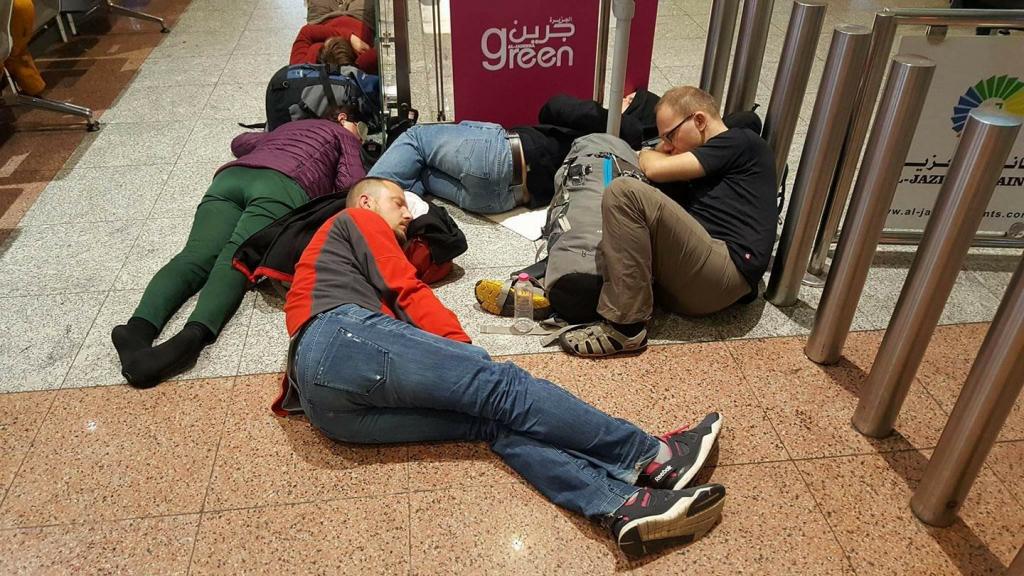
We landed in Jeddah after 9pm local time. Unfortunately we have to wait at the airport for 9 hours. We can’t leave the airport. Getting a visa isn’t easy here. To get one you need to have a local sponsor, who will watch over you all the time and take full responsibility for your actions.
We stay in the terminal, which isn’t clean. The place gives us a huge cultural shock. Men usually wear white robes and women wear burkas and hijabs. You won’t get any alcohol here, which is Saudi Arabia is illegal. However, in the main hall there is a place for prayers from where in the middle of the night we can hear signing.
Women have very few rights here and even among themselves they don’t always respect each other. This is what we saw at the airport: one woman in the waiting room approached another and without a single word showed her a gesture with her hand to move away. Because she didn’t move away far enough, she made the same gesture again, encouraging her to move away even futher. Finally, when she moved, the other one lay down on the chairs and pushed her with her purse to the very last chair.
After the morning prayer on the plane, at 11:45 we landed safely in Nairobi. The first impression is that the people here are nice and smile a lot more than the ones in Saudi Arabia and the airport is cleaner. Even on the plane some Kenyan ladies were singing something about hakuna matata (which means to relax) in Nairobi. And finally in the toilets there is toilet paper instead of a Karcher with water under pressure!
The visa process goes smoothly. We fill in a simple two-page form, pay 50 american dollars, have to smile to a camera and in the end leave our fingerprints for the Kenyan government and finally we get our visas.
Soon after we collect our luggage and go straight to the exit, where we get hit with a wave of heat. Our guide, who we found through a reference of a friend is already waiting for us. We already agreed the programme of our trip over the internet. Part of the group is going to do the safari and two other people chose the hardest route to Kilimanjaro.
Before that happens we need to get to Tanzania. For $40 oper person we got a bus, which will take us straight to Arusha in Tanzania from where tomorrow we will start our trip to safari and Kilimanjaro.
Now we need to eat something and wait for our transportation, which is on the way collecting a few more people. We sit in the restaurant near the airport, where we order some local dish with chicken and something similar to our potato mash, but is something completely different :) We go through the first price shock, because such dish is a cost of $14!
After lunch we get on our minibus and get on the way. While leaving Nairobi we got hit in the back, bt the driver only walked out of the car, looked at it, waved his hand dismissing it and got back in.
After some two hours of sleep in the car (last night we slept on the floor at the Jeddah airport and we are wrecked), we stop at… some local souvenir shop. In the back of it there is a little local kitchen serving small bites. We get tempted with a chicken curry soup with ciapati bread, which the lady initially asked $4, but because she had no change she said that we got mixed up and the soup costs $5 :) I wonder if this is a one-time situation, related to our problems with hearing caused by fatigue…? ;)
About an hour and a half later we are at the border with Tanzania, where we have to, apart from our passports, show the vaccination book with a stamp for yellow fever, which here is mandatory. Only after that we get the visa form and have to get to another queue to the next window, submit the form, then stand in another line to another window, there pay $50, again leave our fingerprints, let them take us a picture and… stand in another queue again to the last window where the officer finally puts the stamp in the passport. Queueing paid off and with the visas we get back on the bus. In the evening, after sleeping for another few hours, we arrive in Arusha. The whole journey from Nairobi to Arusha took us slightly more than six hours.
Here, after checking in at our hotel. We have a short briefing with our guide and his people, who will be taking care of us during the trip. We meet Mr. D - our chef. I’m wondering if letter D stands for Diarrhea? If so, it will get really interesting…
After the briefing our guide, whose name is Lobulu, takes us for a dinner to a night club, which is located only about 1 km from our hotel, but due to safety concerns according to Lobulu, it’s better to go there by car.
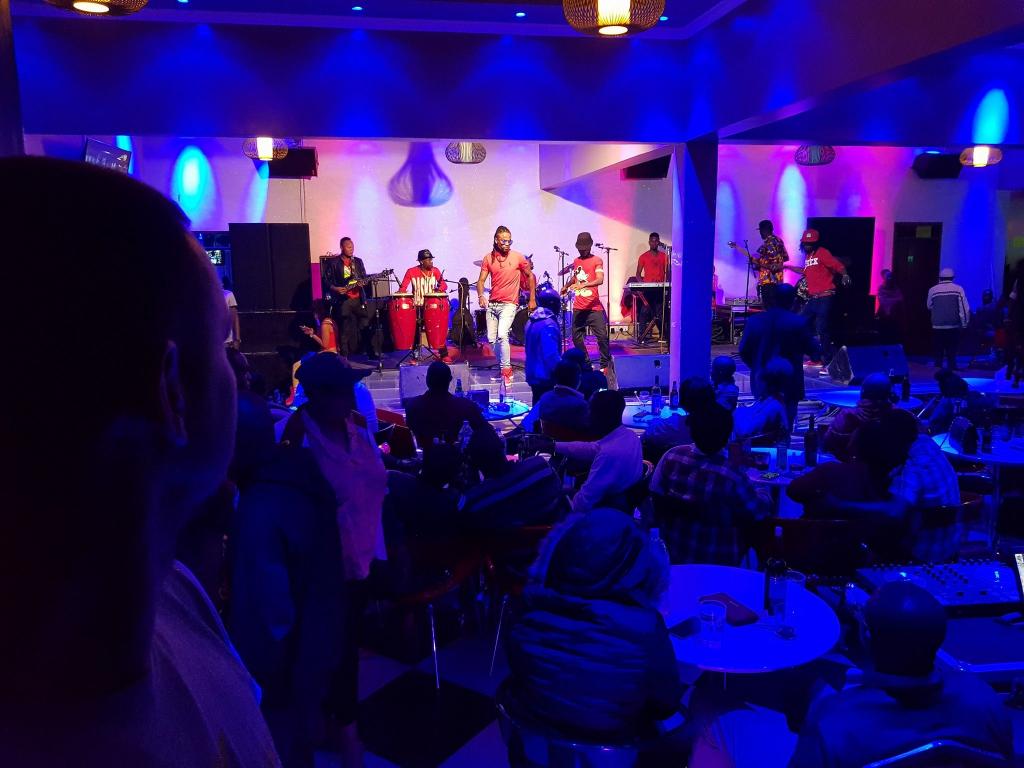
Later we get back to our hotel, where we soon go to sleep as we need to wake up at 7:30am tomorrow.
We leave our hotel after breakfast at 9 am. On the way we stop for shopping in a so called “supermarket”, which turned out to be a small local shop, where we have to buy supplies for the entire 5 days of the safari. The seller ripped us off a bit, but it seems like this is going to be the case everywhere because we are tourists. Anyway, nothing compares to the most expensive tea in the World we had in Beijng for 40 EUR per cup ;)
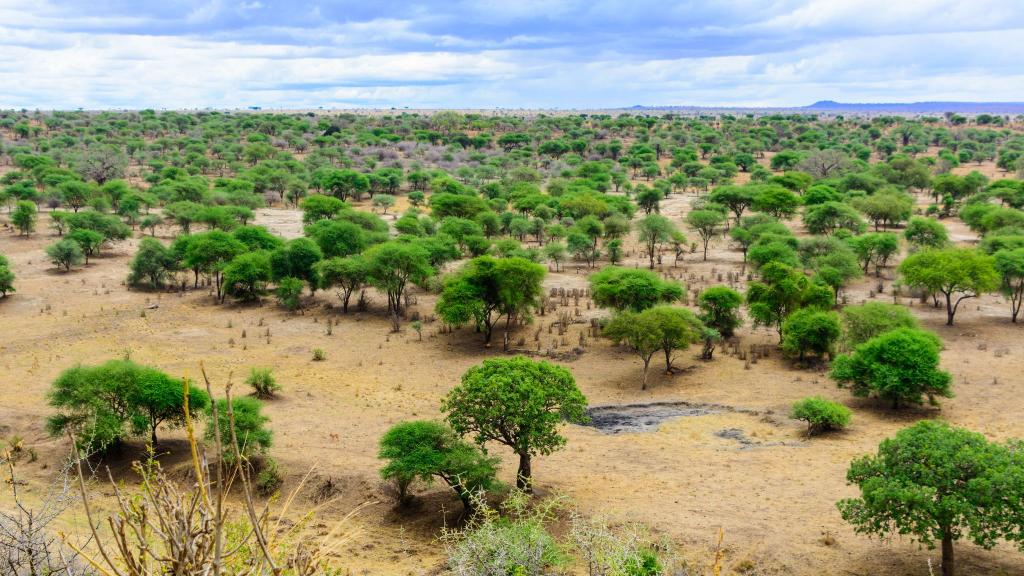
It takes us two hours to get to Tarangire National Park. We stop at the gate, where we have to check in, and when leaving everyone also has to check out due to safety reasons. At the gate there is a viewpoint of the savanna.
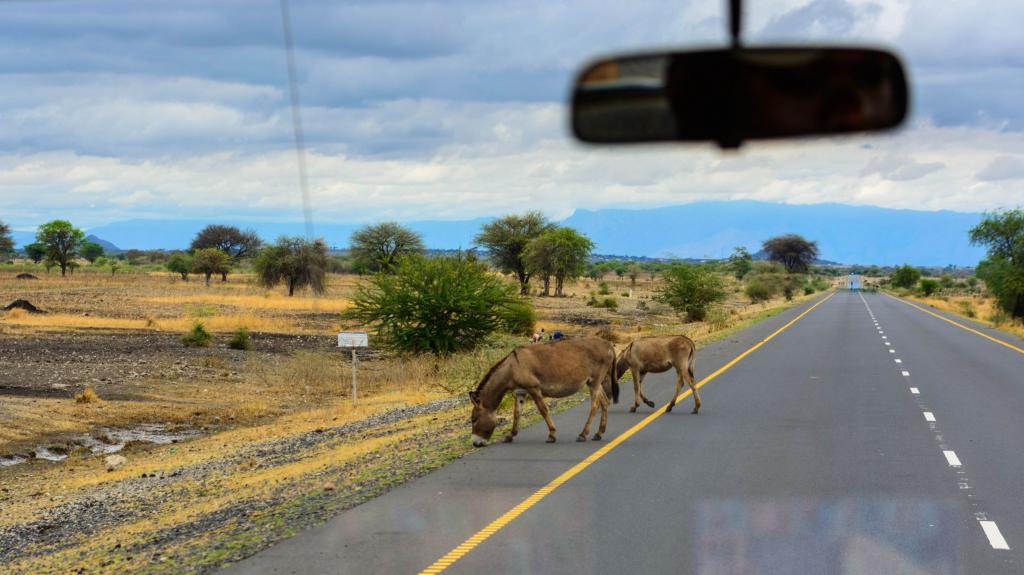
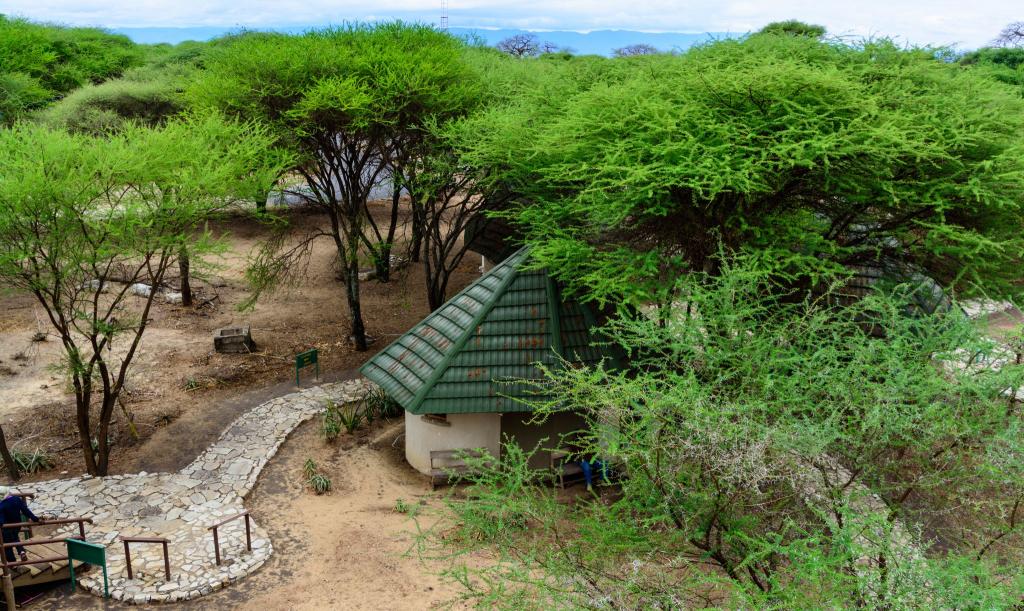
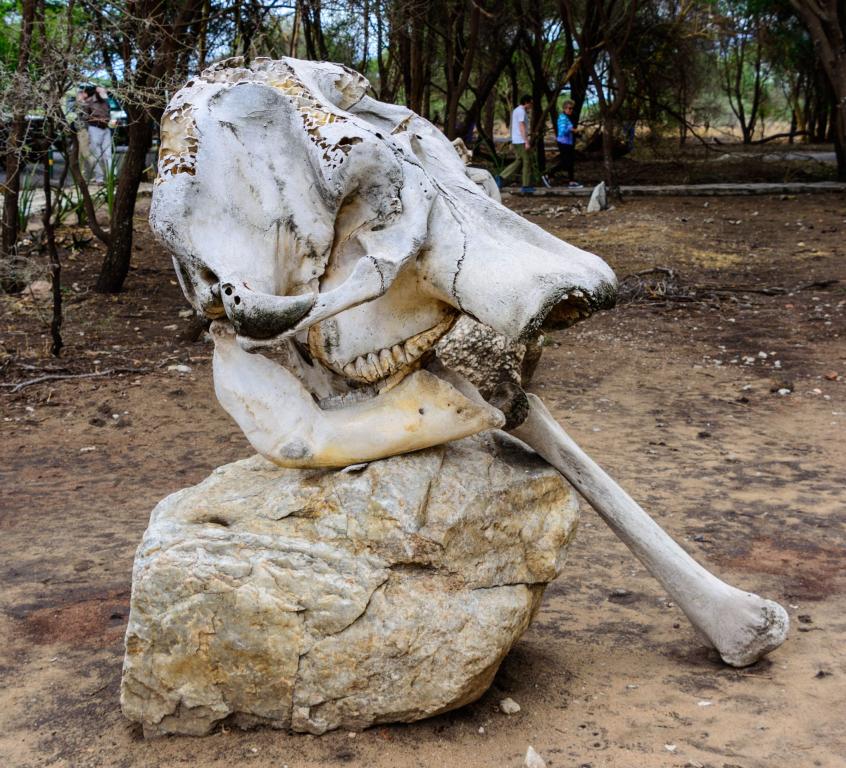
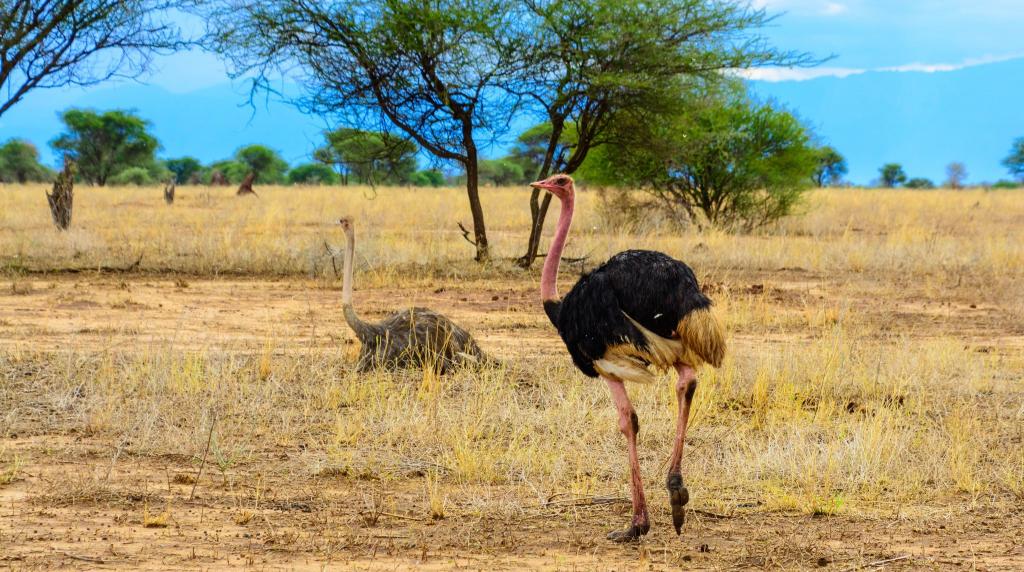
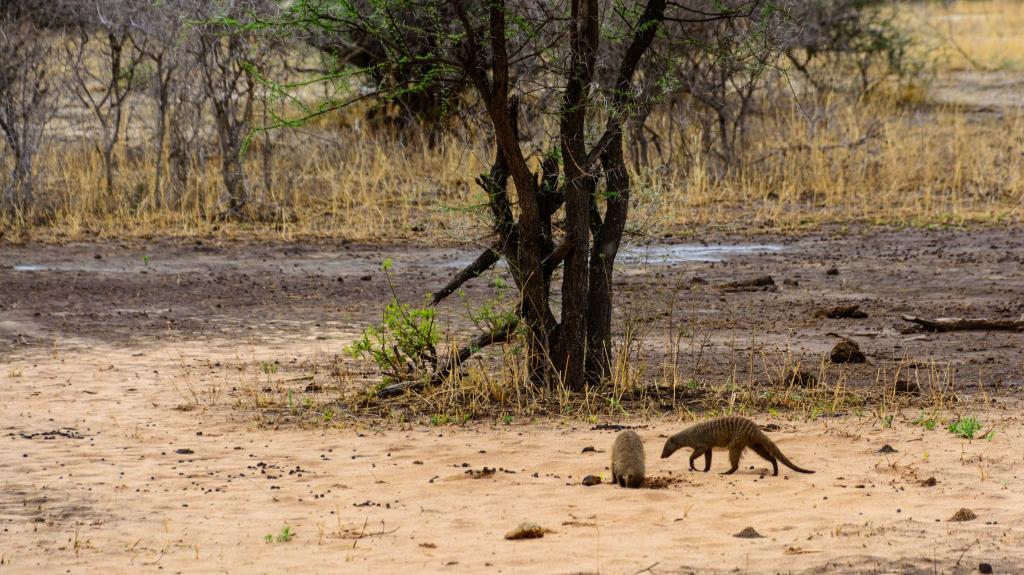
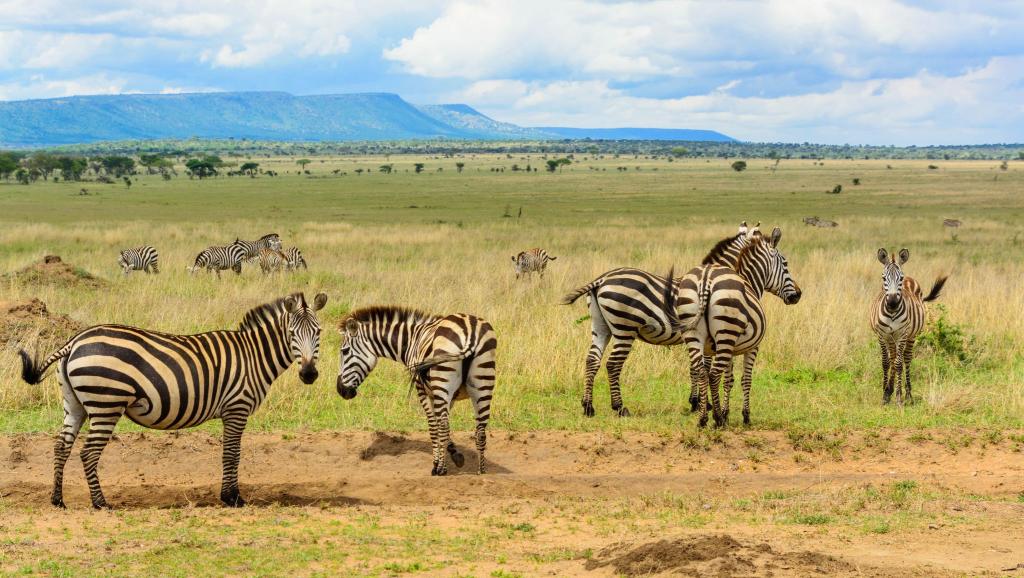
Most of the day we spend in the car seeing many species of animals, such as the elephants, lions, antilopes, giraffes, etc. According to the guide, today is only the introduction of what we are going to see in the Serengetti Park tomorrow, where we should be able to see the lions and the crocodiles from a close proximity.
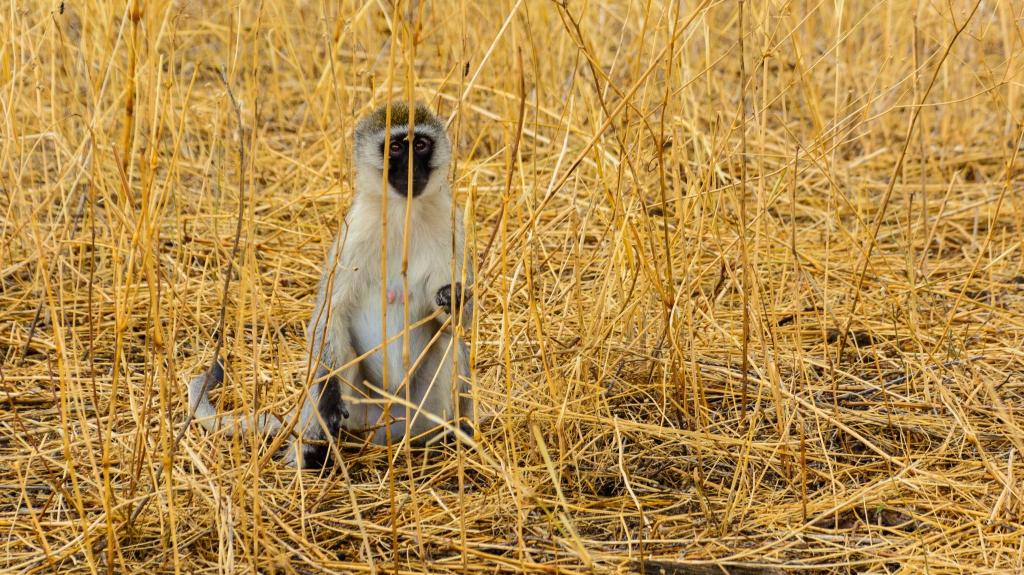
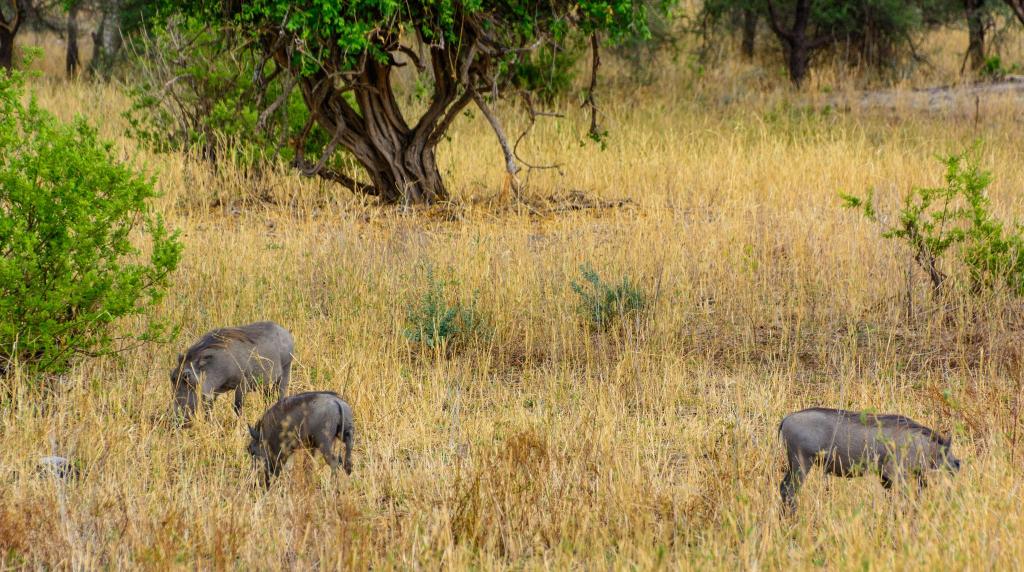
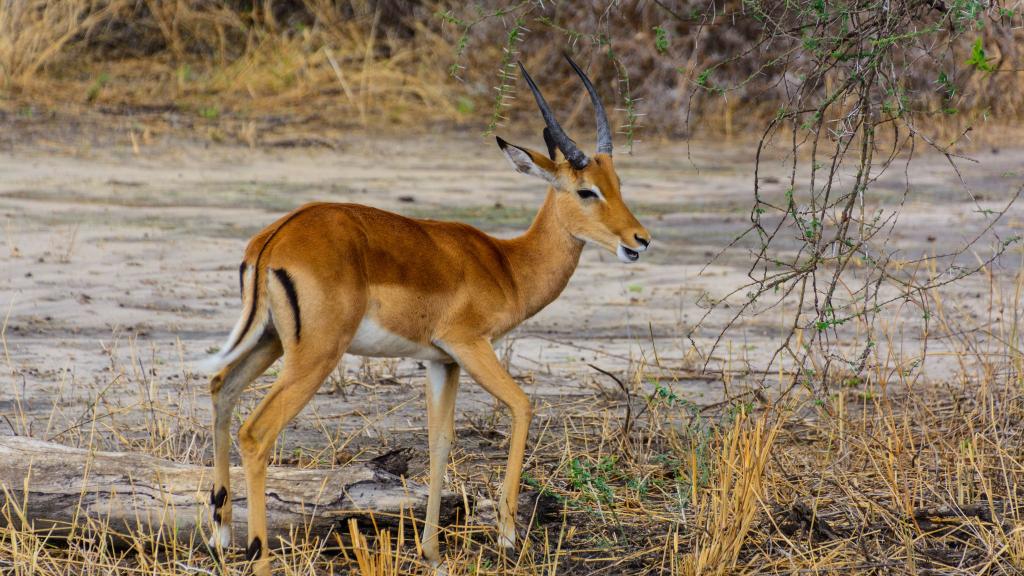
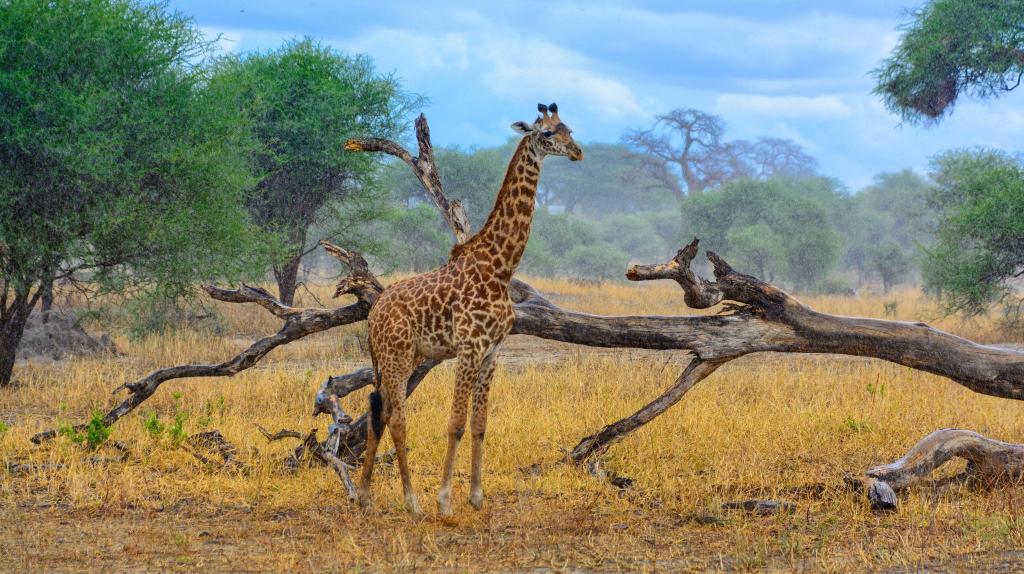
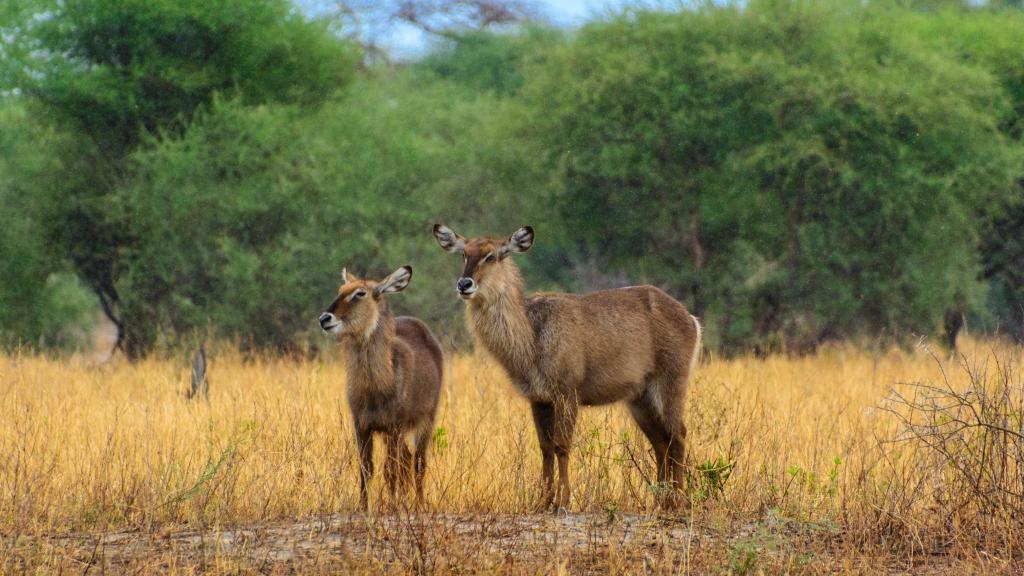
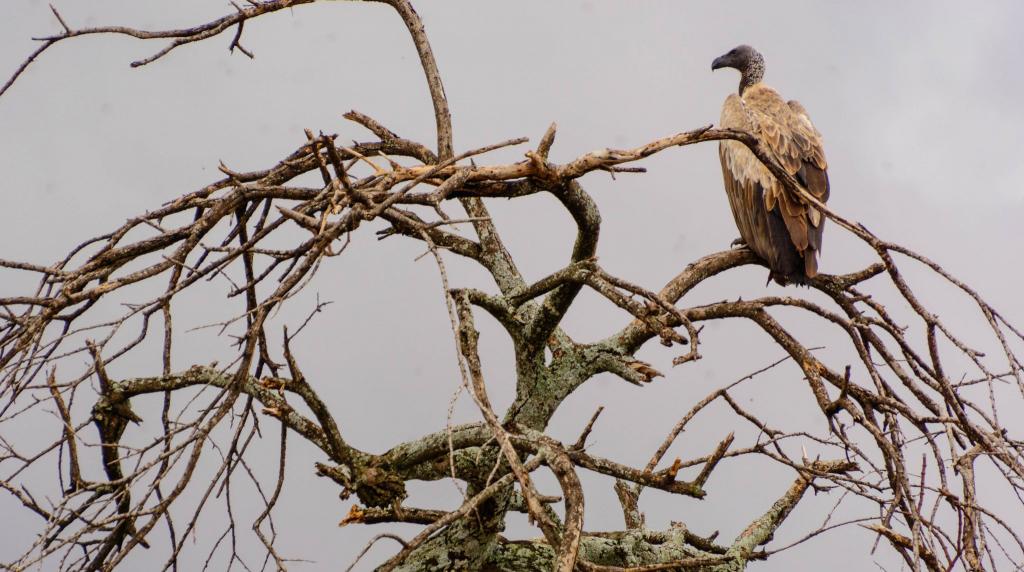
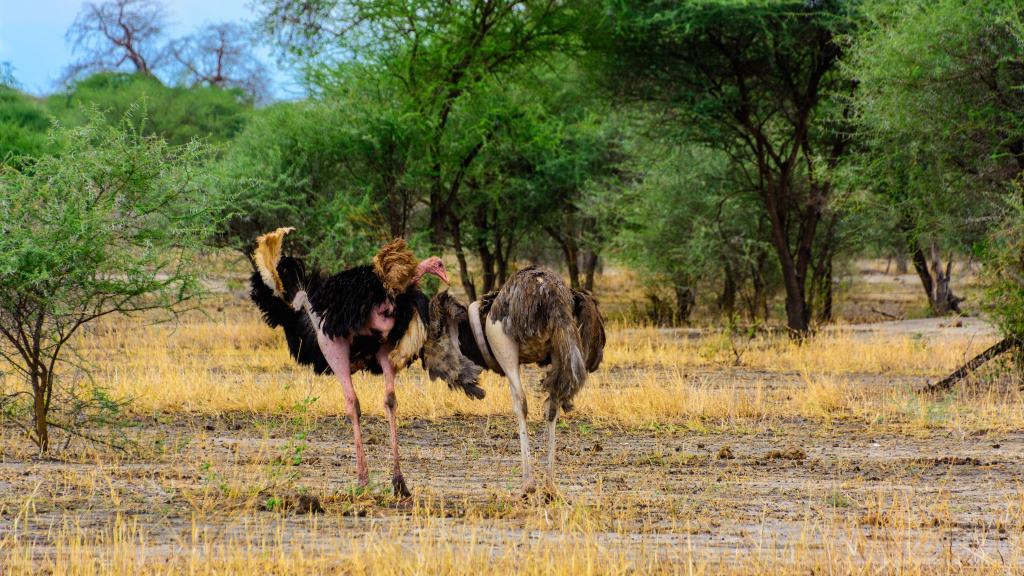
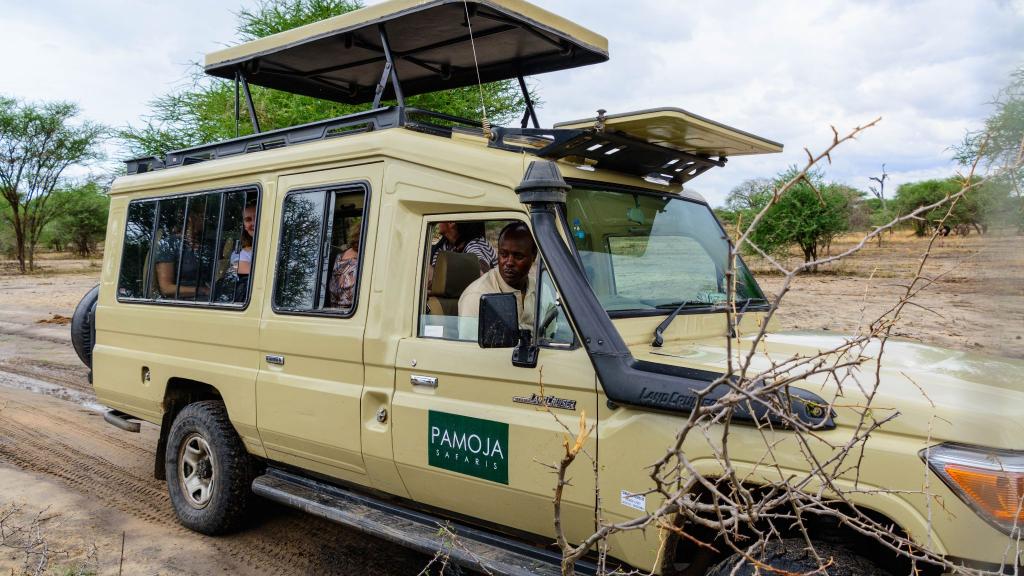
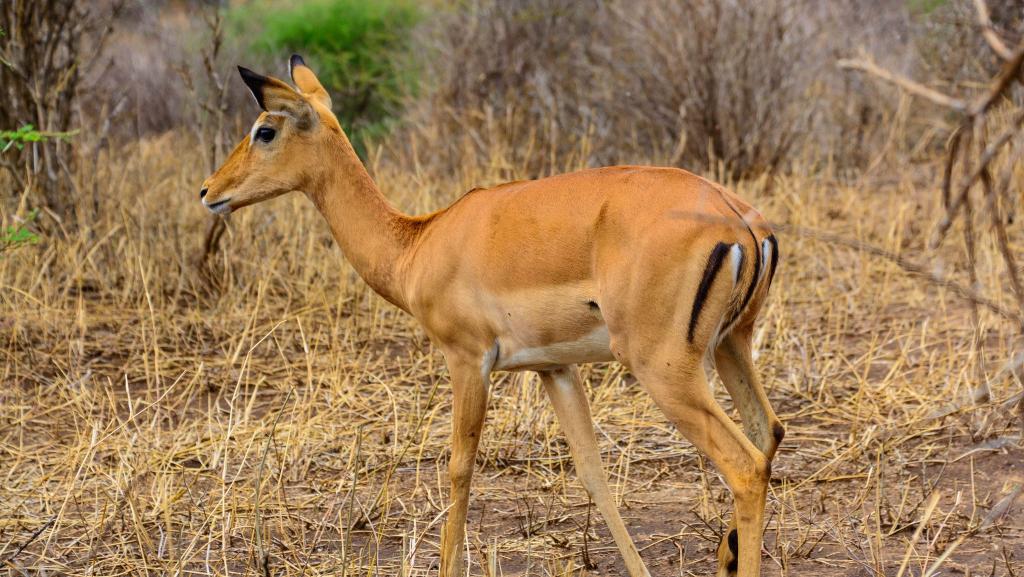
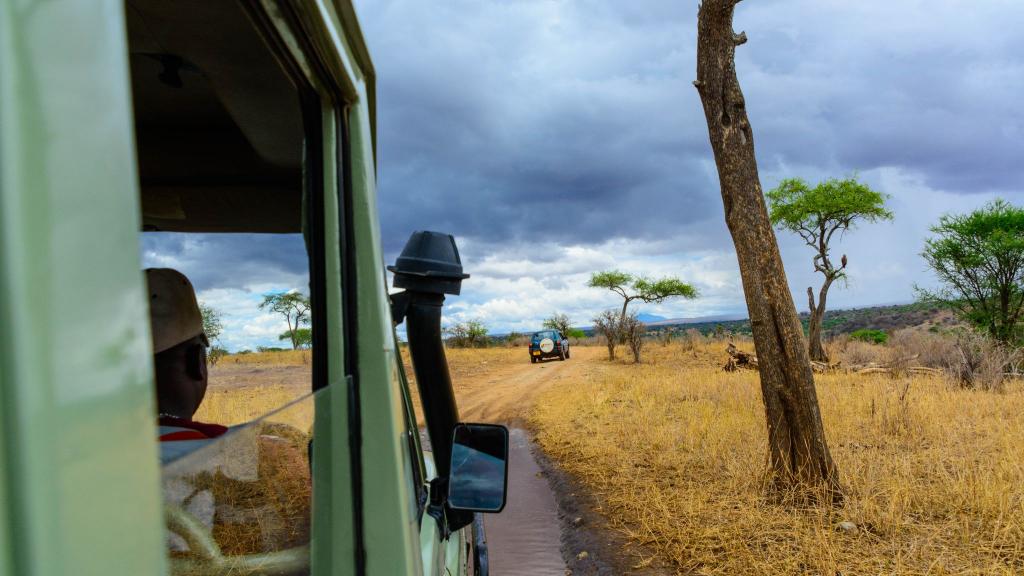
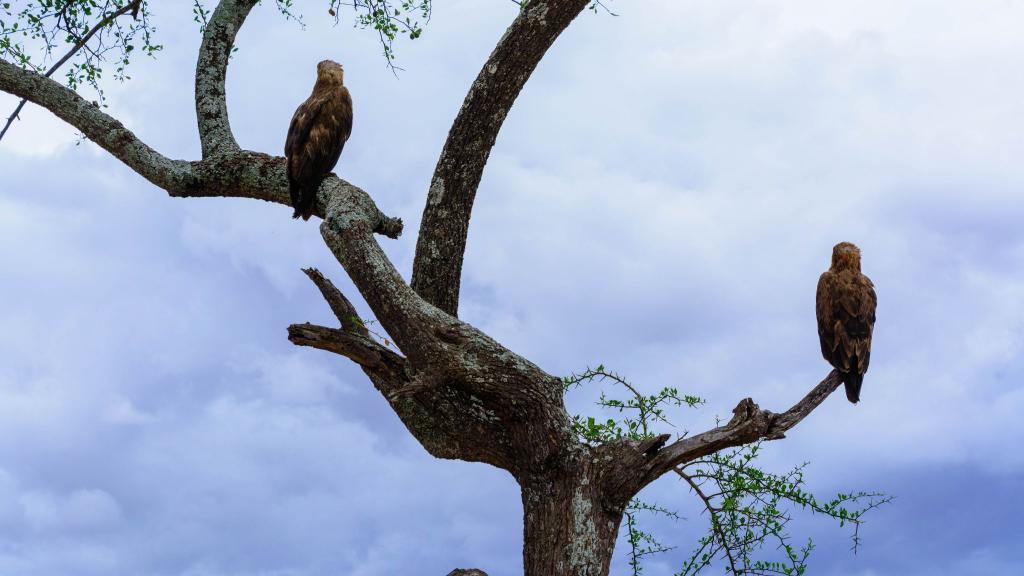
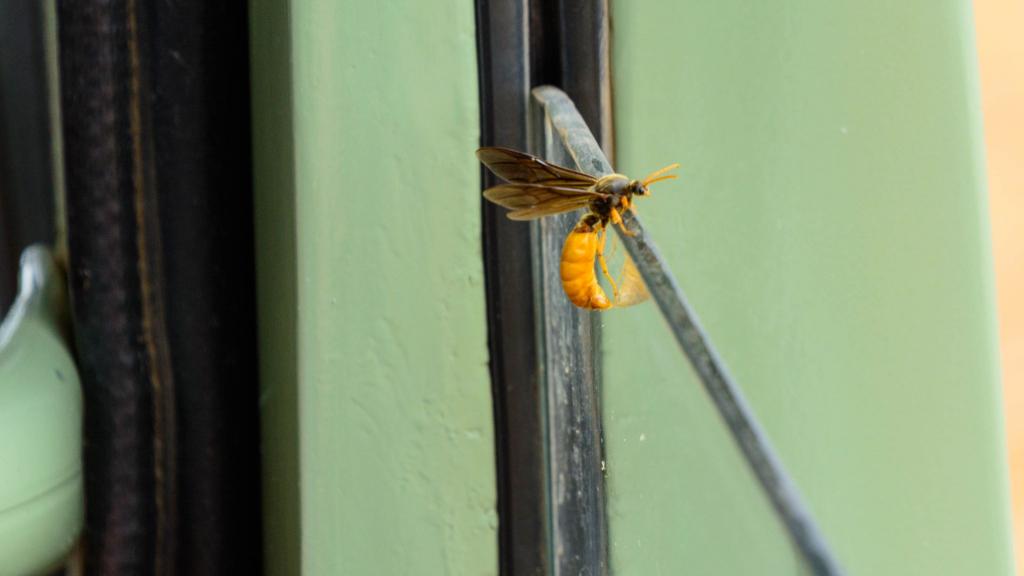
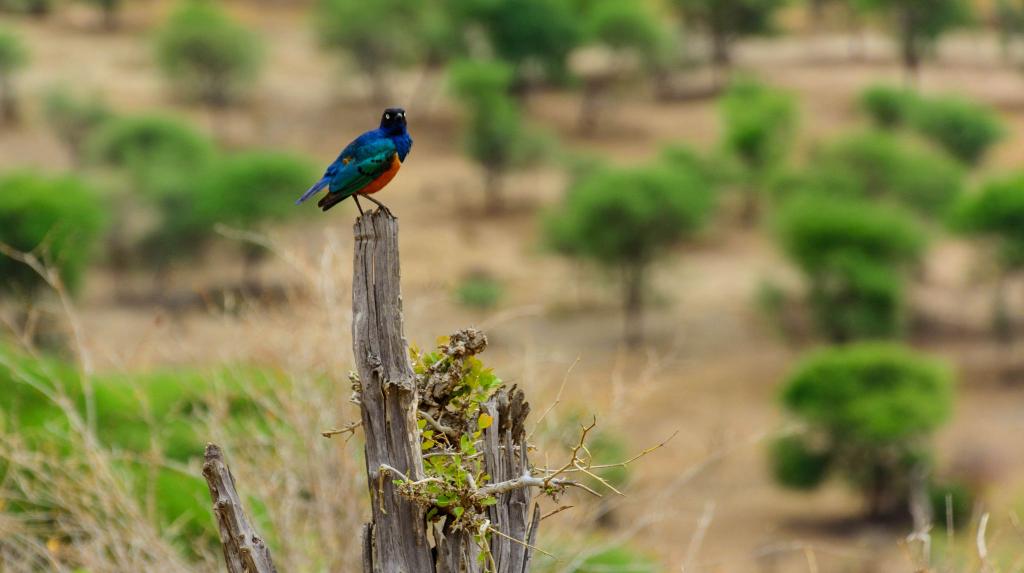
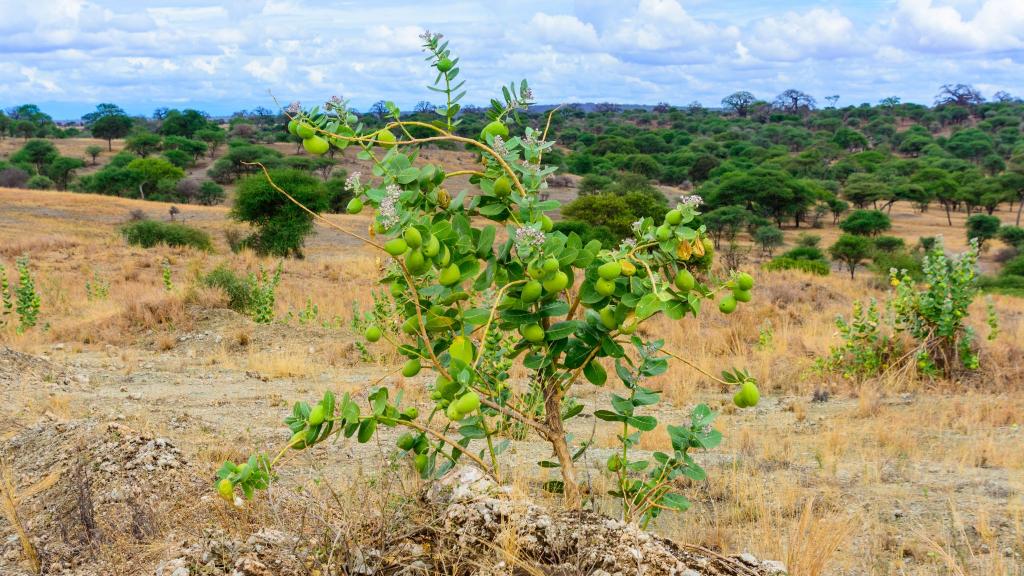
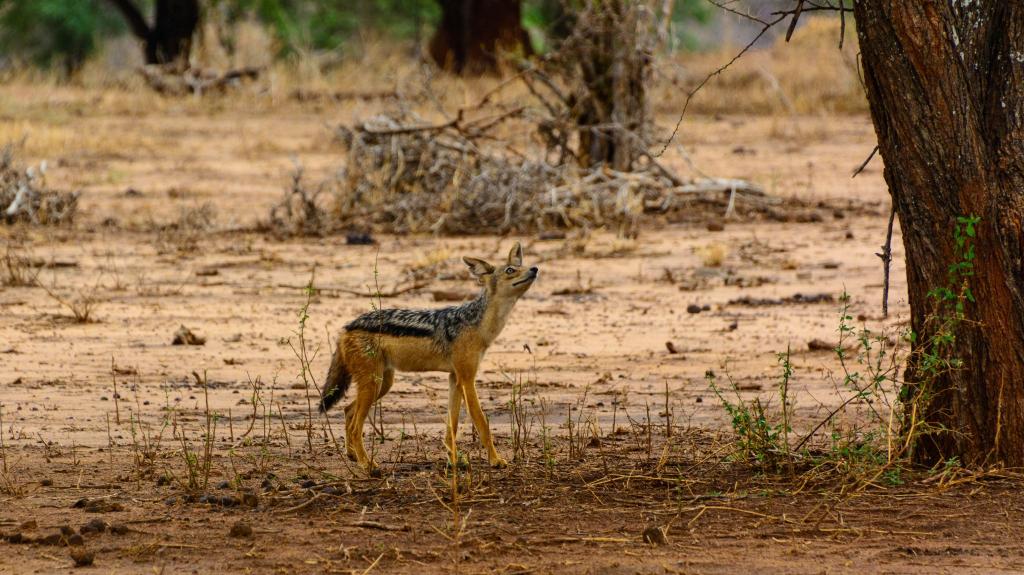
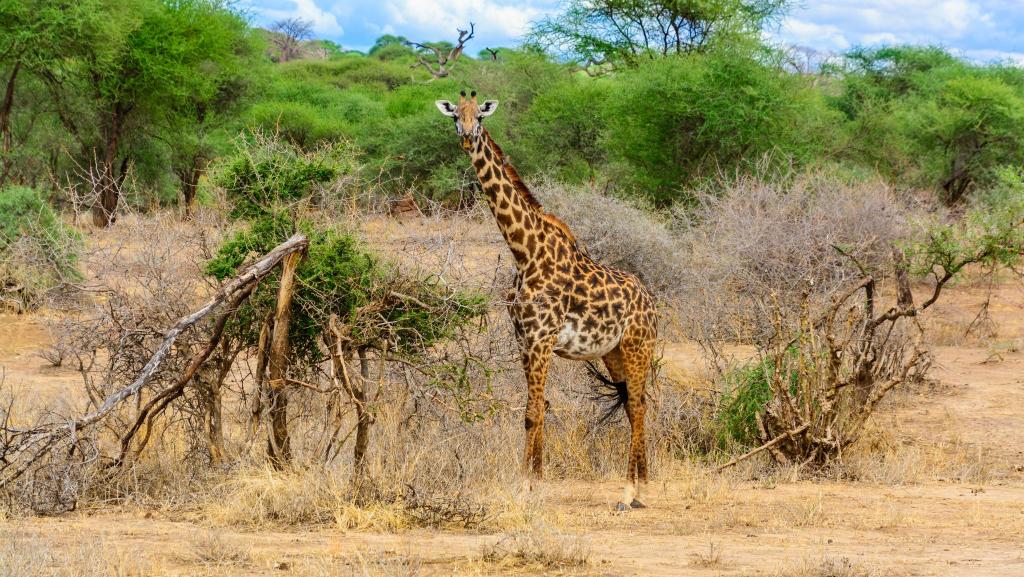
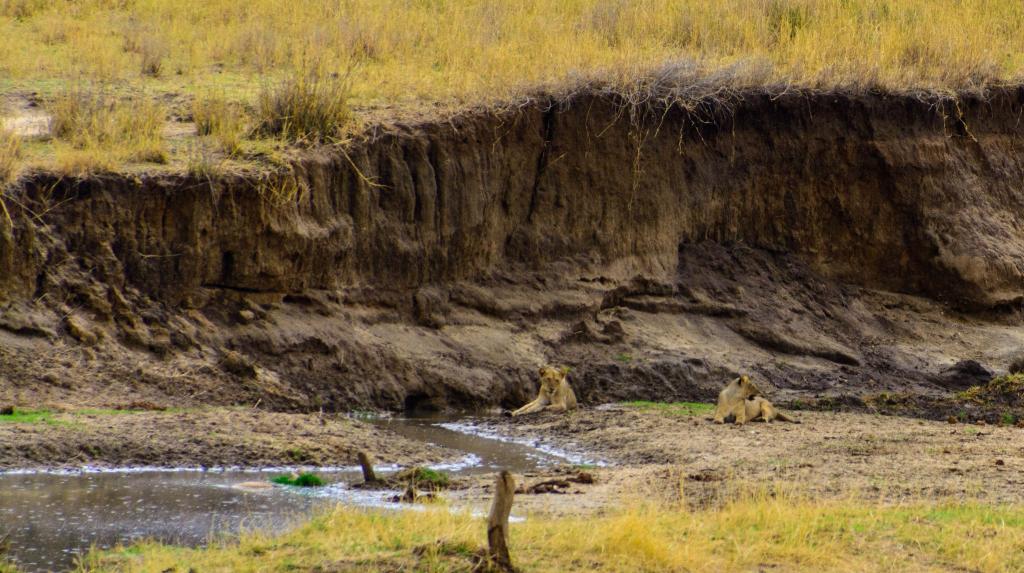
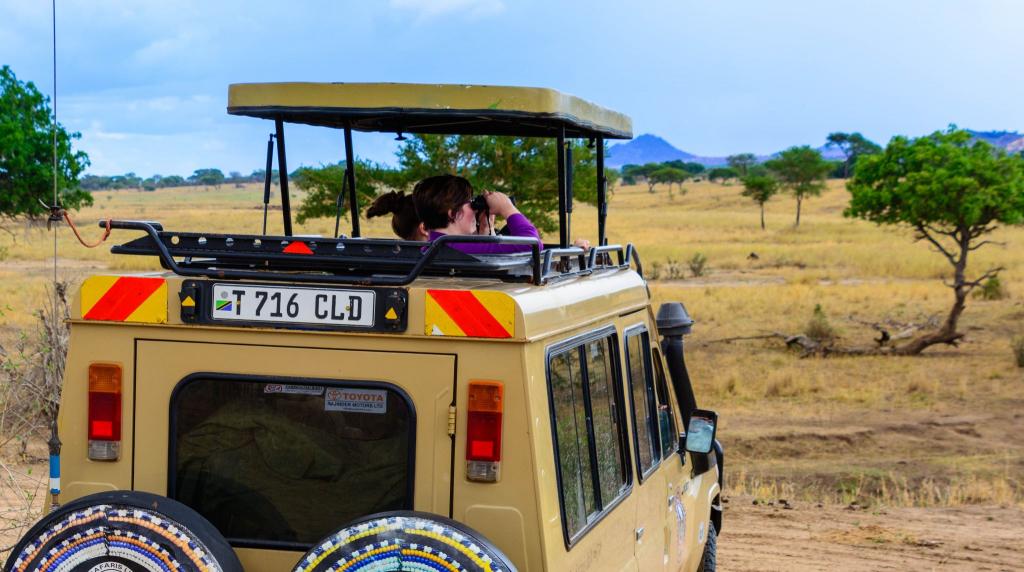
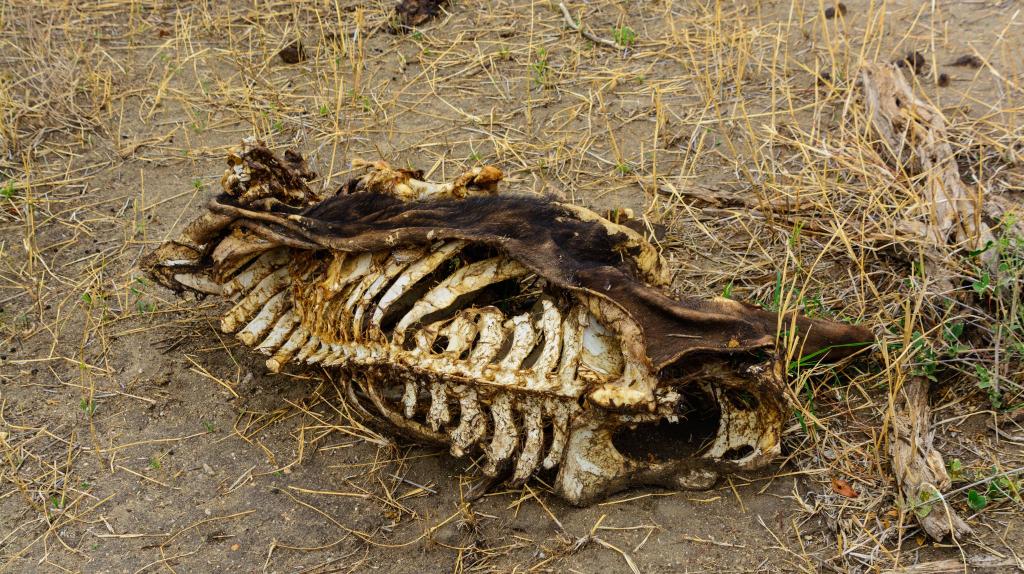
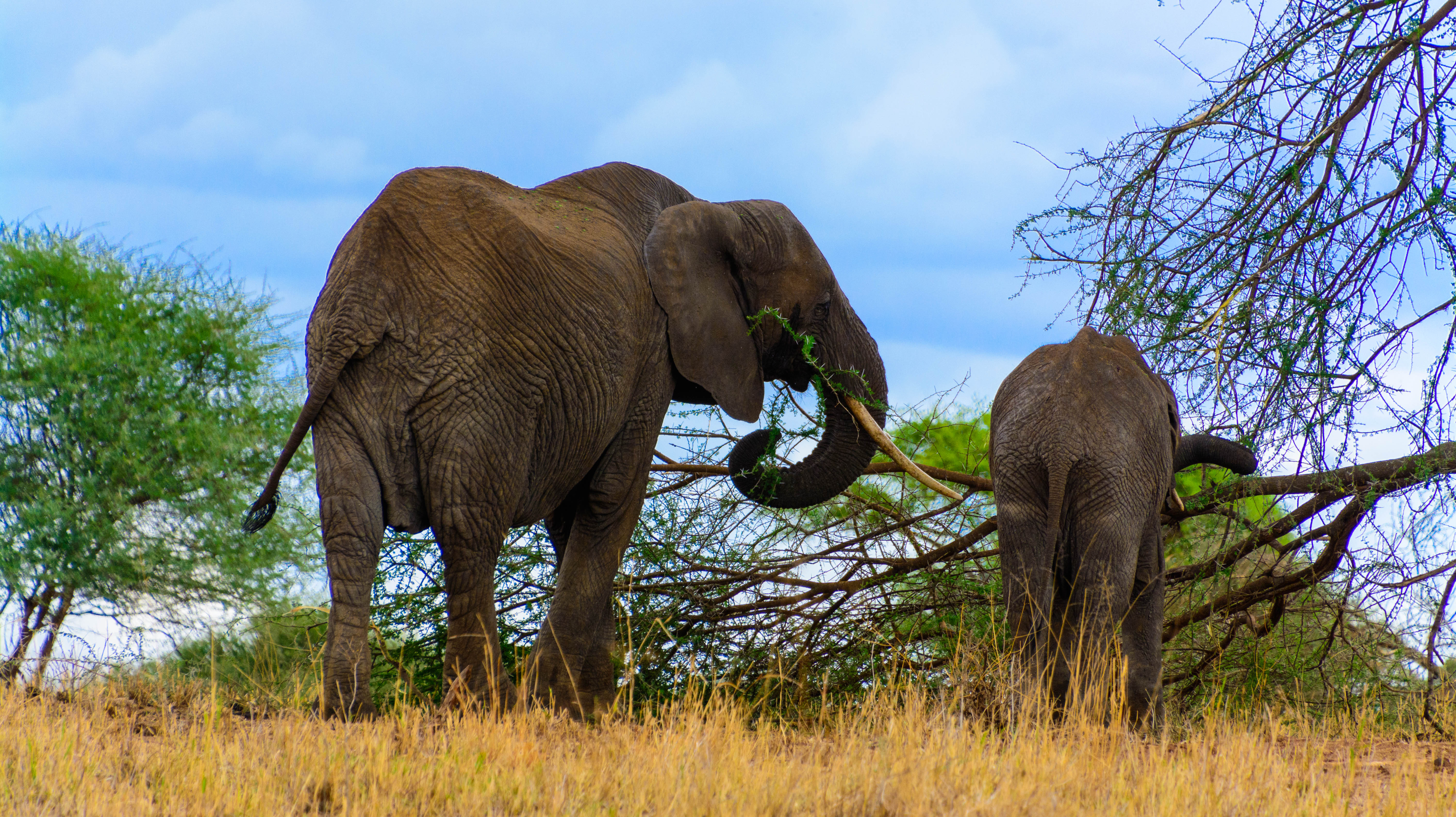
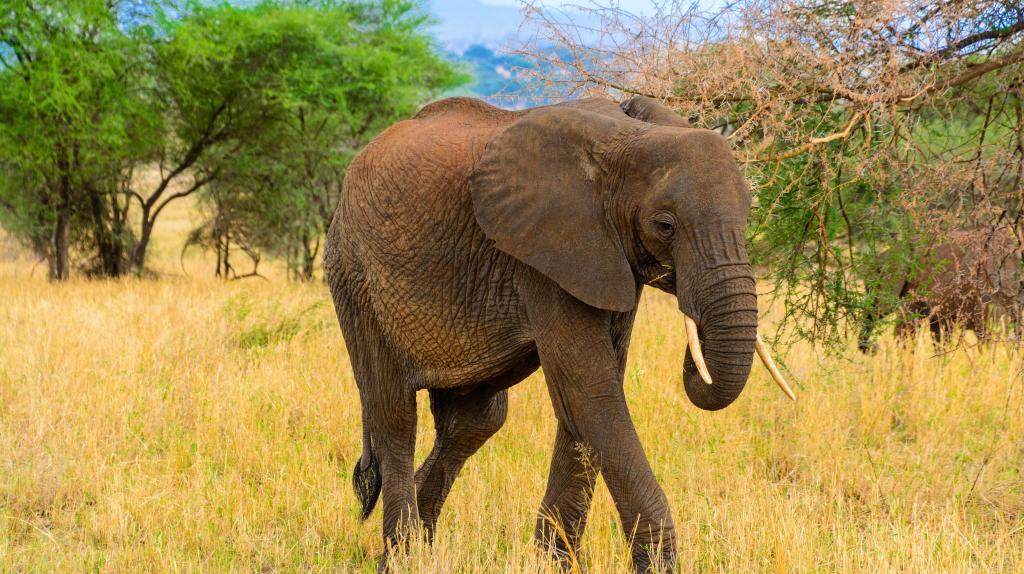
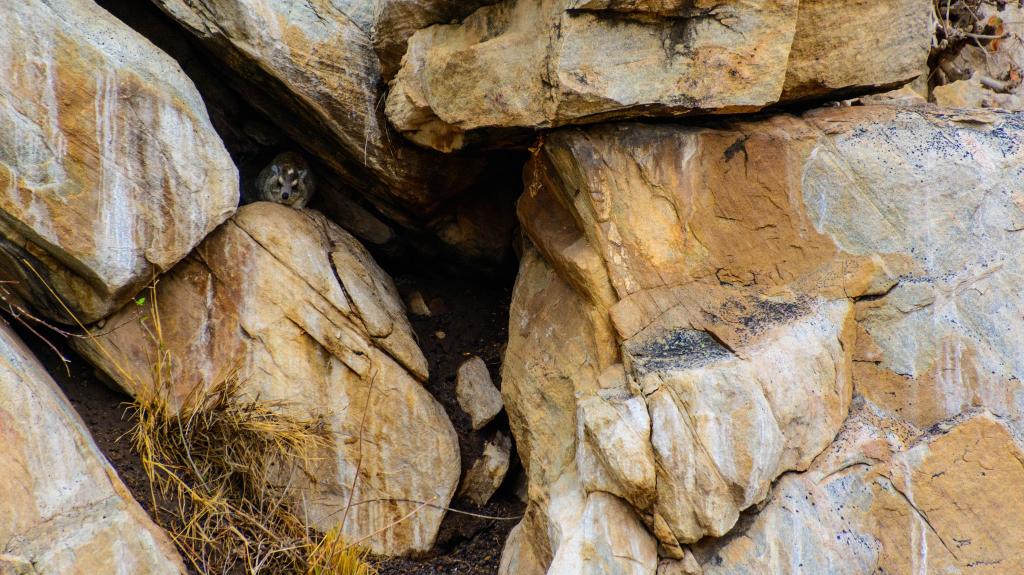
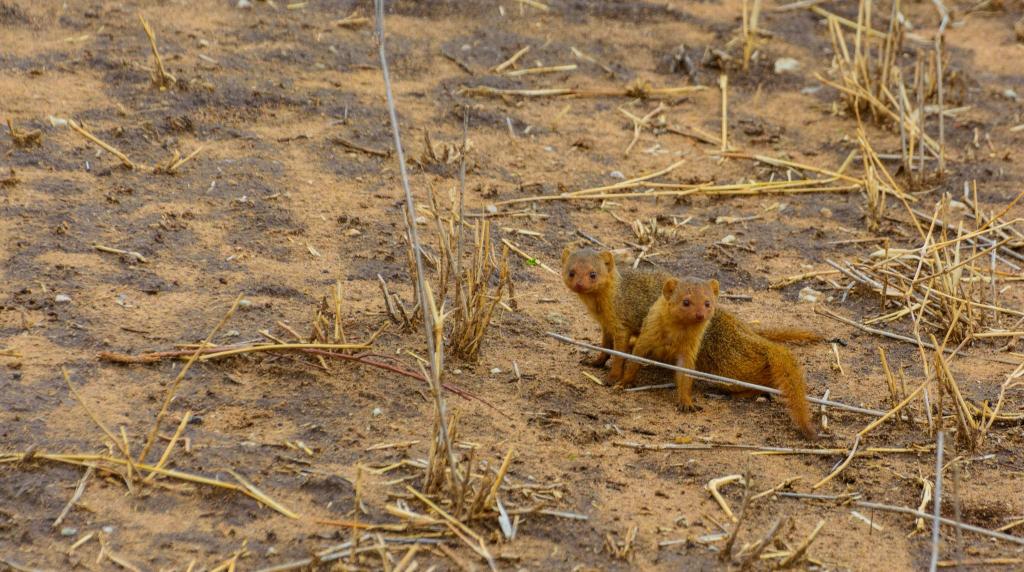
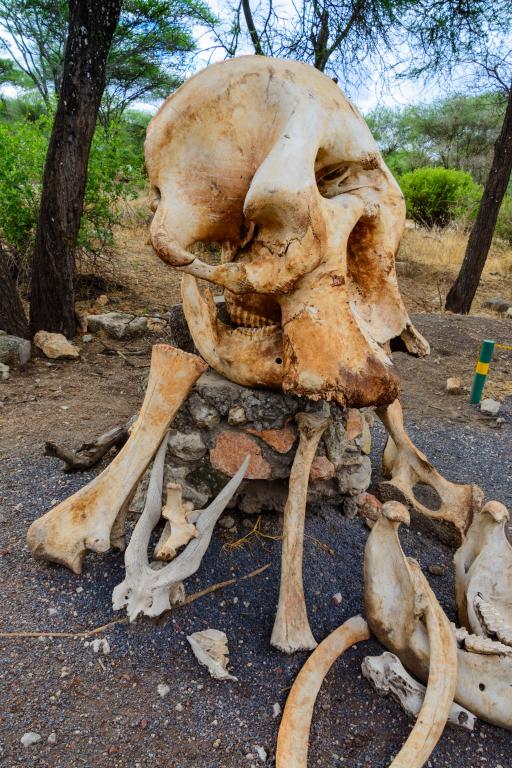
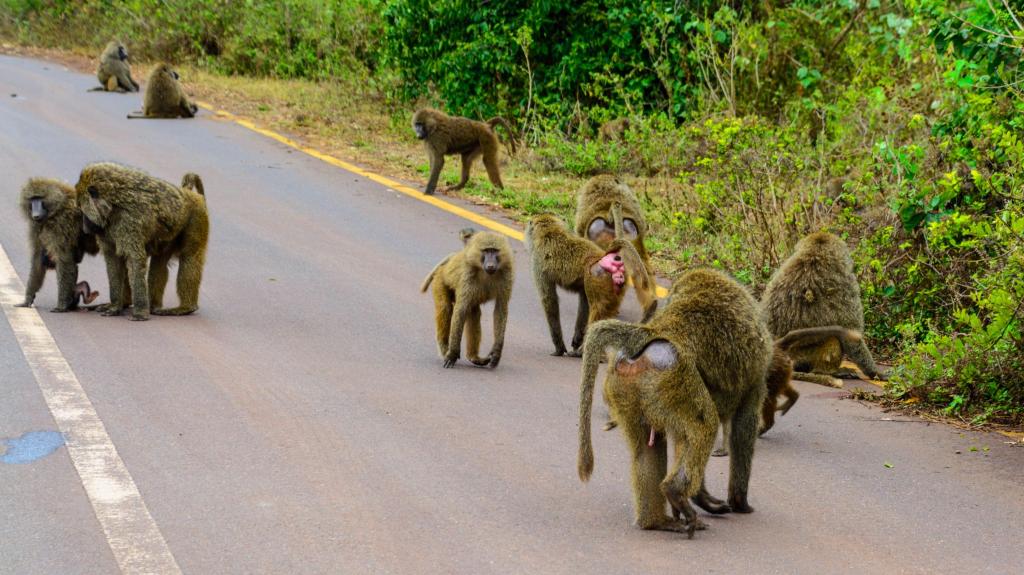
During the lunch break we have a small row with a local monkey, who, of course, picked me to steal the banana from ;)
In the evening we arrive to our campsite, where we get the chance to rest and to eat a delicious dinner, prepared specially for us by Mr. D :)
After a barely slept night due to the heat in our lodge we get up at 7:30. As soon as we leave the lodge, we feel a refreshing breeze outside. The resort is simple, but it’s nice and cosy. In the background we can hear a lot of animals playing for us, just like in the Amazon jungle. In the lodges there are beds with mosquito nets, a private hot shower, a toilet, which is pretty much everything we need. If you are looking for access to the internet, don’t expect it to work much.
We leave straight after the breakfast around 9am. Our guides packed all our bags to our Land Cruiser and we hit the road.
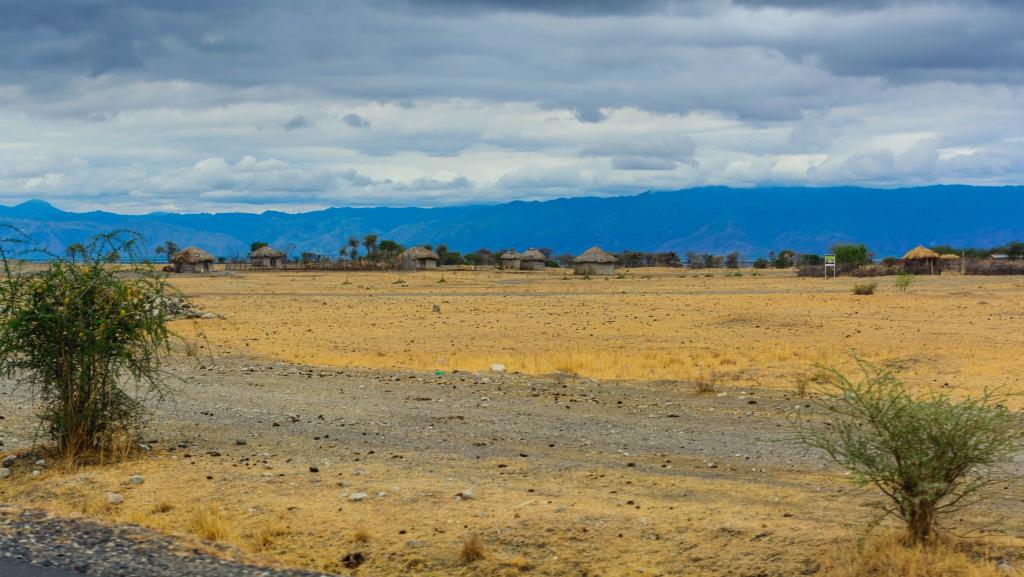
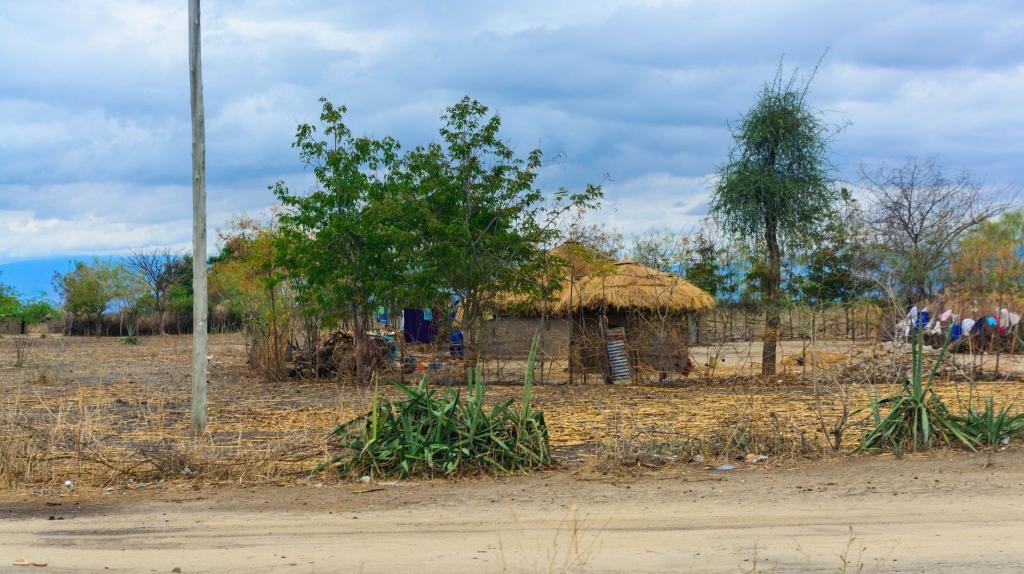
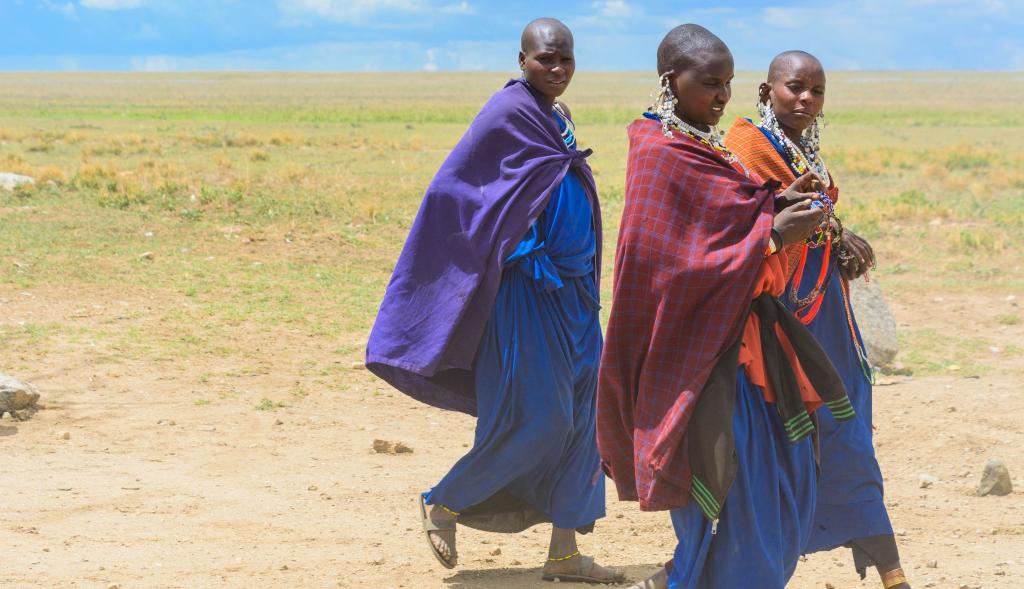
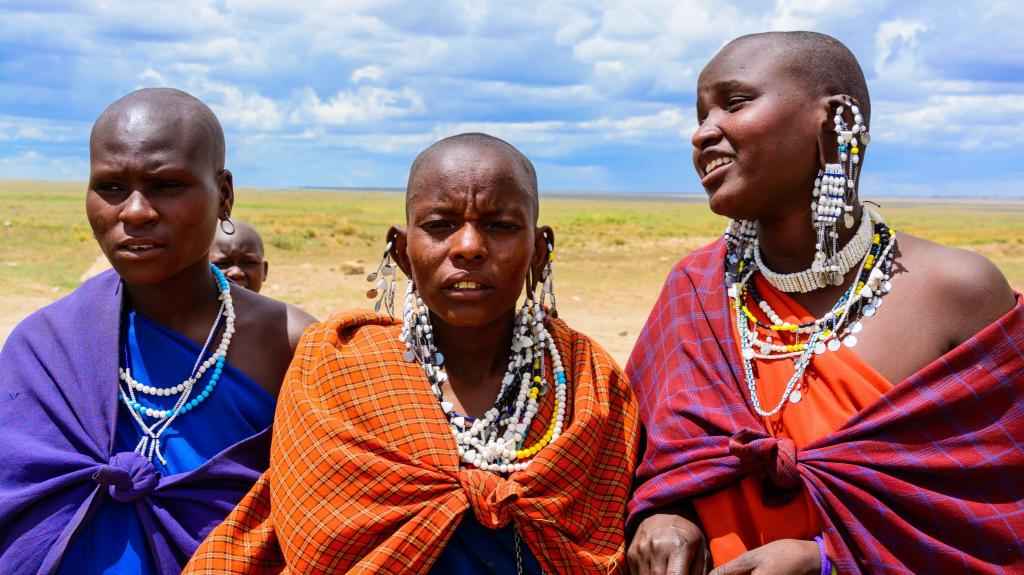
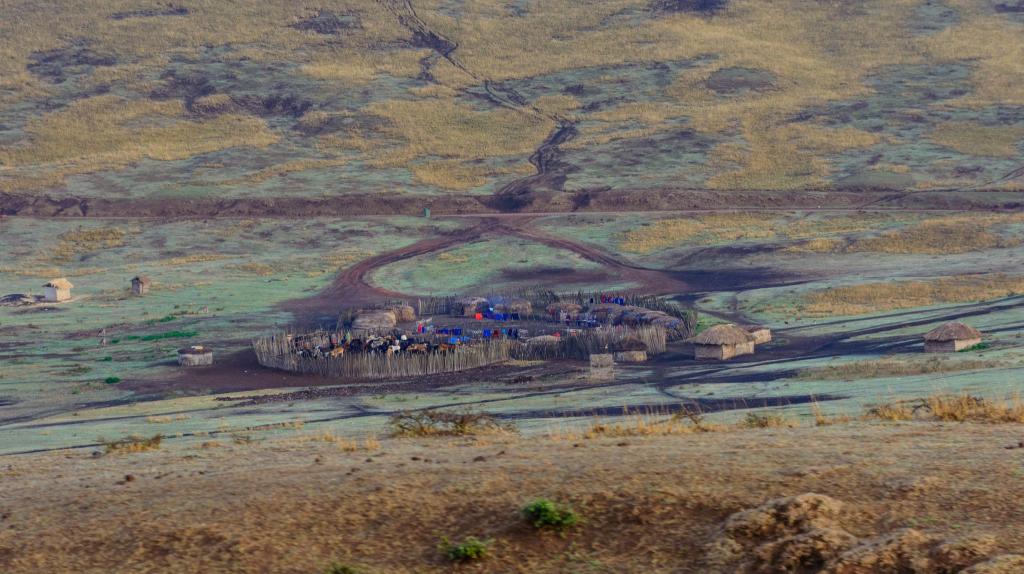
After more than two hours we got into the Ngorongoro National Park. Its name comes from the masai word “ngoro”, meaning a cow bell. The park is a reserve for the Masai tribe, living close to the nature in villages, growing their cattle. For the wild animals not to kill the domesticated ones, they build high wooden fences.
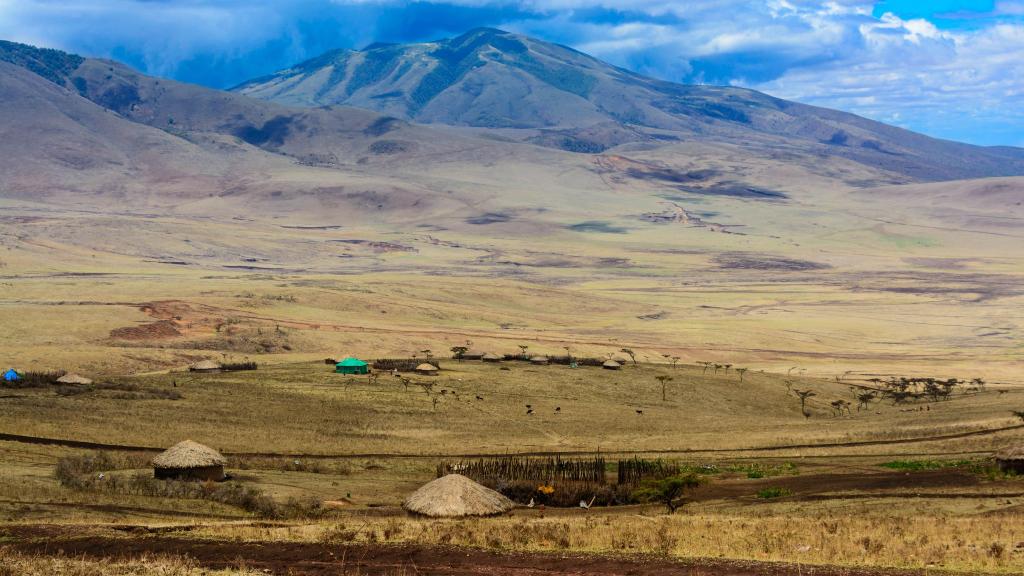
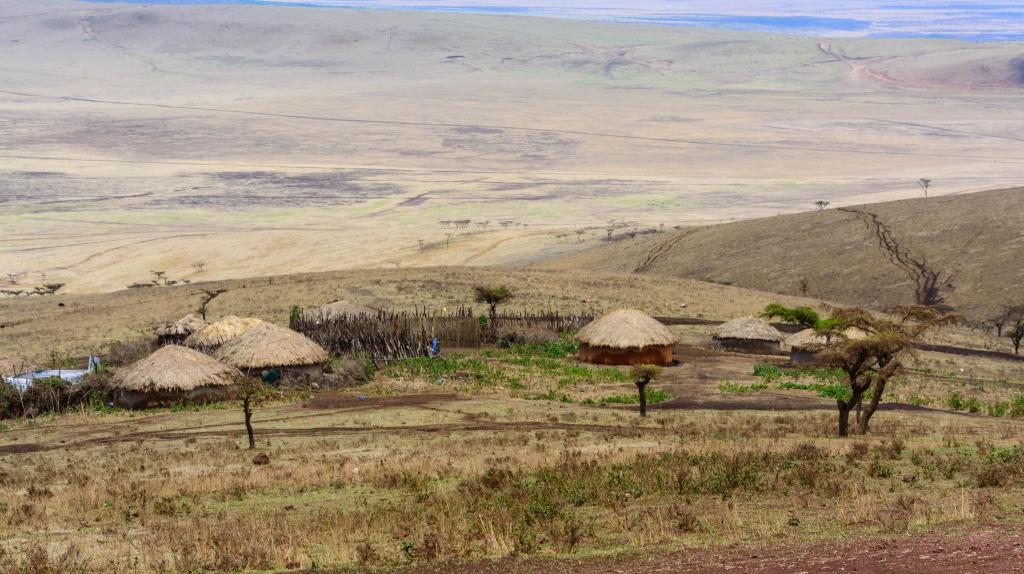
The park is in a creater, which was formed 4.5 million years ago by the collapse of the mountain higher than Kilimanjaro. Currently it’s a savanna.
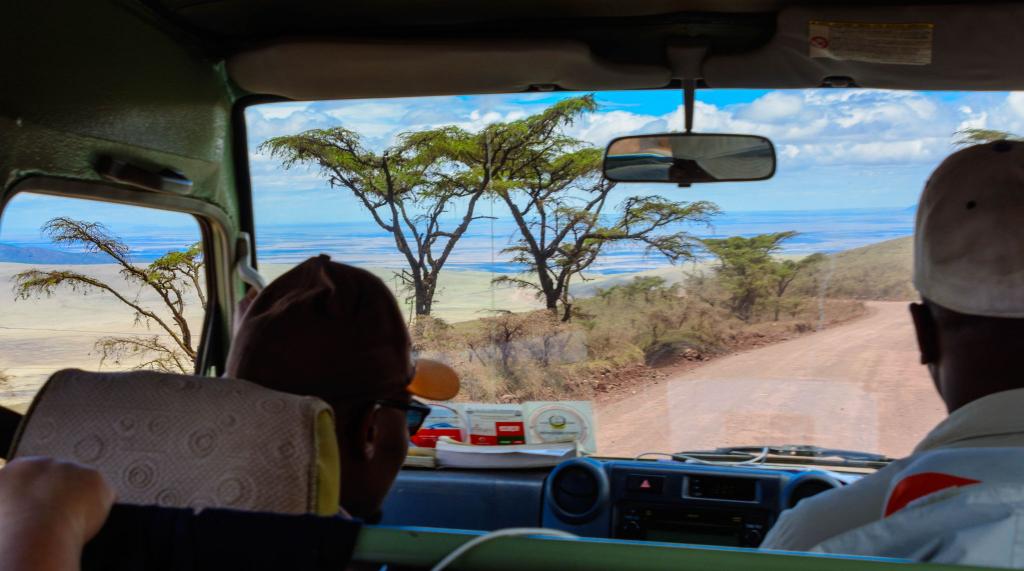
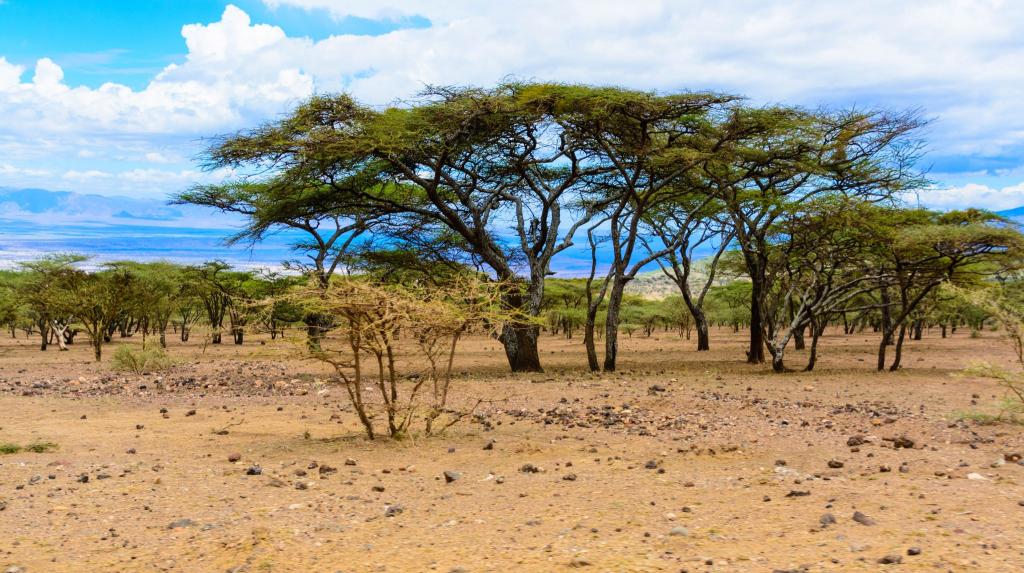
After roughly a 3.5-hour drive we arrive at the border of Ngorongoro and Serengeti, which is the most famous safari park in the World, well known for a huge number of different animal species. Here we meet the last Masai people, who don’t live beyond the Ngorongoro Park. We can take some pictures with them, for a small fee of a few dollars. Before taking pictures you should be aware that they will ask you for money as soon as you point your camera at them.
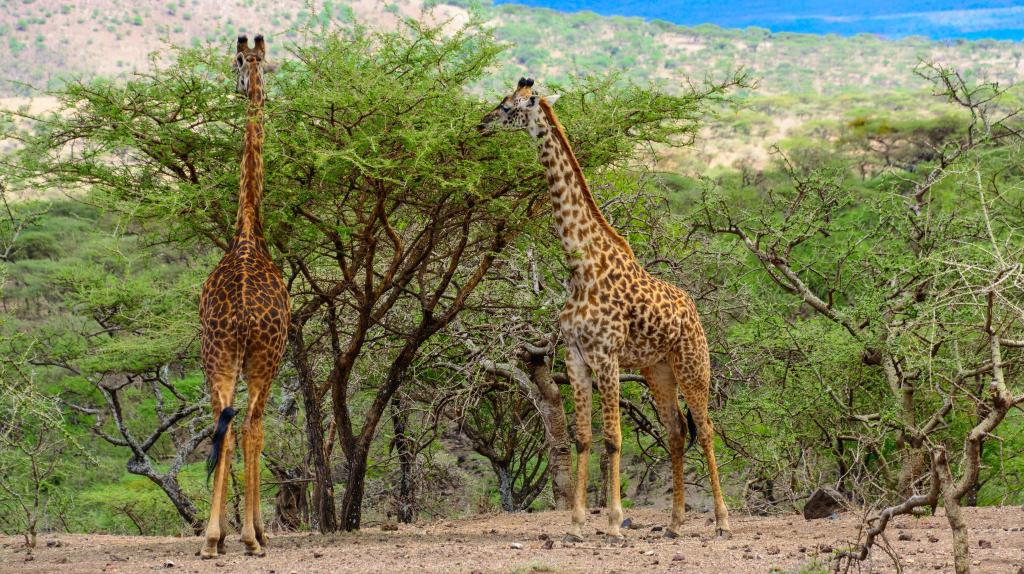
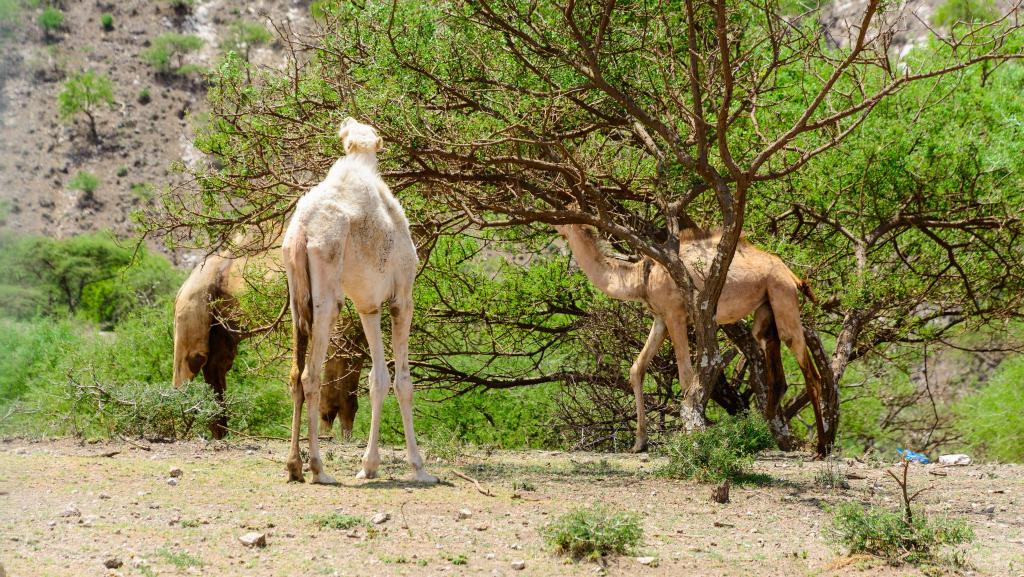
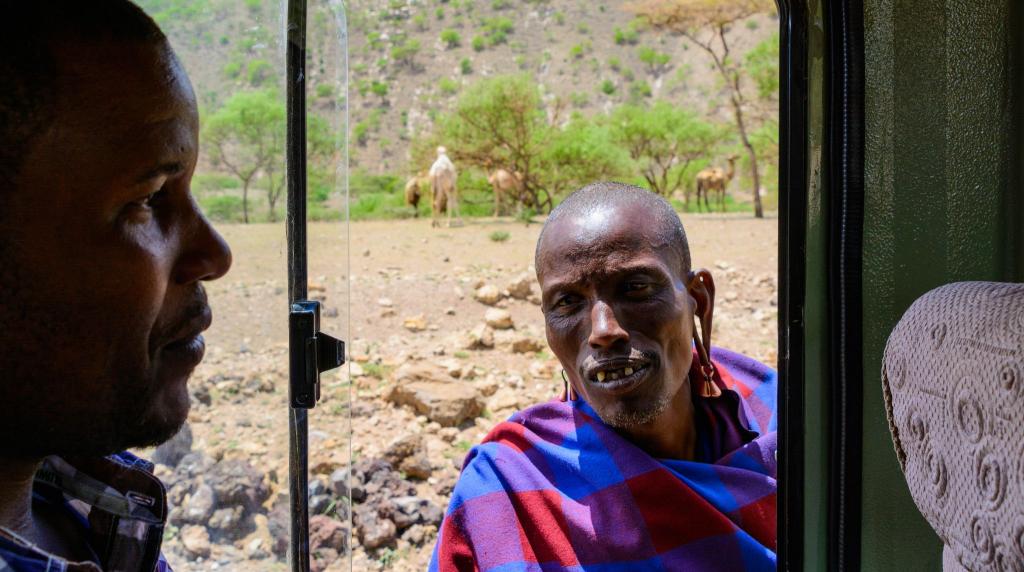
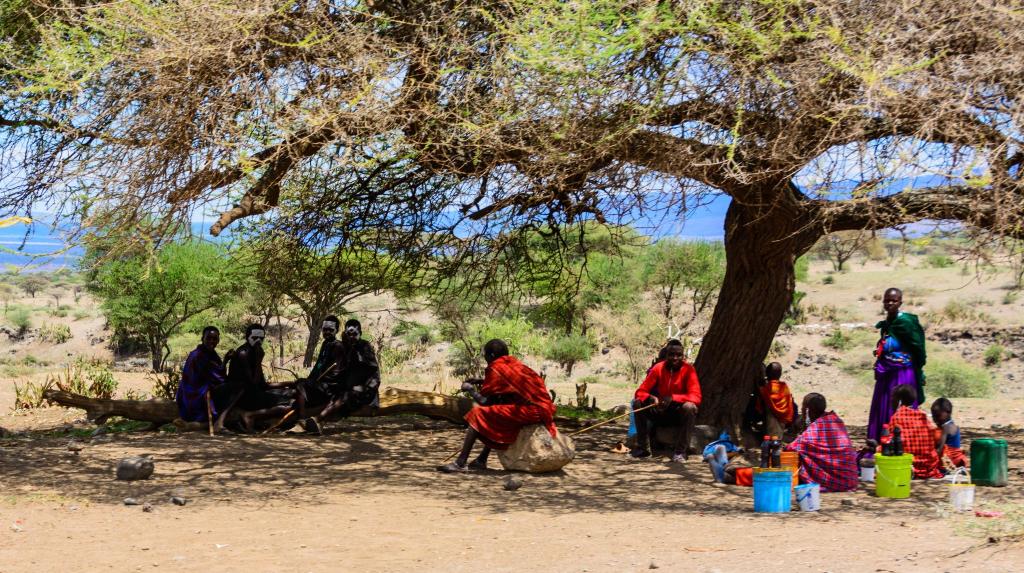
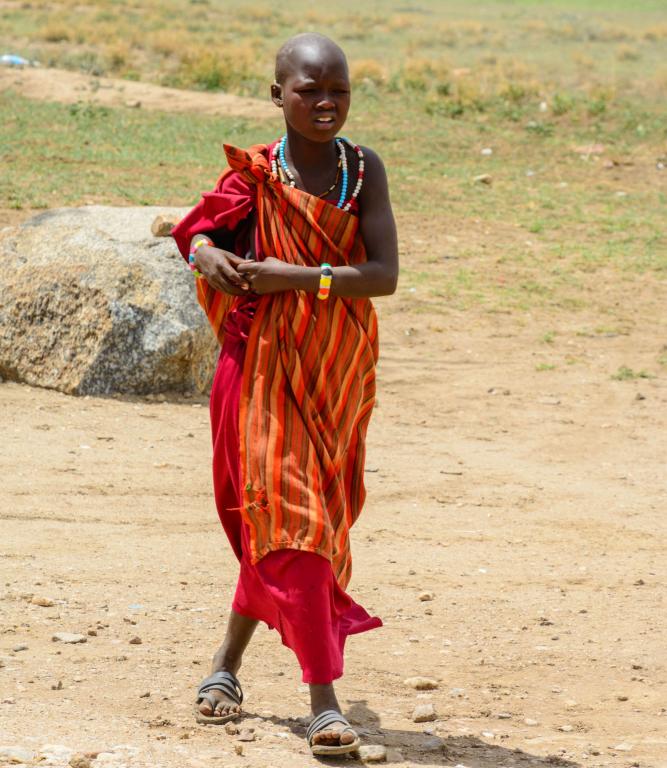
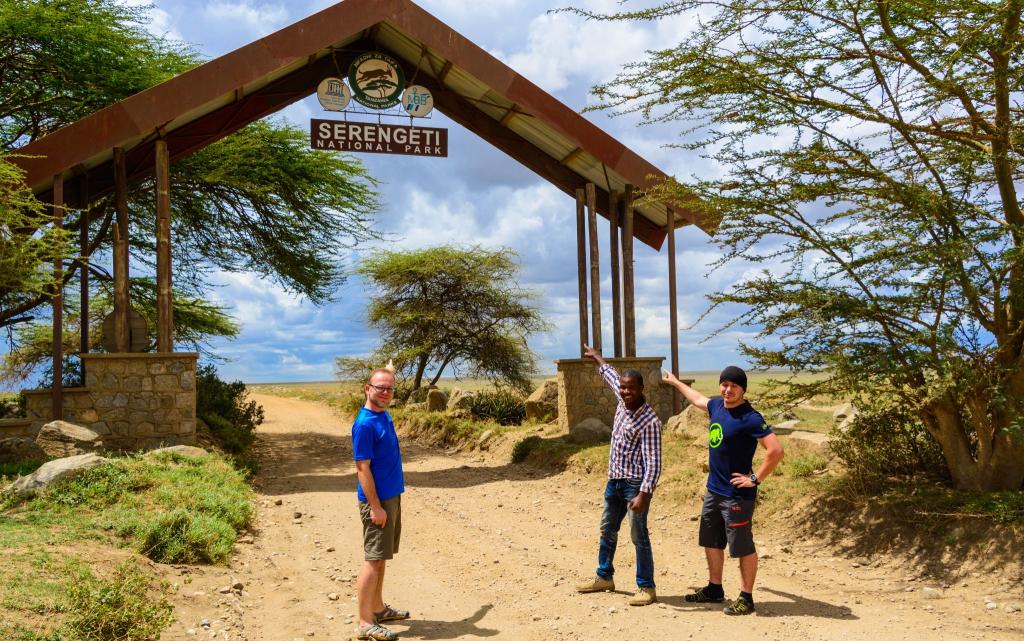
A bit further on the land of the Serengeti National Park there is a Visitor Centre, where everyone has to sign in. We also stop here for lunch.
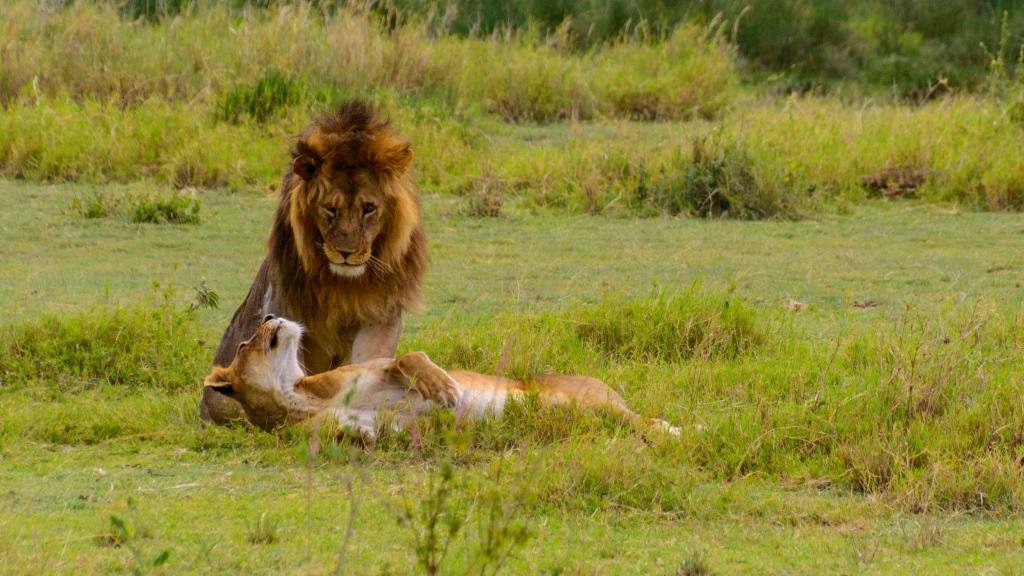
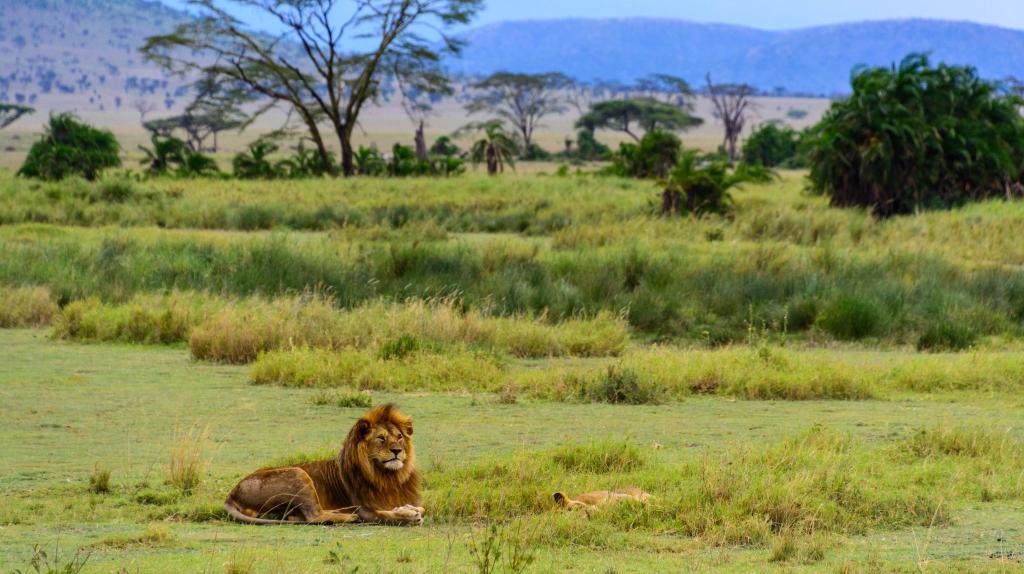
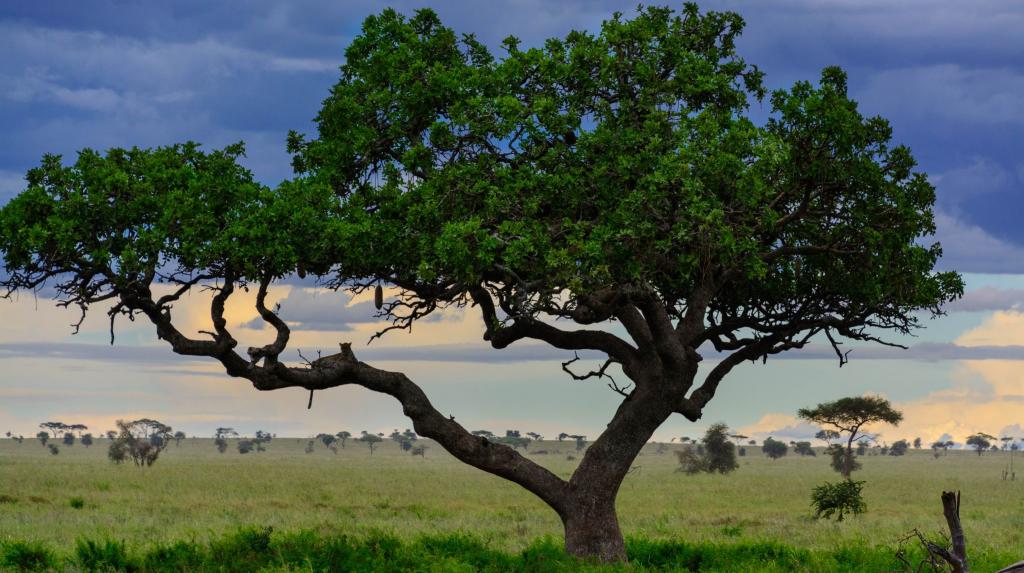
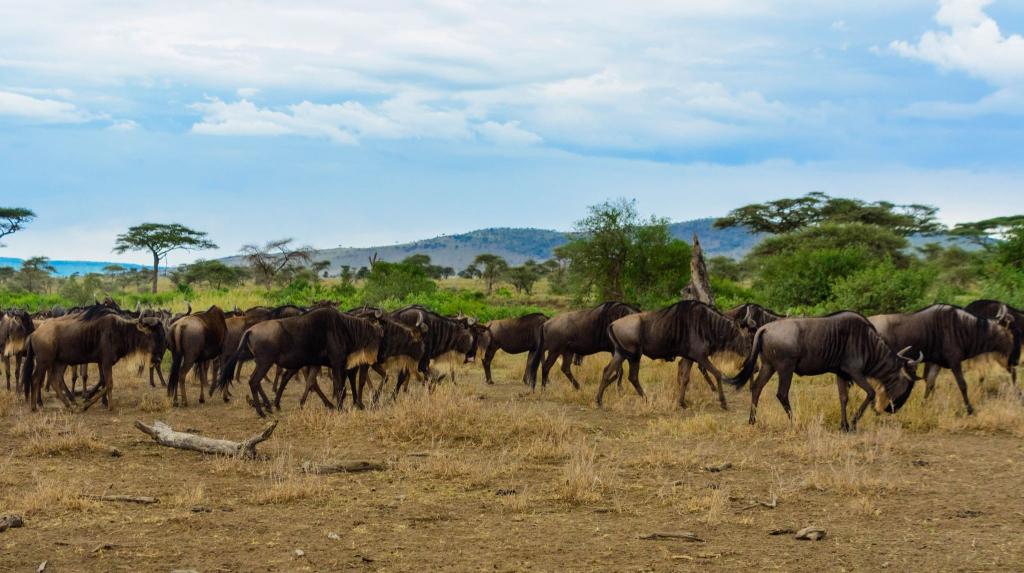
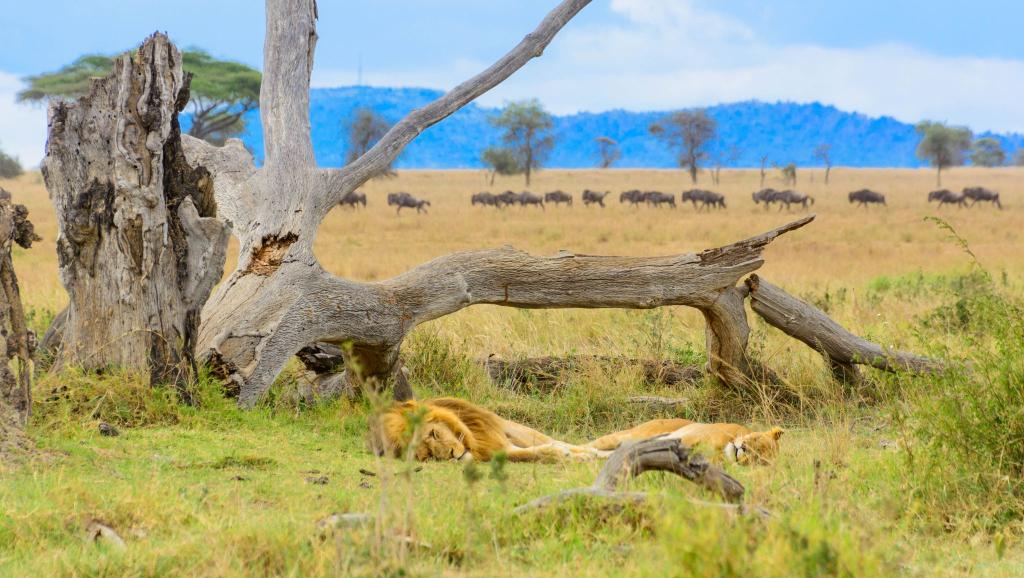
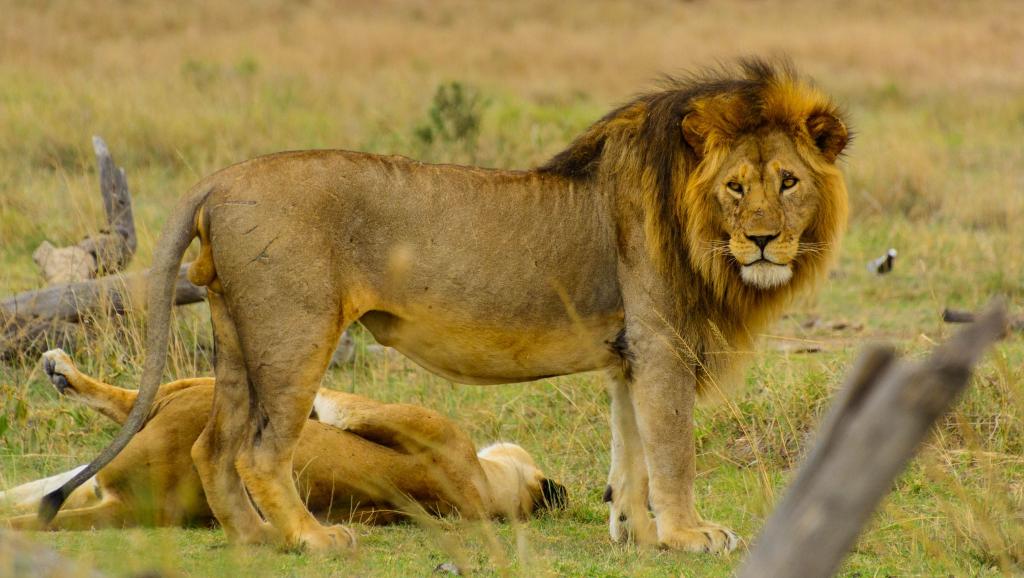
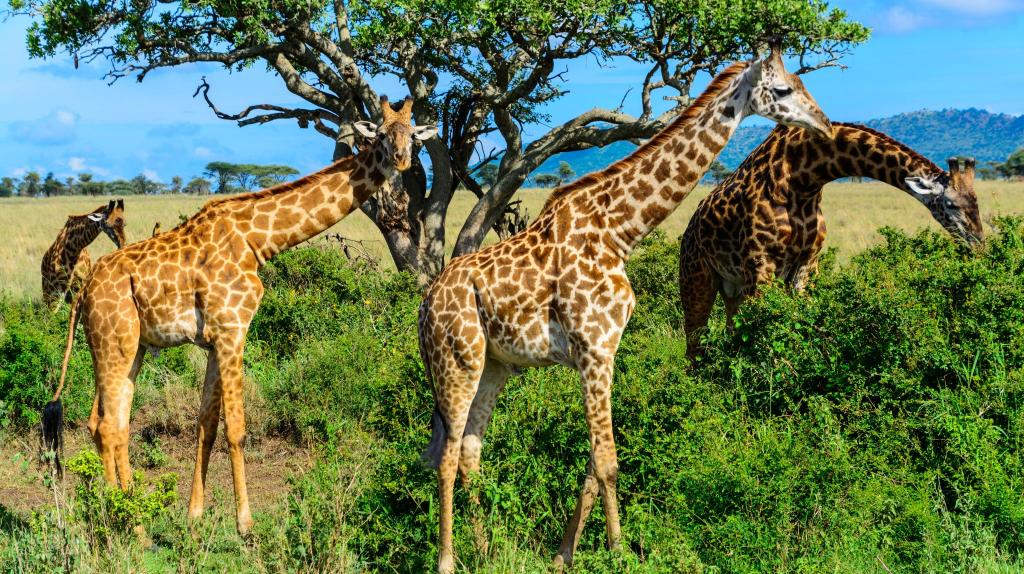
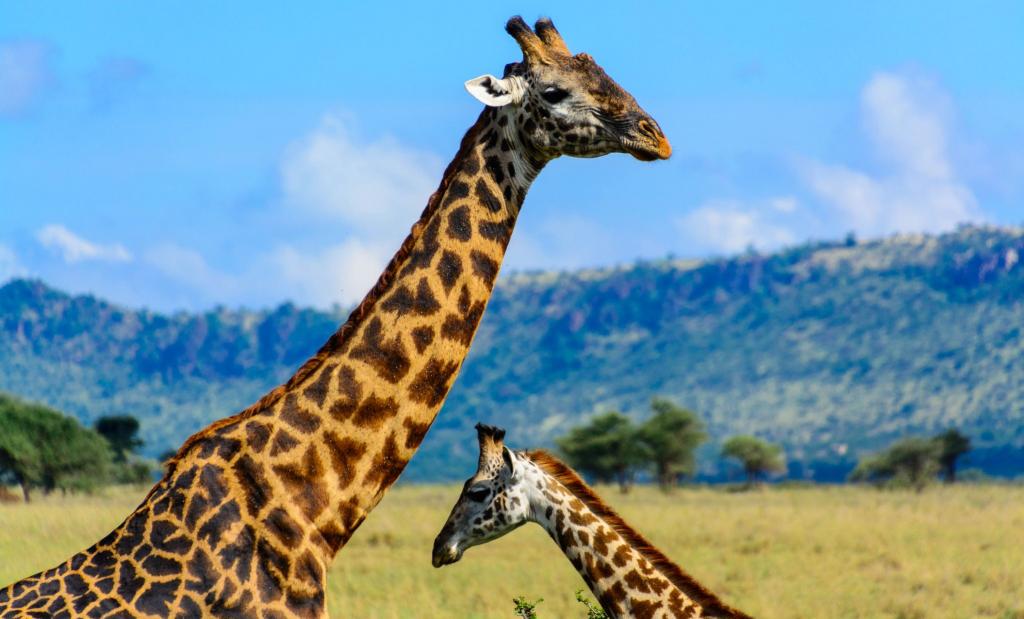
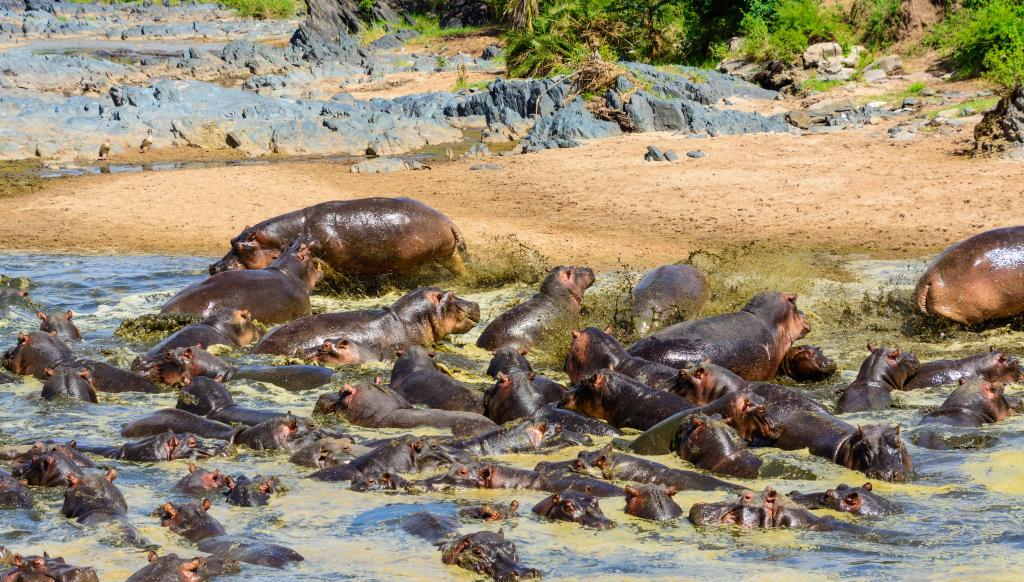
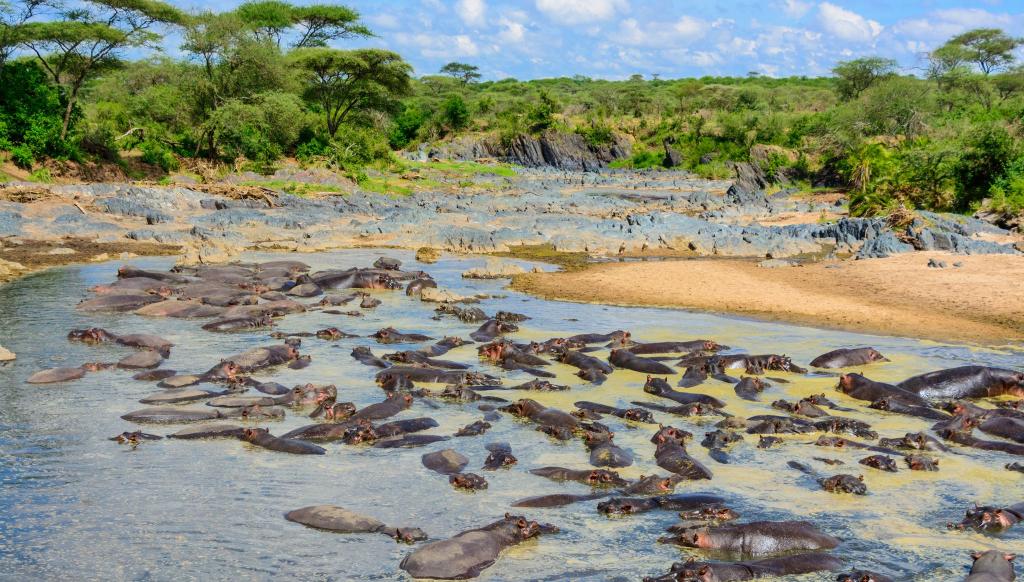
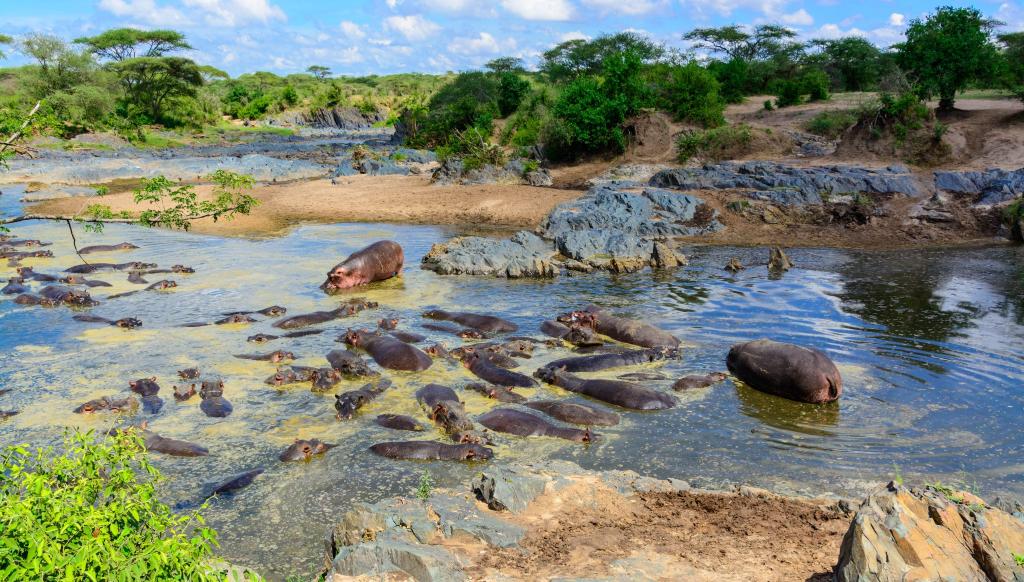
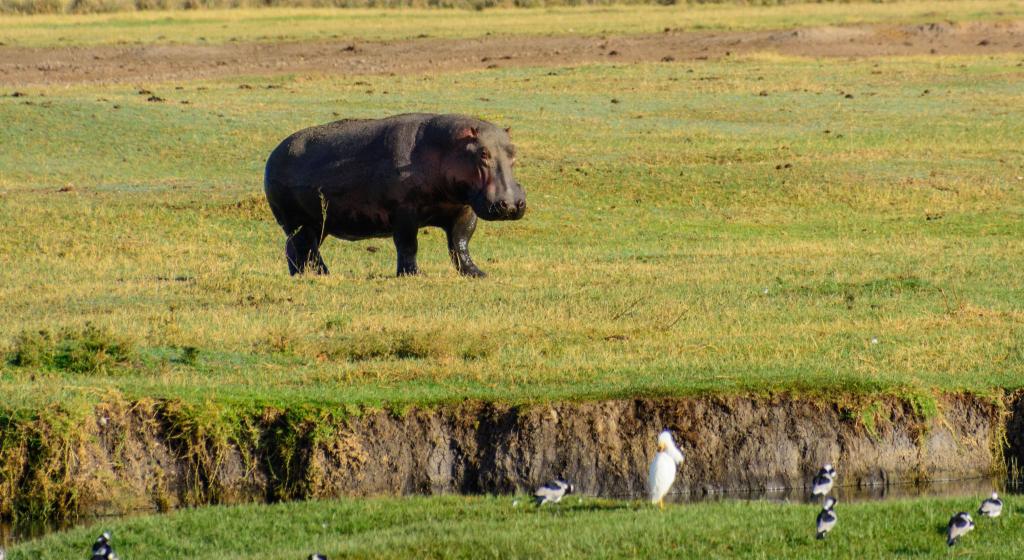
We have 3 hours of driving left to our campsite. On the way we encounter lions passing by very close to the road and even one couple in a mating ritual, which can take up to ten days. We also encounter some hippos relaxing in the rivers, gnu, giraffes, antilopes and a lot more.
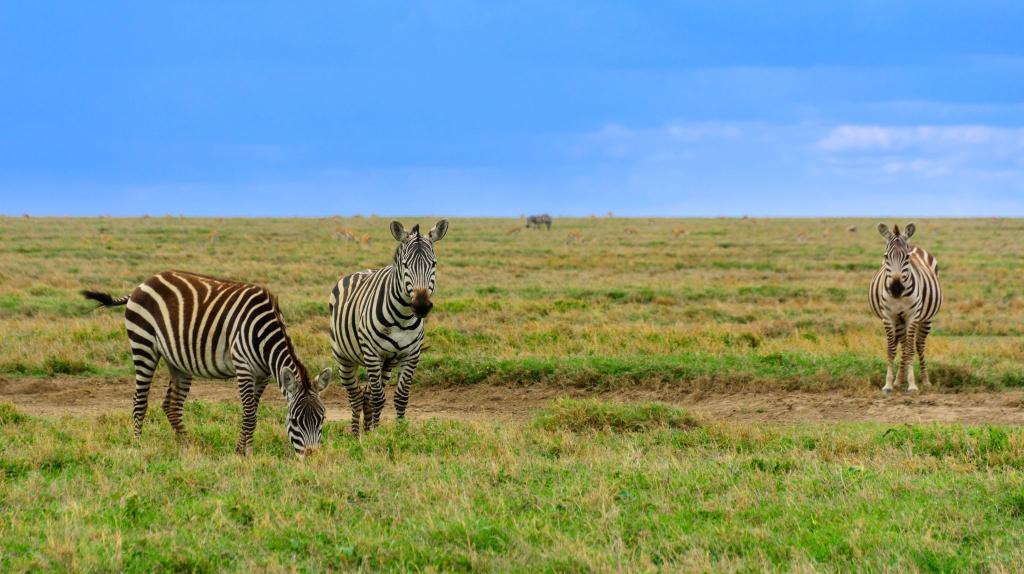
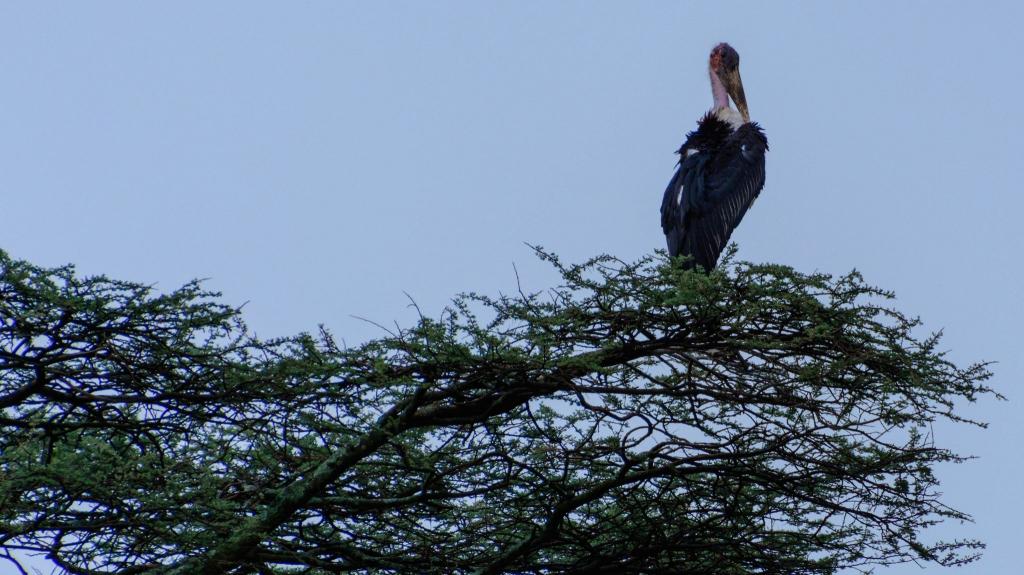
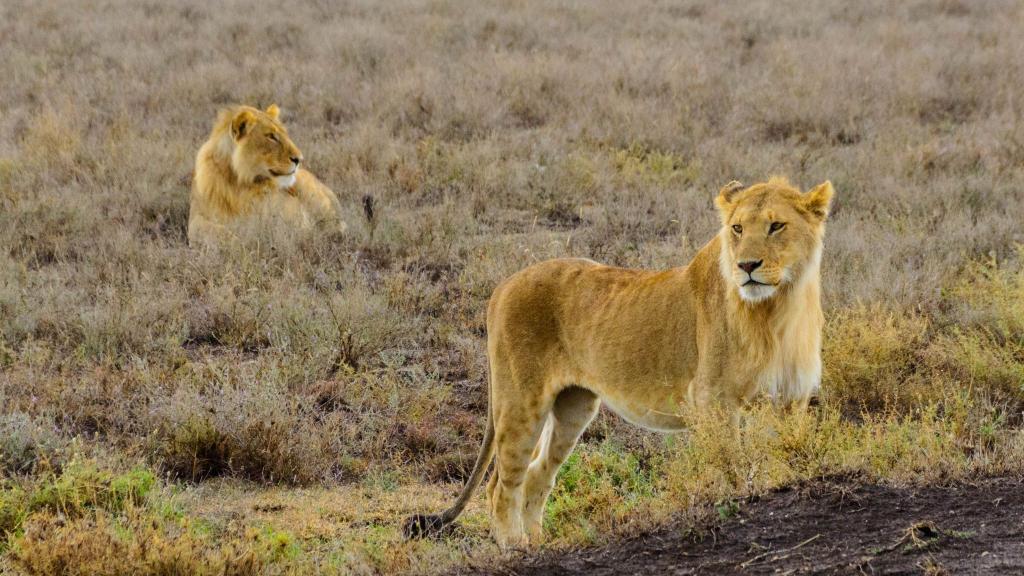
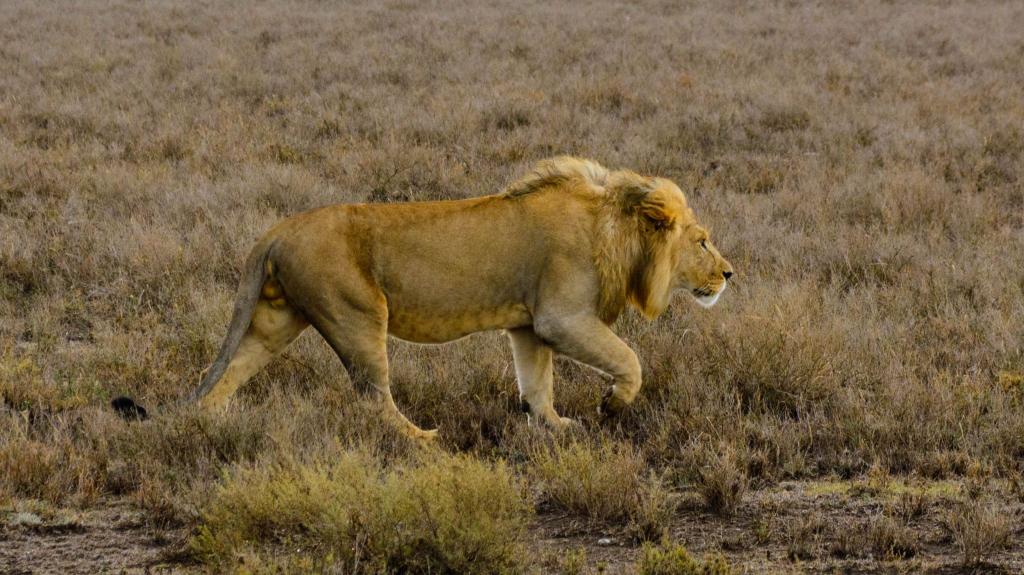
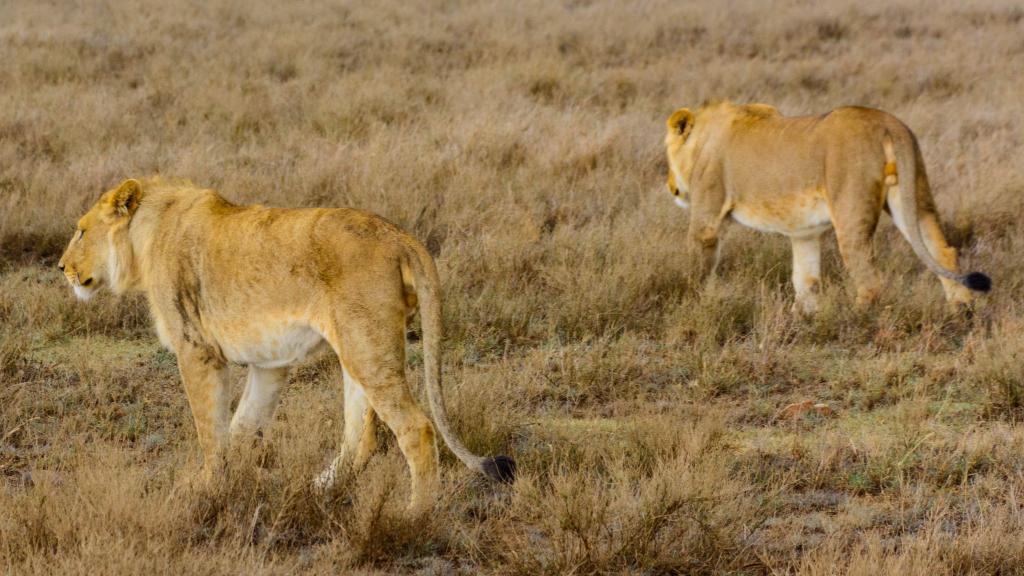
It starts to fade when we arrive at our campsite. We are going to sleep here In tents for two nights, in the wilderness, where we can hear animal noises all the time. The camping is very simple with no hot showers.
This is all for today as after our dinner we have nothing left than just go to sleep.
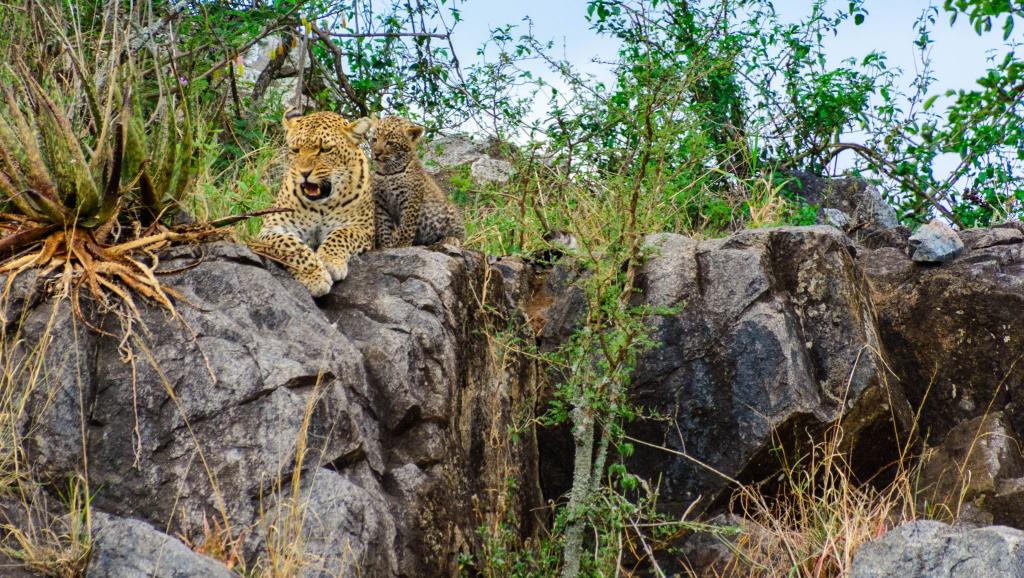
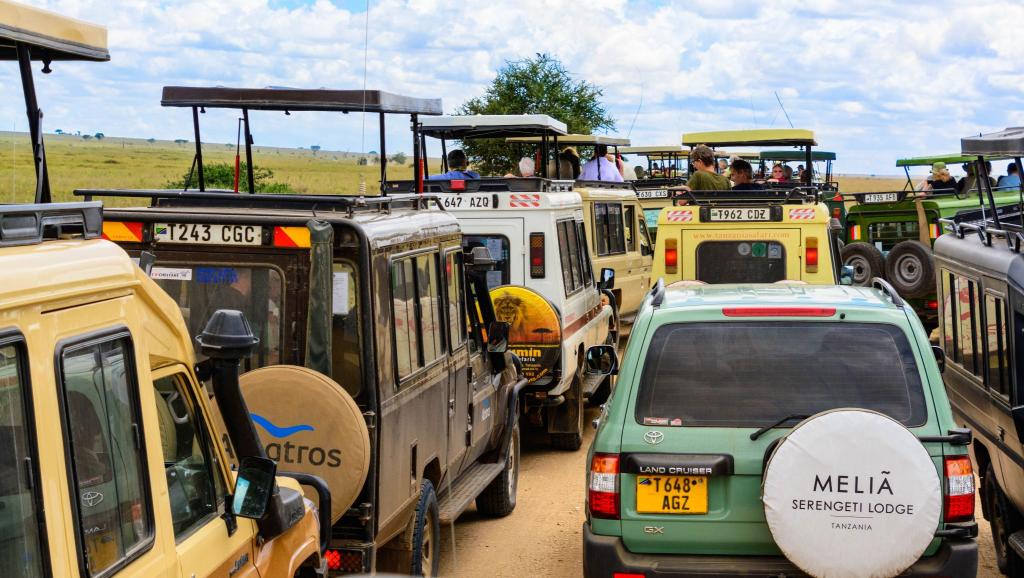
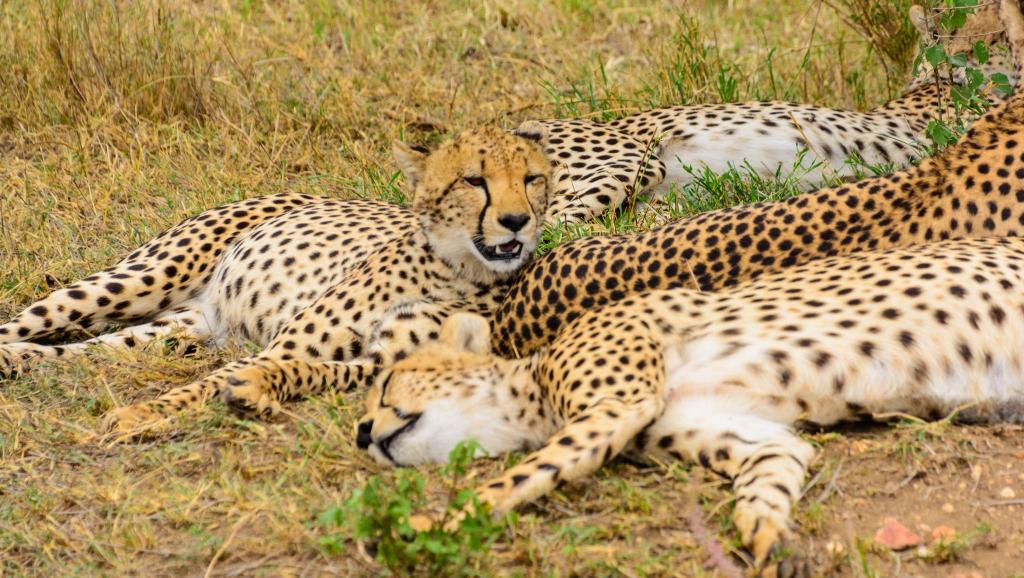
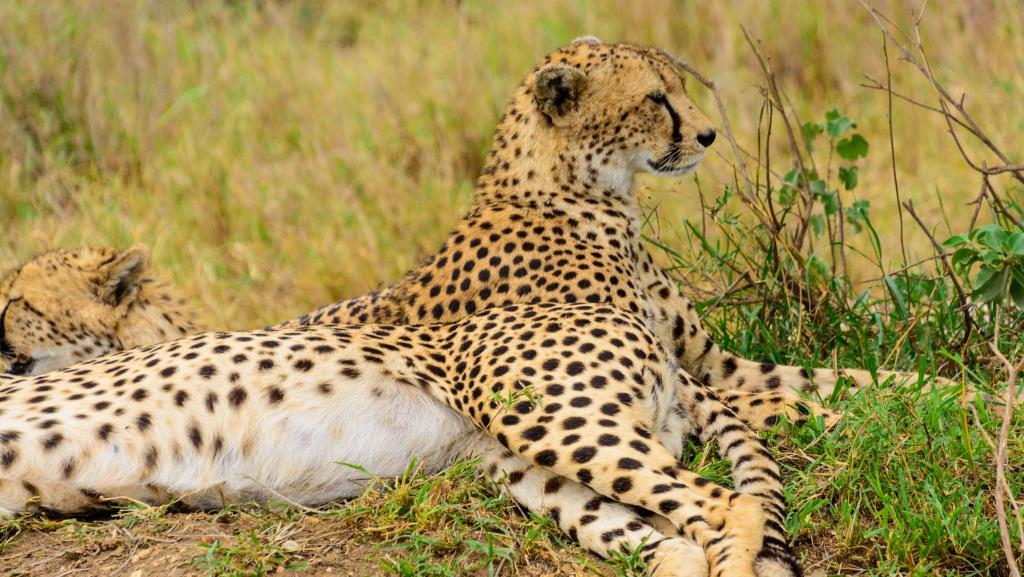
Today we drove all day in the Serengeti National Park. We encountered a lot of giraffes, gnus, antilopes, hippos and cheetahs lying at the side of the road. The traffic, especially around those cheetahs and the lions was quite heavy, where a few dozens of Land Cruisers appeared within minutes.
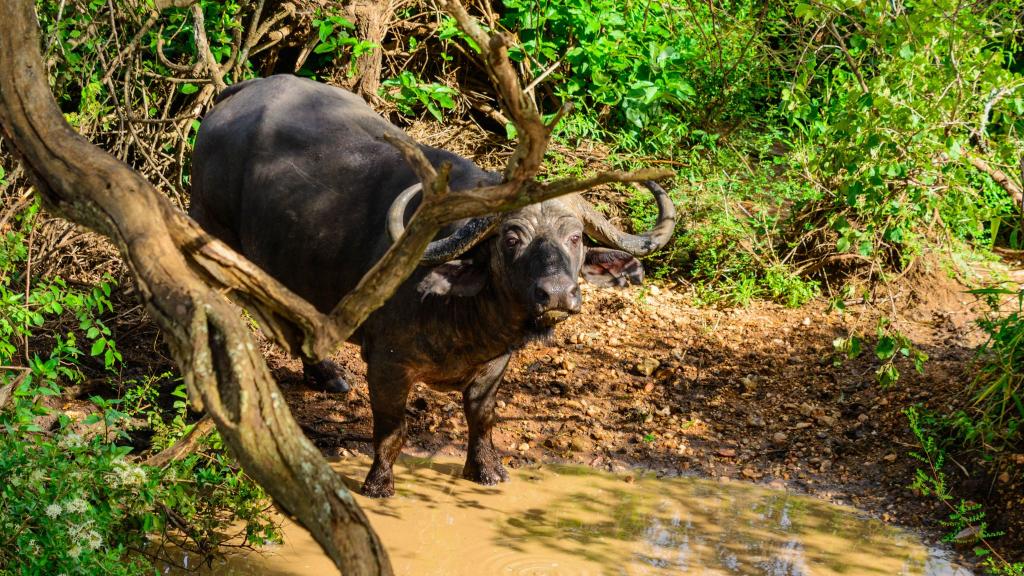
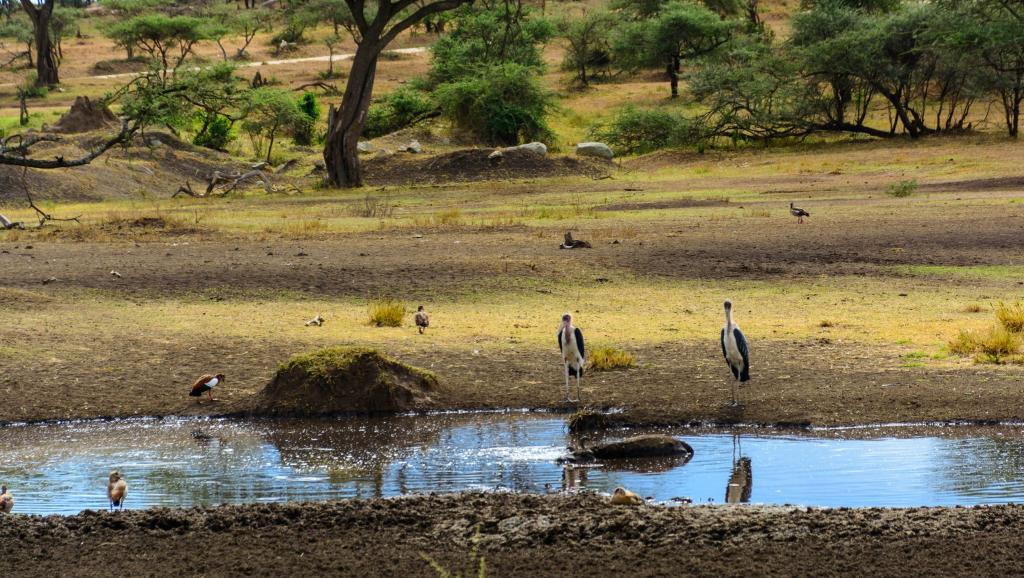
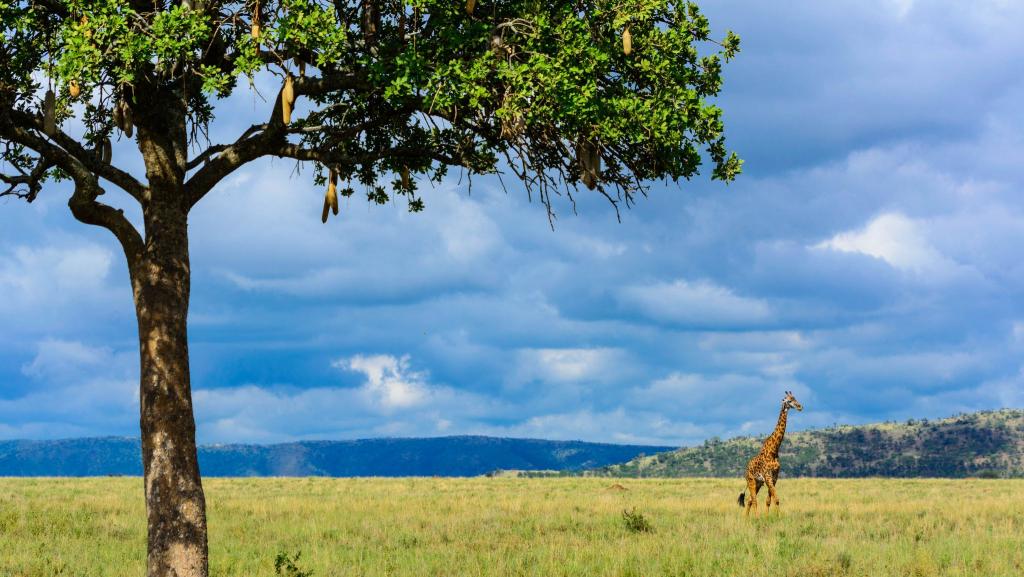
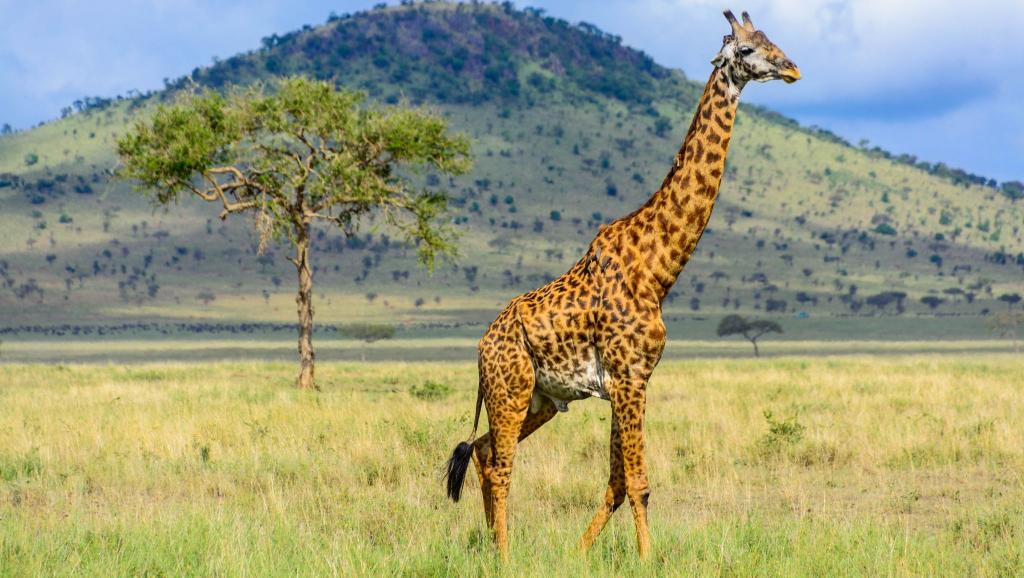
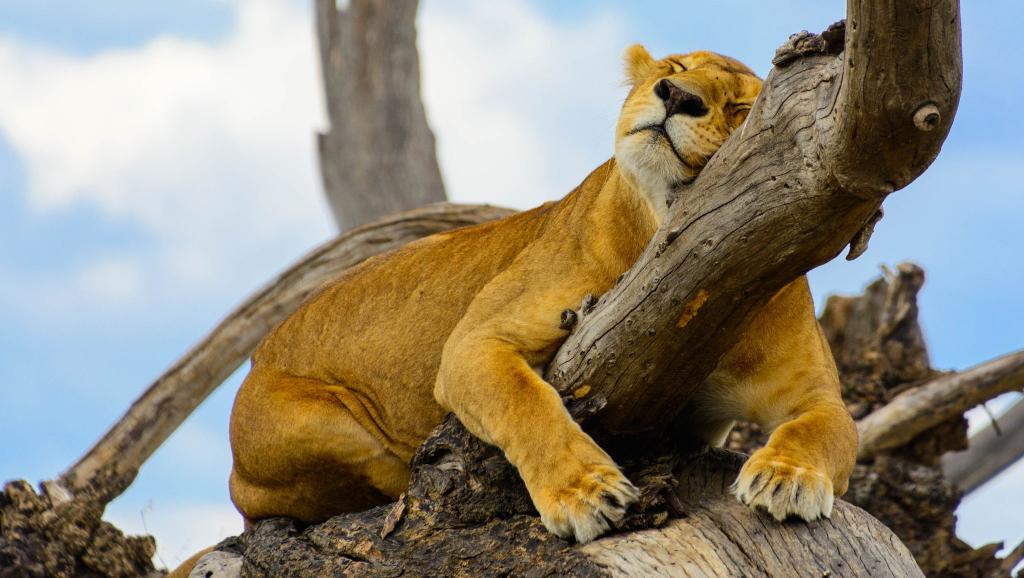
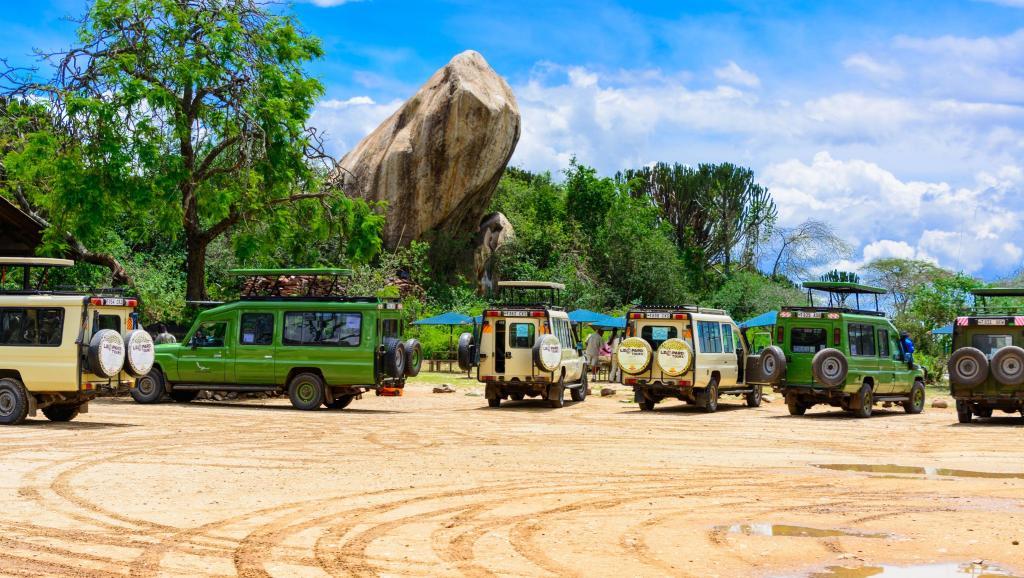
Before lunch we stopped at the park Visitor Centre where one of the guides told us about the migration of wild animals in the park. He also explains us that the lack of trees is caused by the fact that the eruption of the volcano produced lava, which is everywhere under a very thin layer of soil.
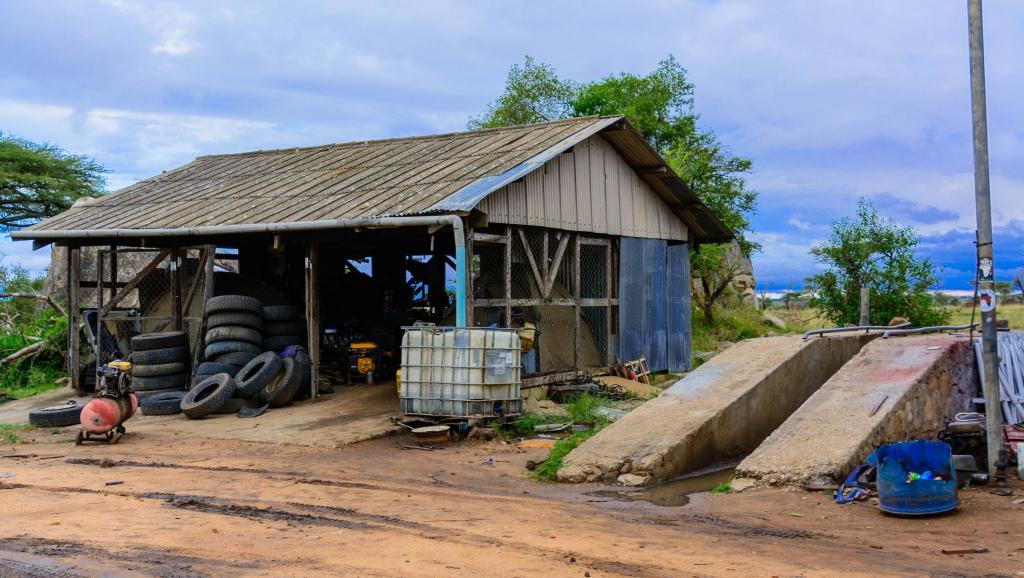
In the evening during our drive our car breaks down and we were facing the risk of having to push the car in the area controlled by lions and aggressive hippos. Luckily we managed to drive to the nearby mechanic, who was able to fix it within half an hour and therefore saved our lives ;)
At the end we drove very close to the flocks of hippos and male giraffes fighting to get the female.
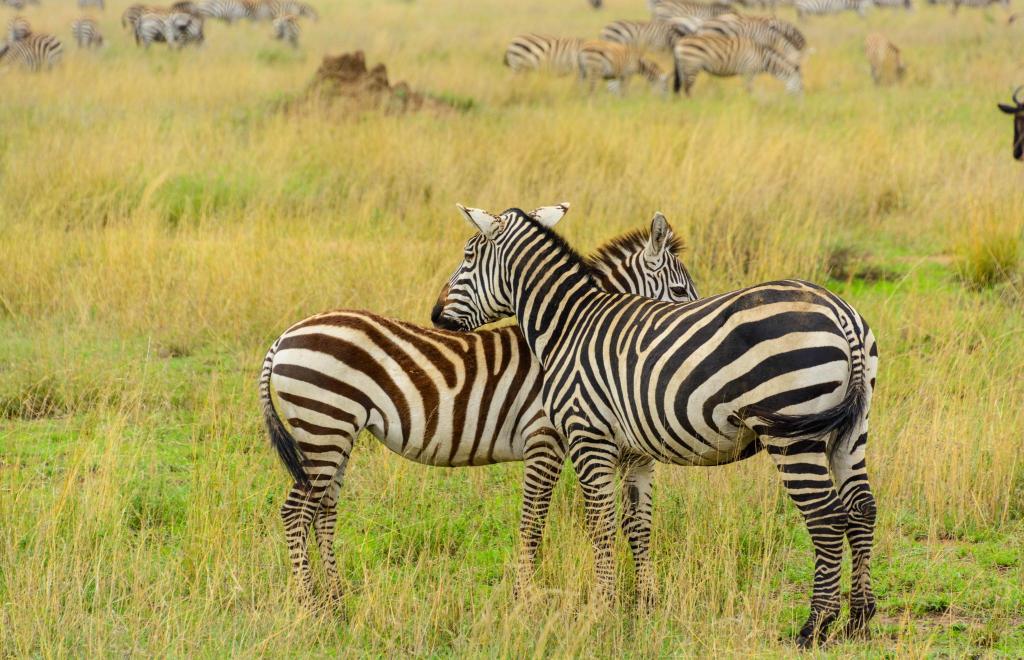
Last night we had a rough sleep hearing wild animals coming to our tents all the time. Making noise pairs of eyes looked at us every time we were trying to leave the tent. All the way to the toilet we ran, lighting everything around with our flashlights and thinking whether the light with lure the wild animals or put them off. Luckily there were no human casualties, but we had an impression that the predators are hunting for us. As it turned out that a few buffalos, hienas and zebras wondered around our tents.
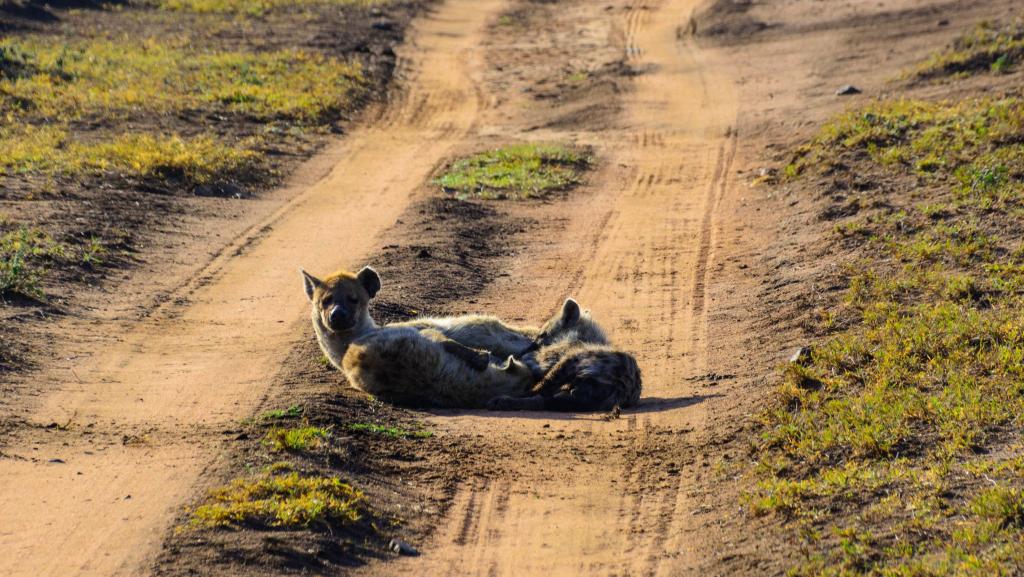
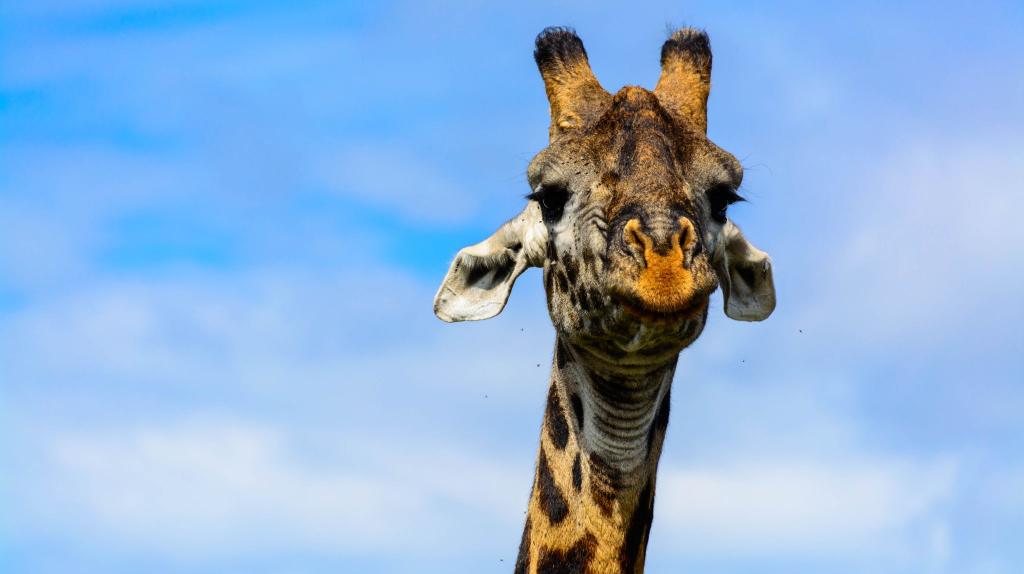
We got up at 6:30am and after a quick cold shower and coffee with biscuits we leave for our last drive in Serengeti. On the way we encountered a lot of gnus, a few cheetahs lying near the road, lots of giraffes and hippos, which are told to be the most dangerous animals. On the way to them we had to drive through the river with lots of them in the water. We also saw vouchers tearing apart a gnu that died in the water yesterday.
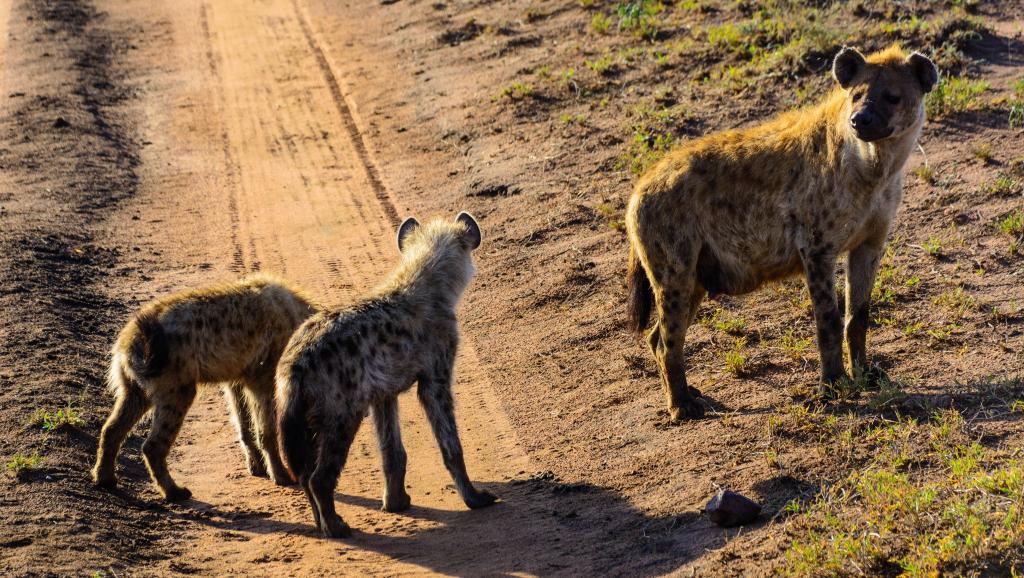
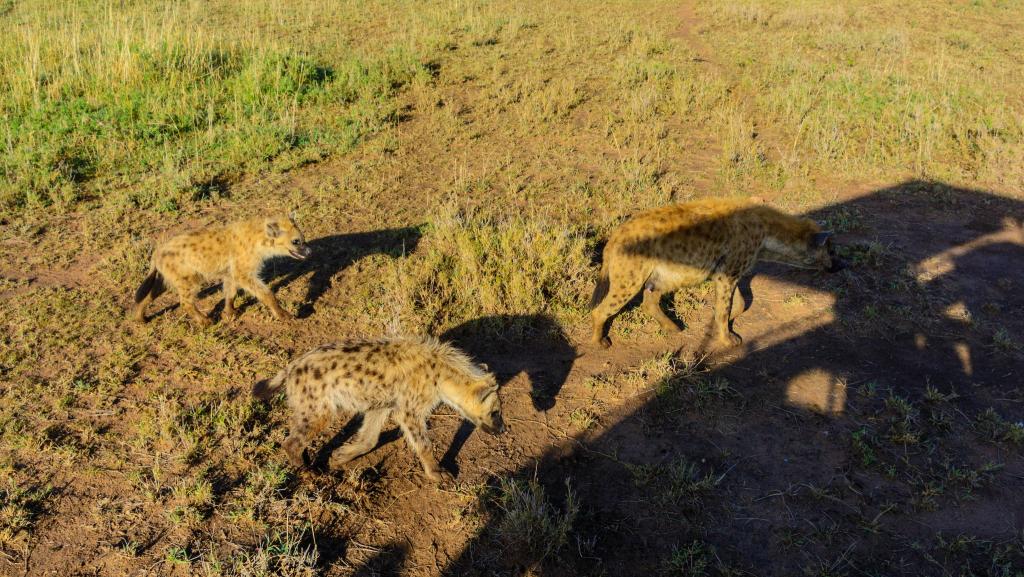
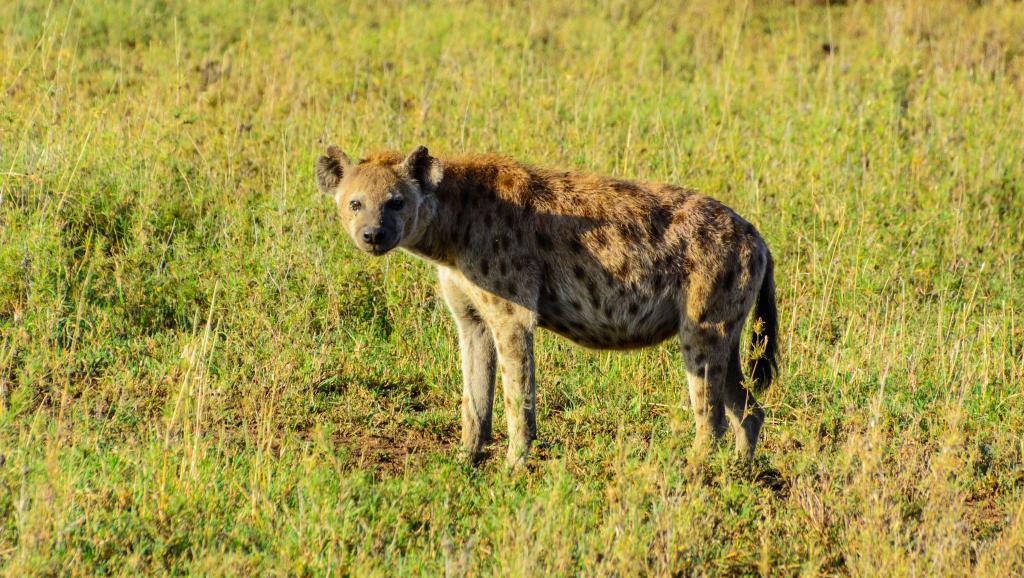
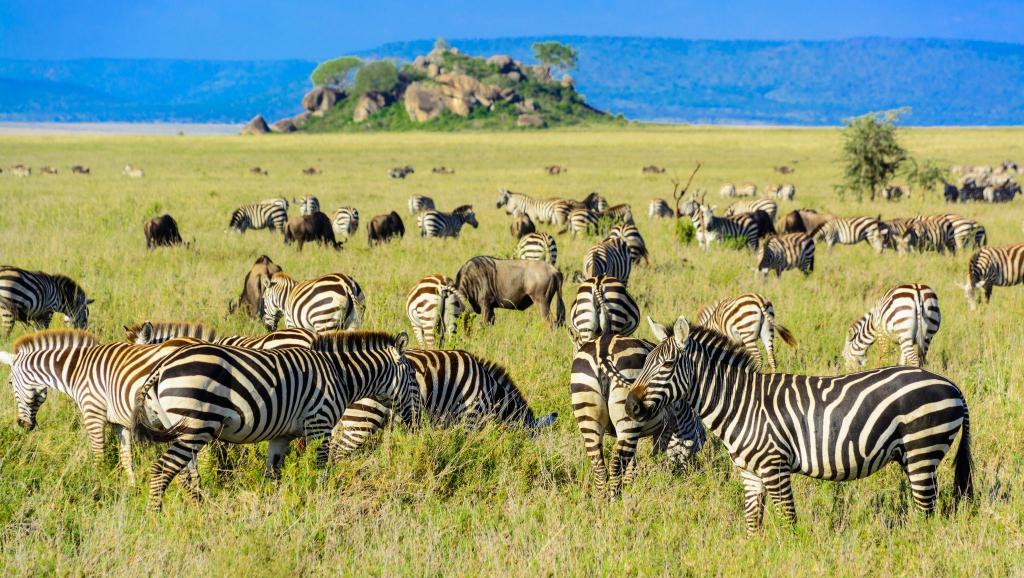
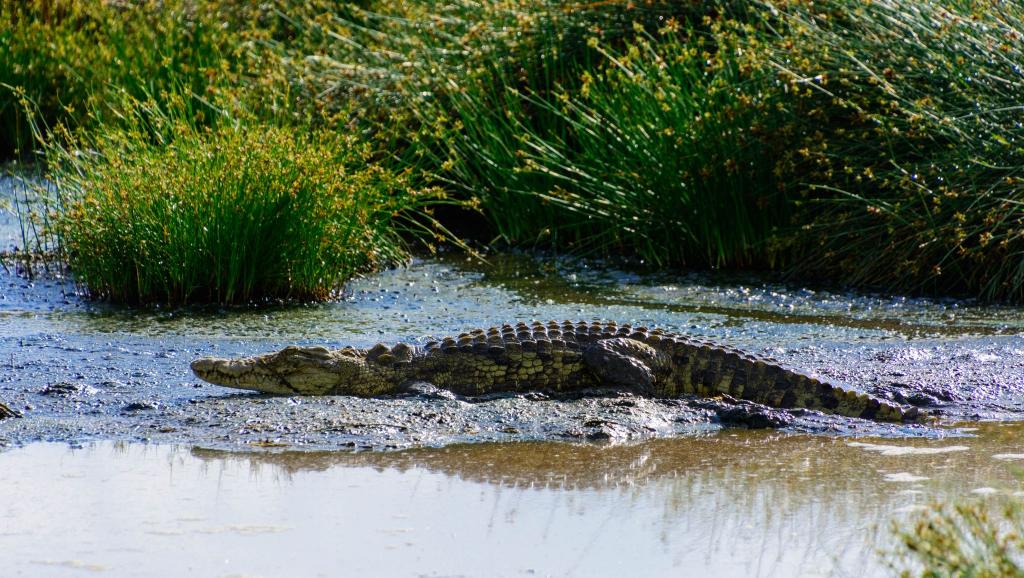
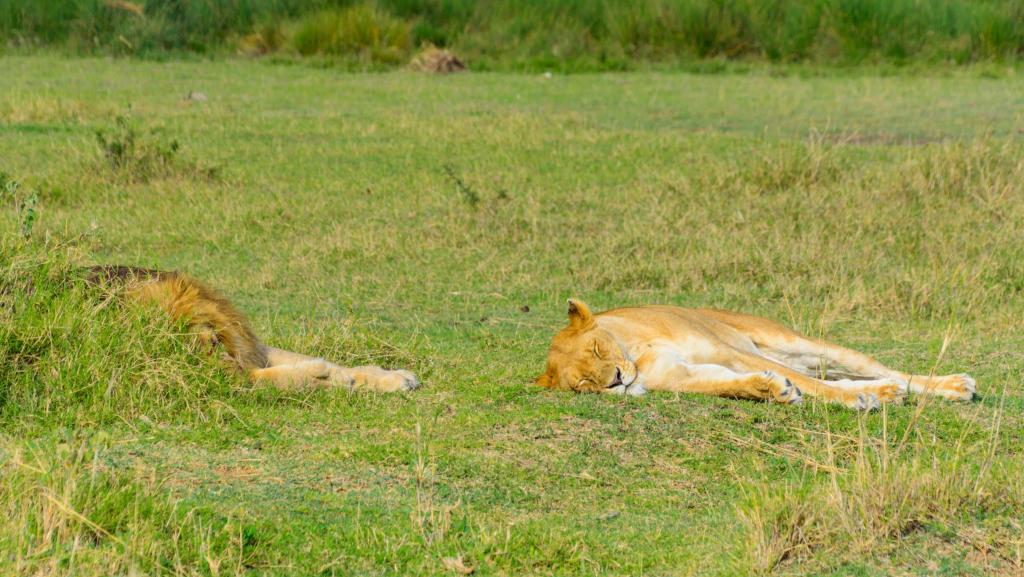
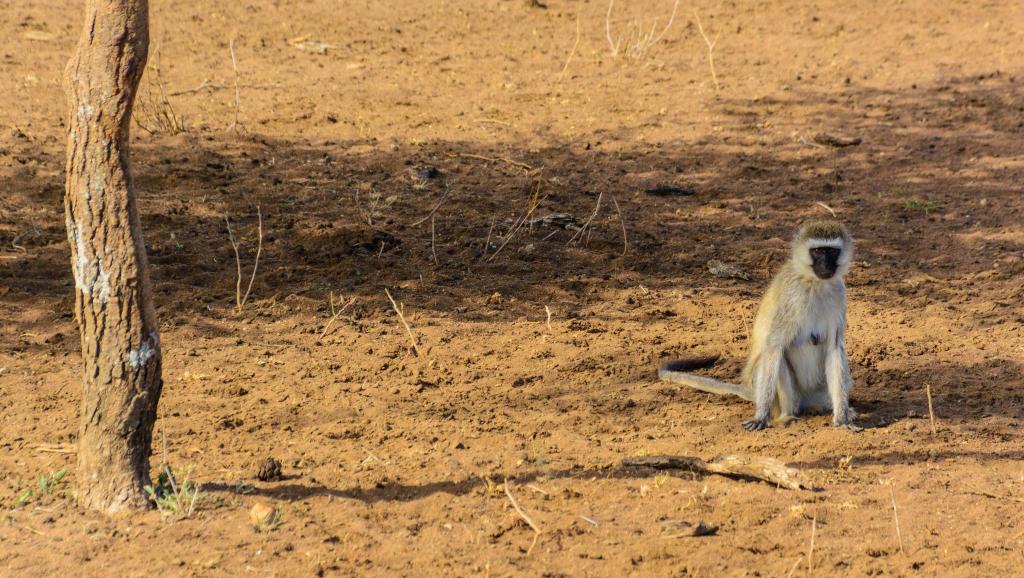
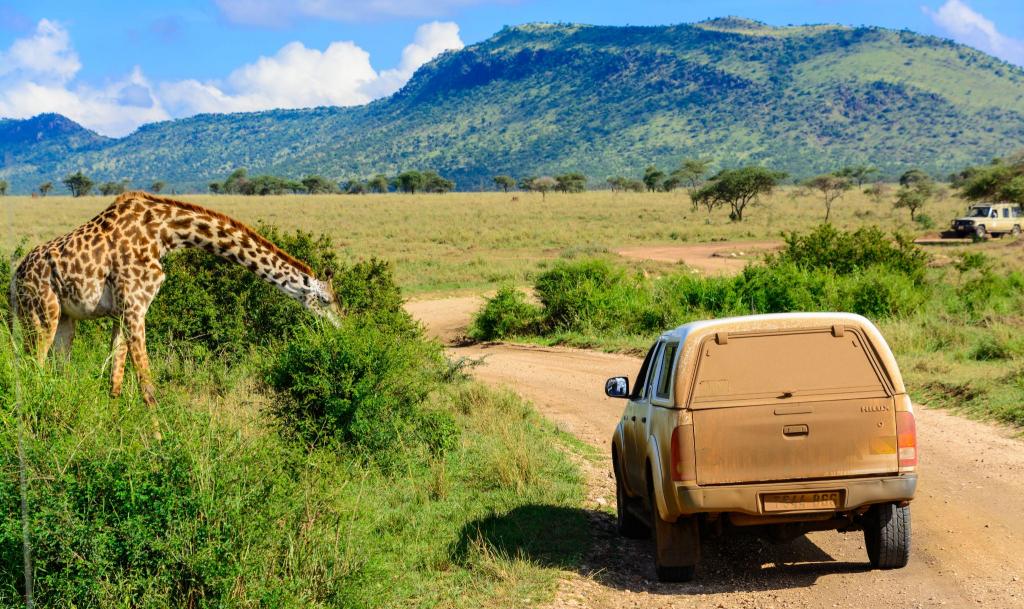
Around 1pm we get back to our campsite for brunch. Thankfully our stomach problems ended and most of us were able to enjoy this nice meal.
The next four hours we drove from Serengeti to our next camp in Ngorongo, where we arrived around 5pm. On th way we pass by Masai villages. As our guide explained, in almost every one of them there is a school.
Here in Ngorongoro, near the canyon we will spend the night. The conditions here are way better than in the previous one. Apart from hot showers and clean and well maintained toilets we get some traces of a Wi-Fi signal from a nearby hotel. There is one catch - where you can get the signal a lion was spotted yesterday.
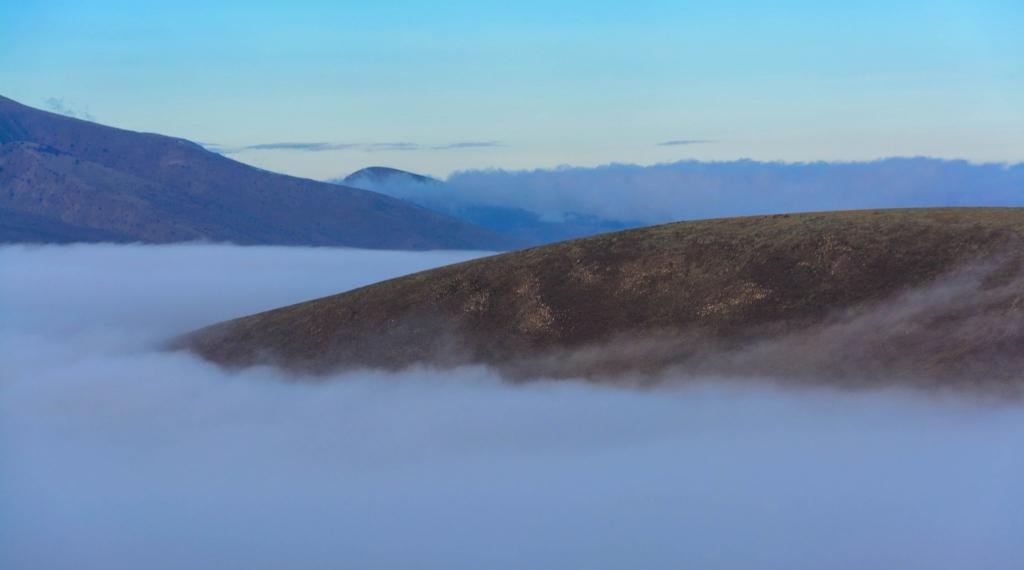
We get up at sunrise as we want to see some hunting animals in the crater, which usually do that early in the morning. Our campsite is on the ridge of the crater and getting down takes us around an hour and a half.
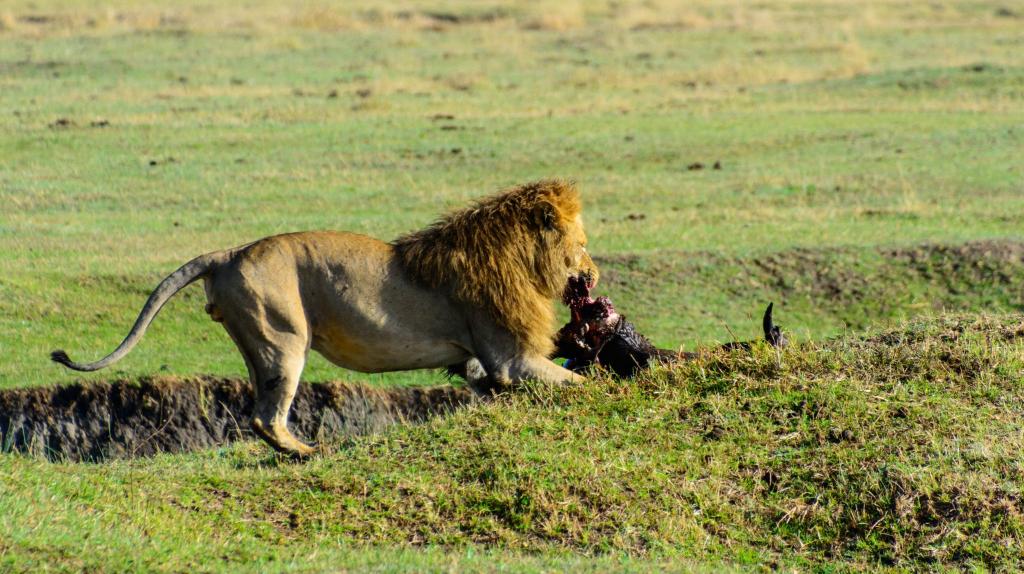
Apart from a large number of zebras and hippos we encounter a few lions fighting for the recently hunted gnu. What strikes us is the view of blood and ripped intestines from the body, what we can see from around 50 metres. We can also hear the sound of broken bones. Around the dead animal there are two lion males and two females circling around.
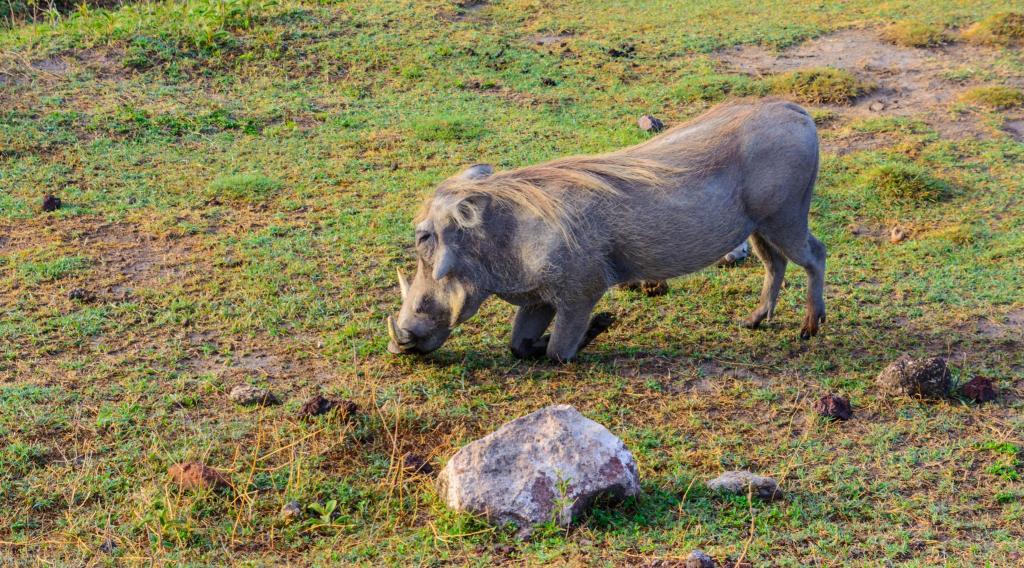
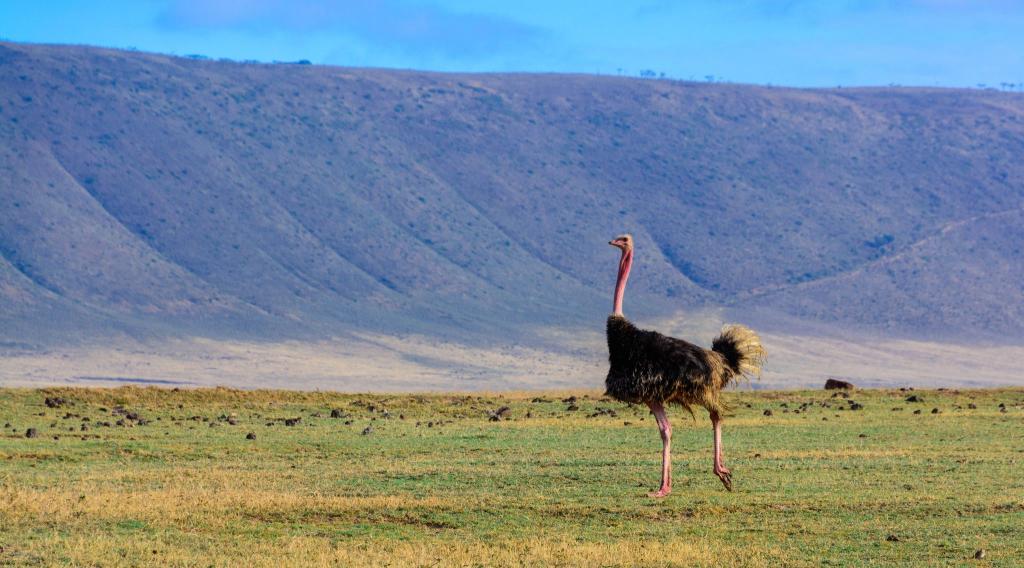
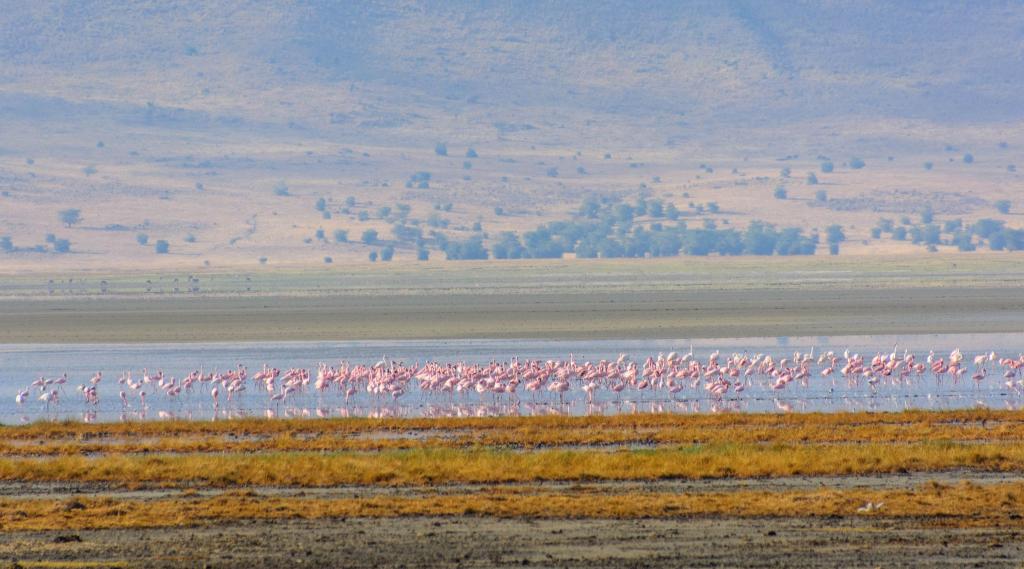
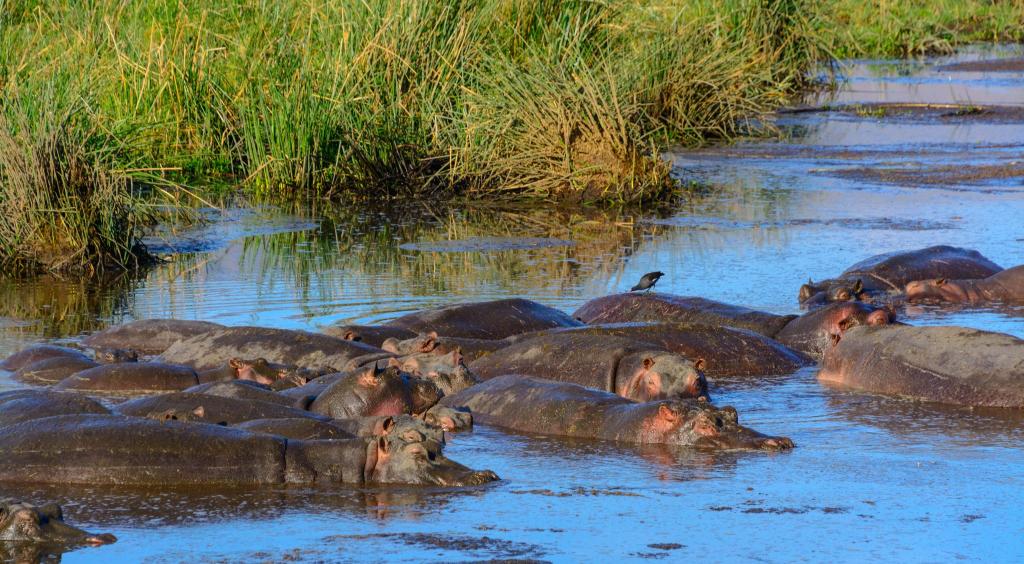
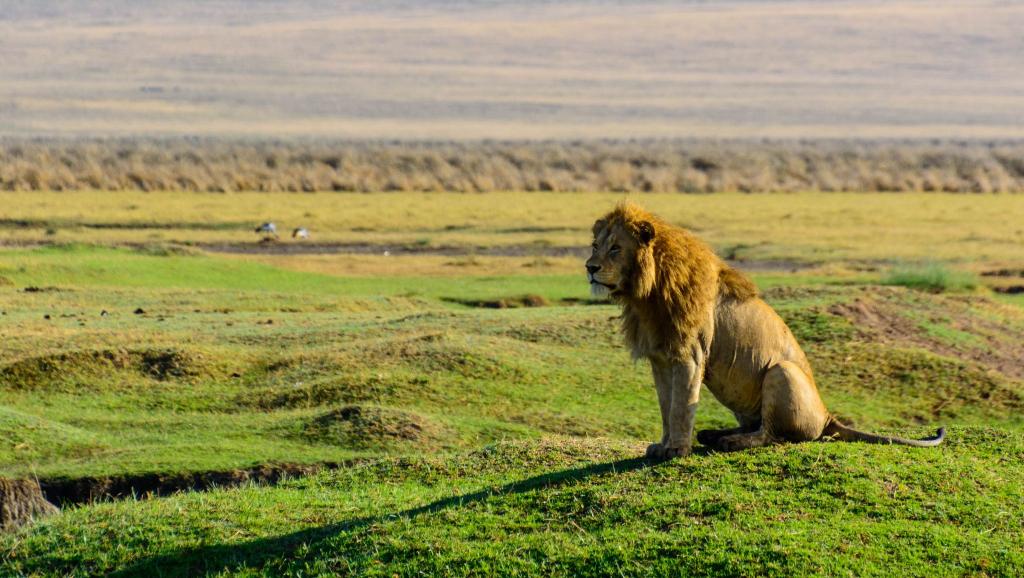
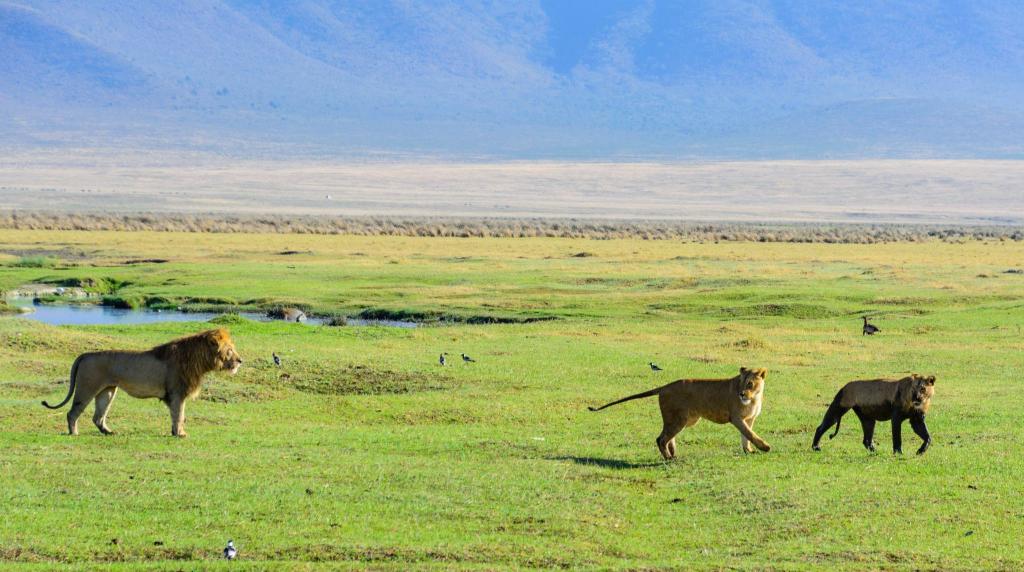
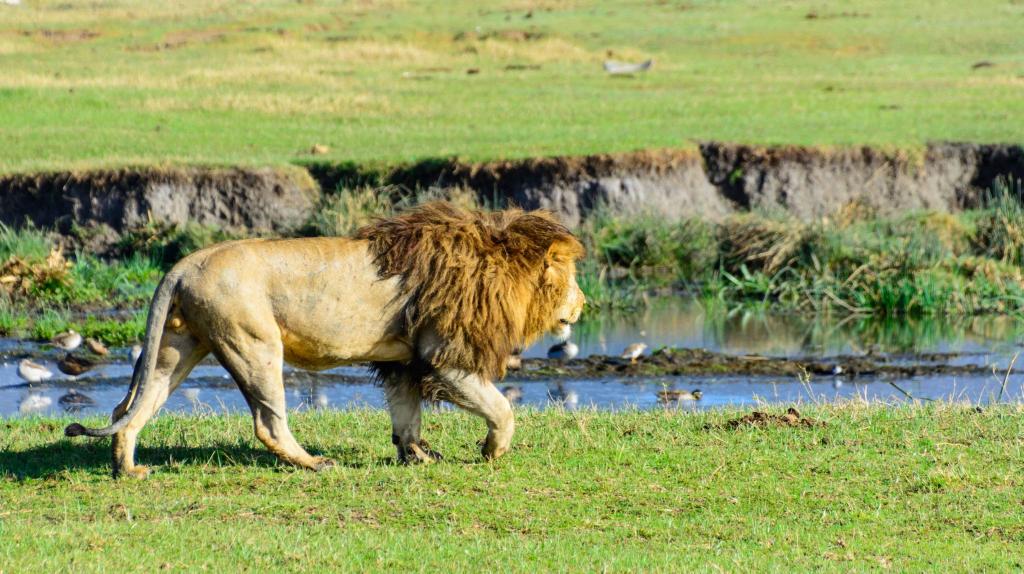
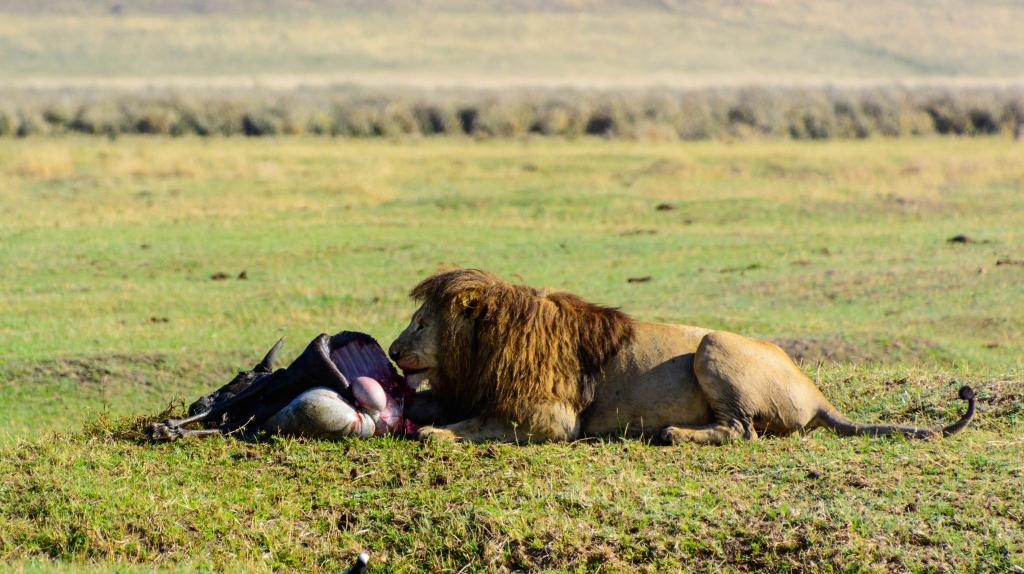
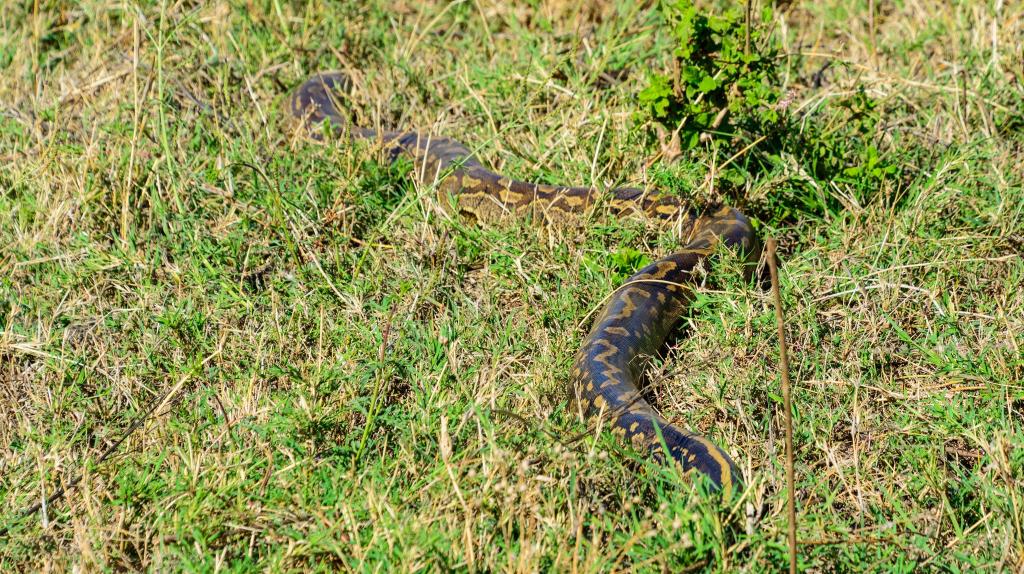
The lions start to approach our car and to walk around us, apparently not caring about our presence at all.
On the way back we encounter a few elephants, but there aren’t that many of them.
Unfortunately we couldn’t see any rhinos, which are very rare here.
We get back to our camp and get on the way back to Arusha, which takes us almost six hours.
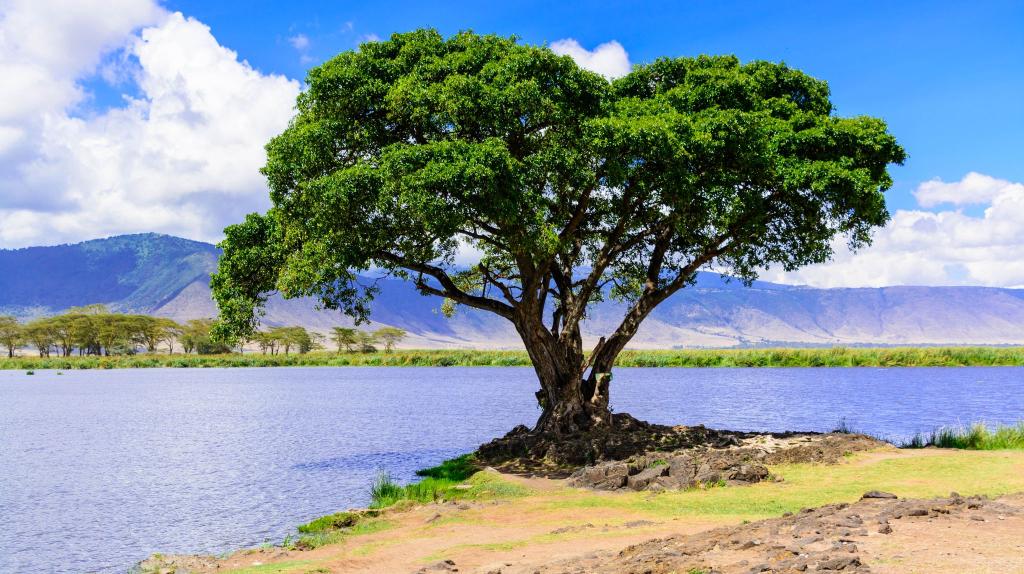
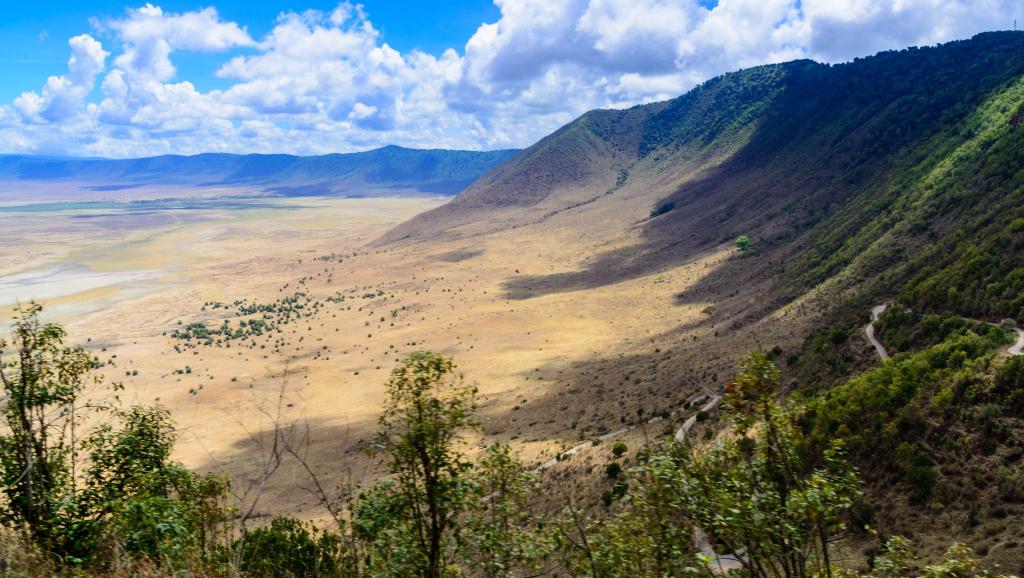
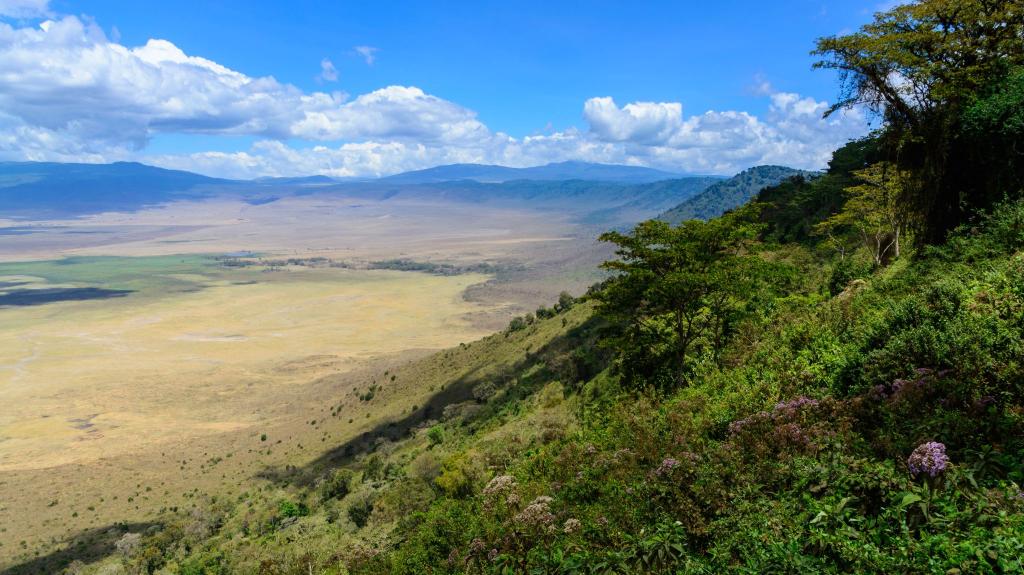
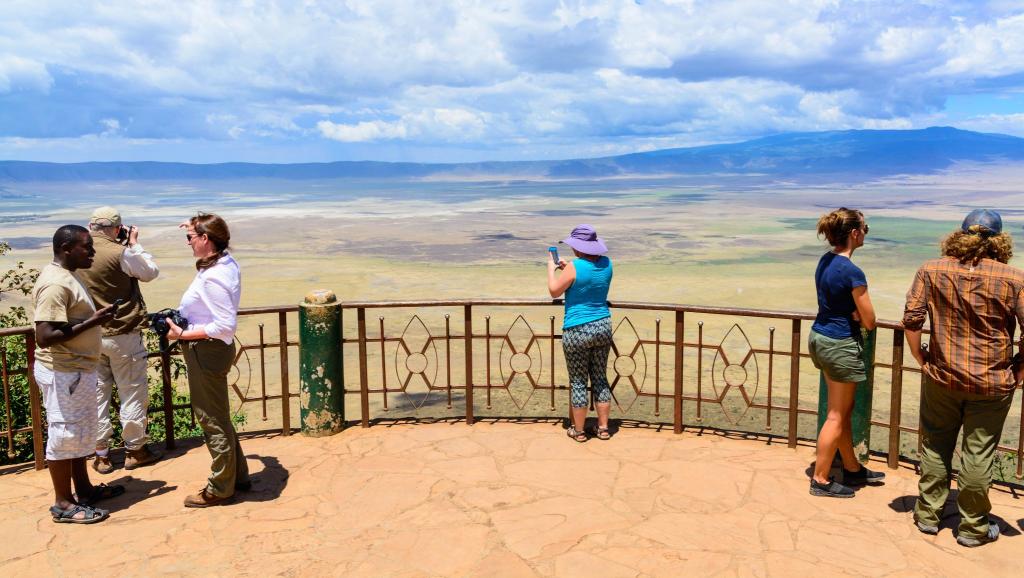
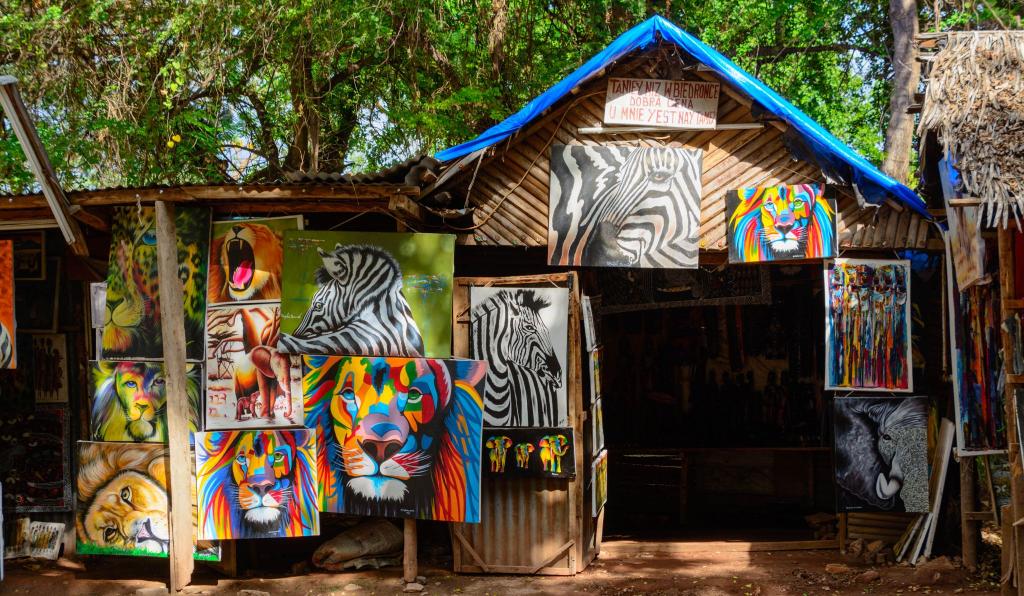
On the way we stop at some villages and small towns for small shopping and to return our tents in one of them. We encounter a shop with a poster in Polish, saying that here it’s cheaper than in the cheapest discount shop called “Biedronka” in Poland.
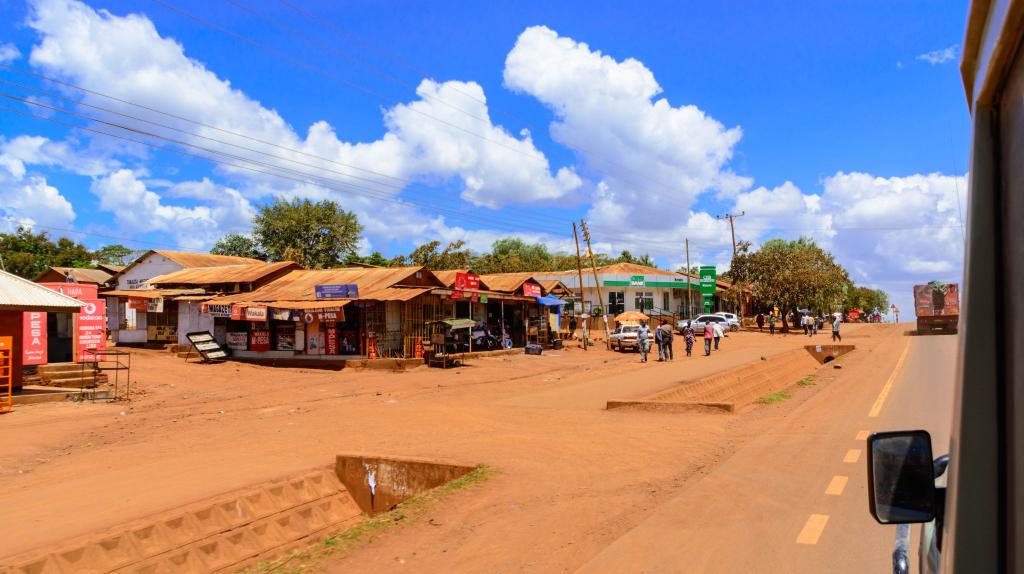
In our hotel we meet with the remaining two people from our group - Sylvester and Emilia, who instead of doing the safari with us chose the hardest route to climb Kilimanjaro, succeeded and came back one day early!
A few from the group went out into town and the rest stayed in the hotel.
The description of today’s day is pretty much not needed as we spent twelve hours on the bus to Dar-es-Salaam. According to the guide it was meant to be ten and we were meant to make it to the last ferry to the Zanzibar at 4:30pm, but we arrived after 6pm.
The bus had air condition and was comfortable, but despite that twelve hours can be exhausting.
Most of the day some disco music was played on full volume and some American war movies with action somewhere in the jungle.
We arrive around 6:30pm, so we will either have to spend the night in Dar-es-Salaam or we can get a flight for $65 per person. We take a taxi to the airport, where we are told that today we won’t go anywhere despite the fact that according to the flight schedule there were two more flights, but in reality the last flight leaves at 6:45pm. We take the taxi from the airport back to the city centre ($15) to look for some hotel and manage to find accomodation in the Rainbow Hotel for $25 per person with breakfast included, which is a very good deal.
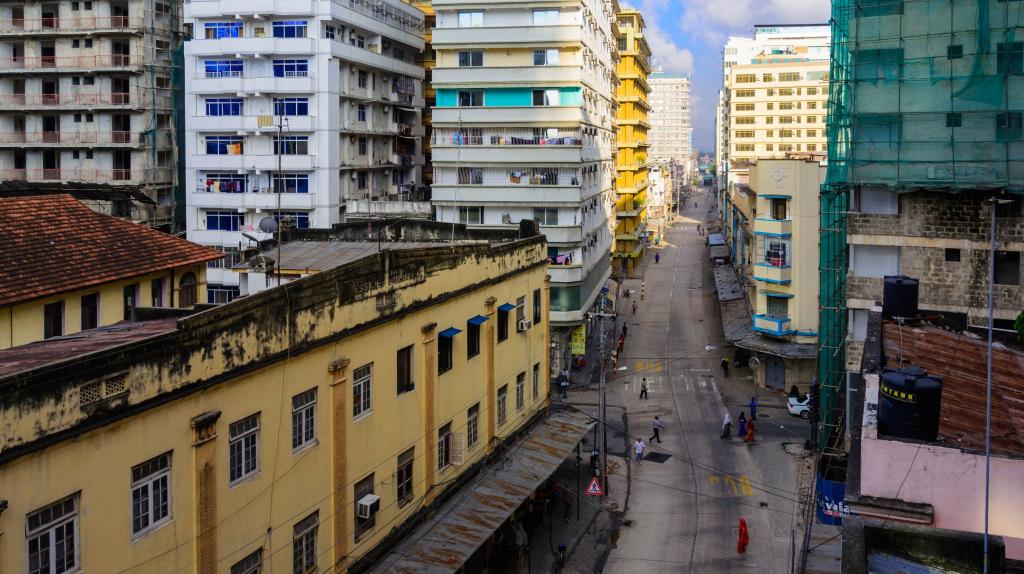
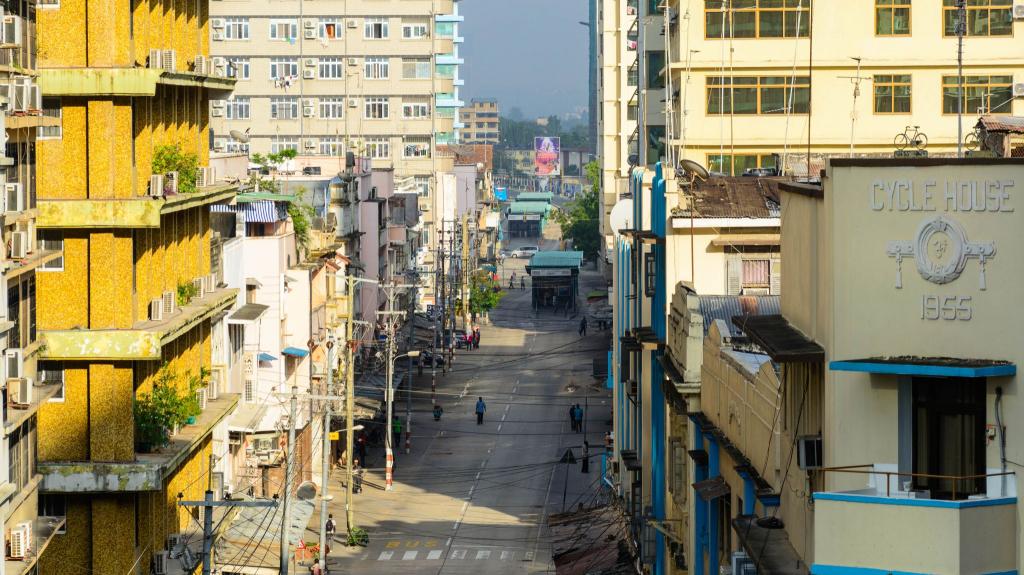
We got to the ferry terminal in ten minutes. There we realized that we got cheated by Lobulu, because the man who was meant to buy us the ferry tickets had only $15 out of $35 and stubbornly refused to buy us those tickets that we paid to Lobulu already, which ended up with a big argument. Therefore, we don’t recommend this guide, who turned out not to be honest and cheated us for $150.
Finally we had to face the extra cost and paid for the tickets again. We checked in our bags and got aboard sitting on the top deck with the view of the ocean.
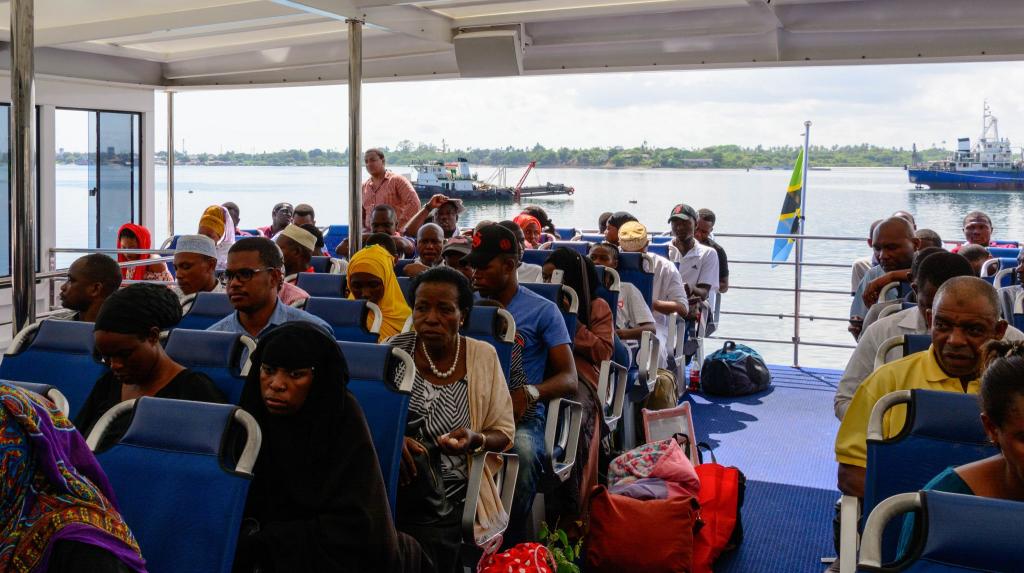
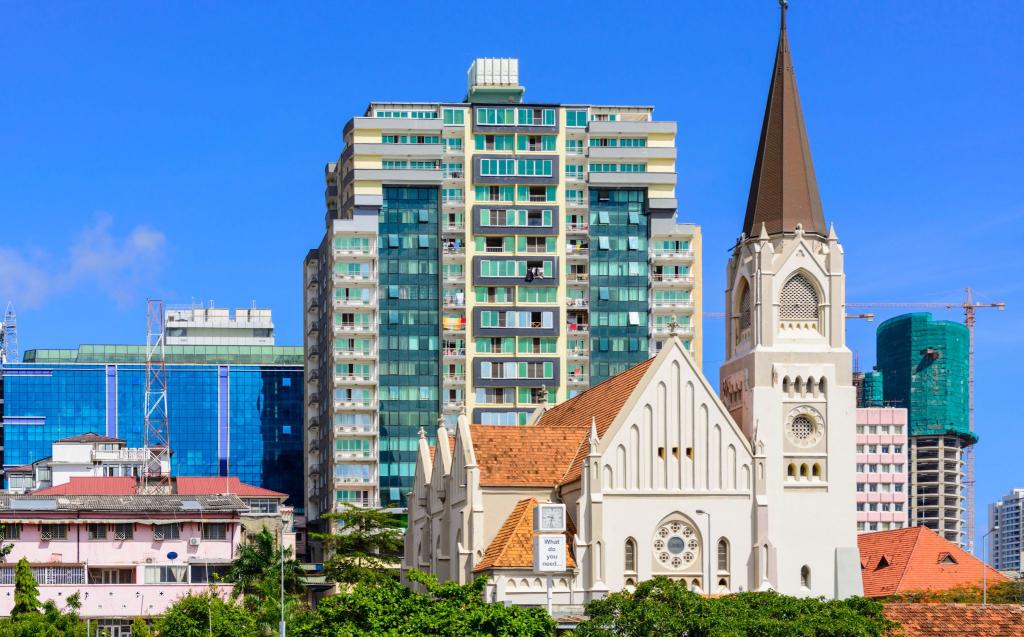
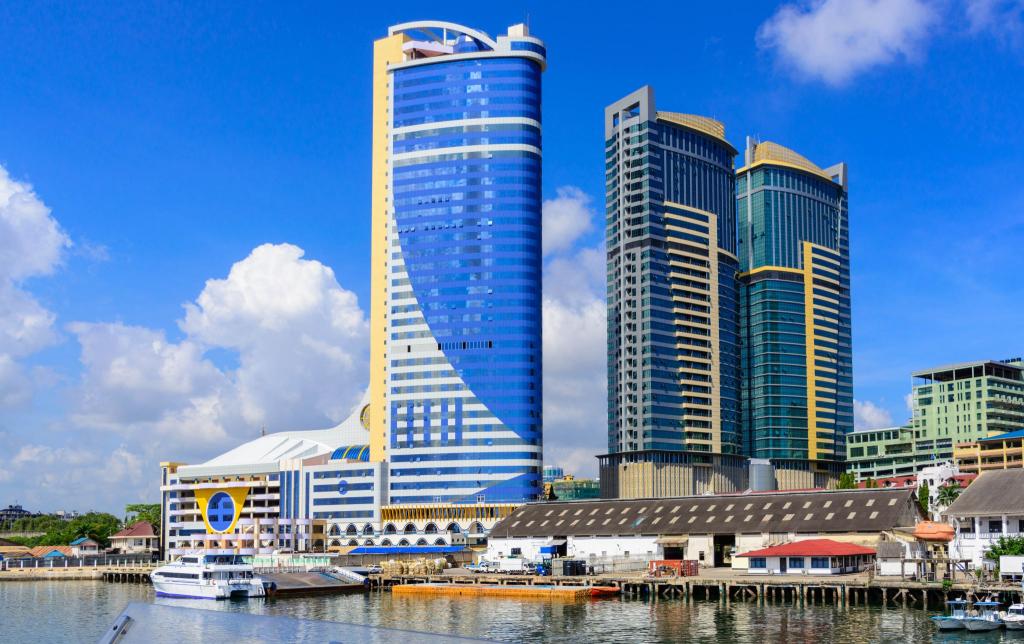
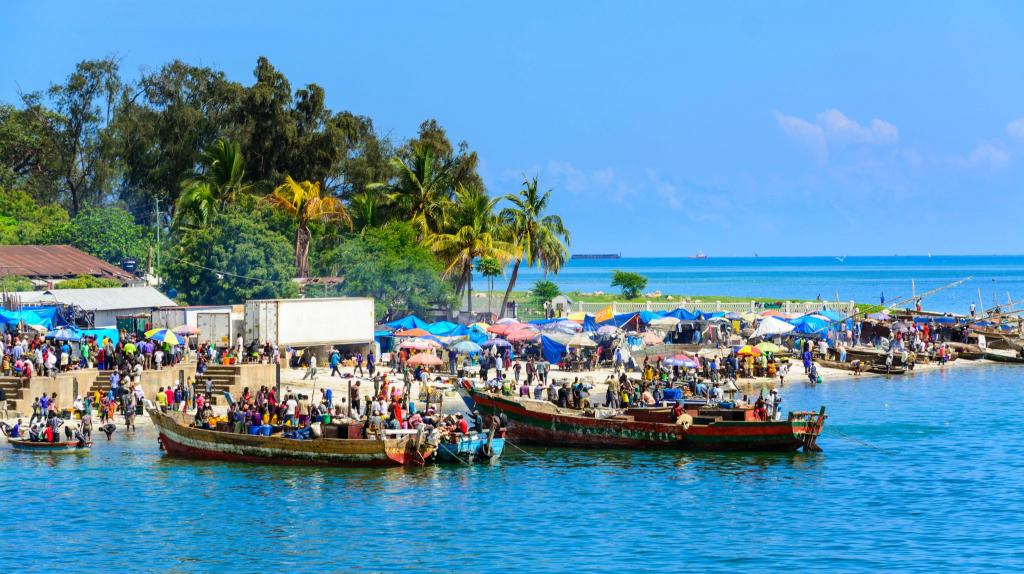
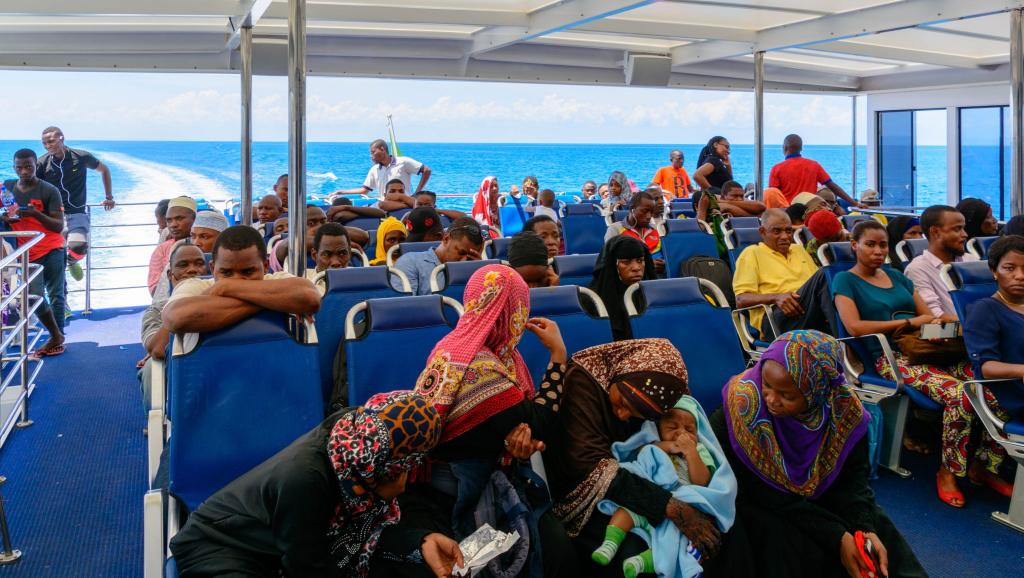
The cruise takes three hours and we arrive at 12:30. We have to go through passport and visa check, where we are also checked for Yellow Fever vaccinations and have to fill in the entry declarations. Now we go through the luggage X-Ray and we are welcomed by the rainy Zanzibar. Fortunately the rain stops after about an hour.
We take a 7-seater taxi to our hotel paying $15 for about an 8km drive.
Thankfully it stops raining after more or less an hour, but the lashing rain in that short time caused the road to flood and humidity was so high that the windows in our car steamed up in a few minutes.
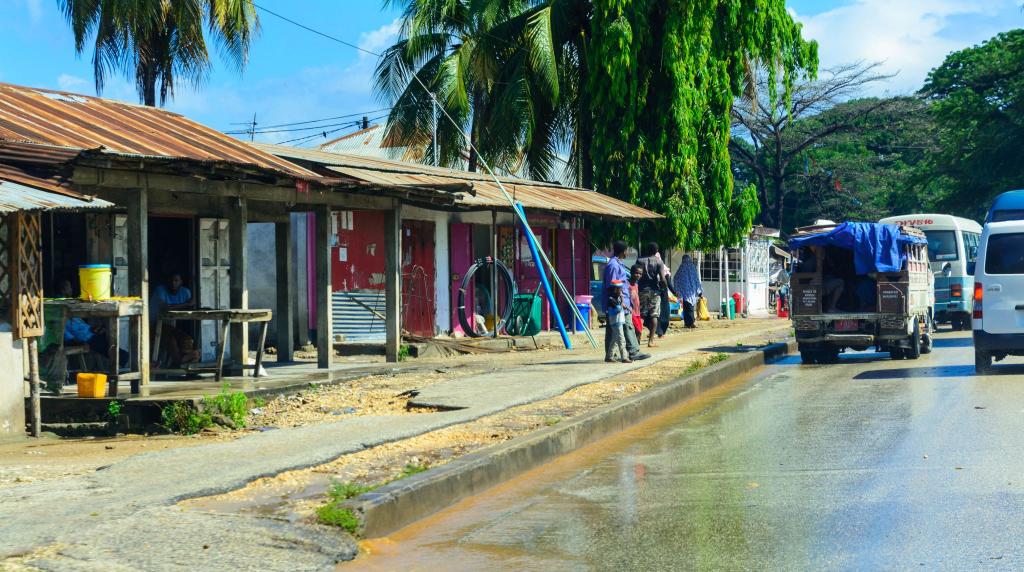
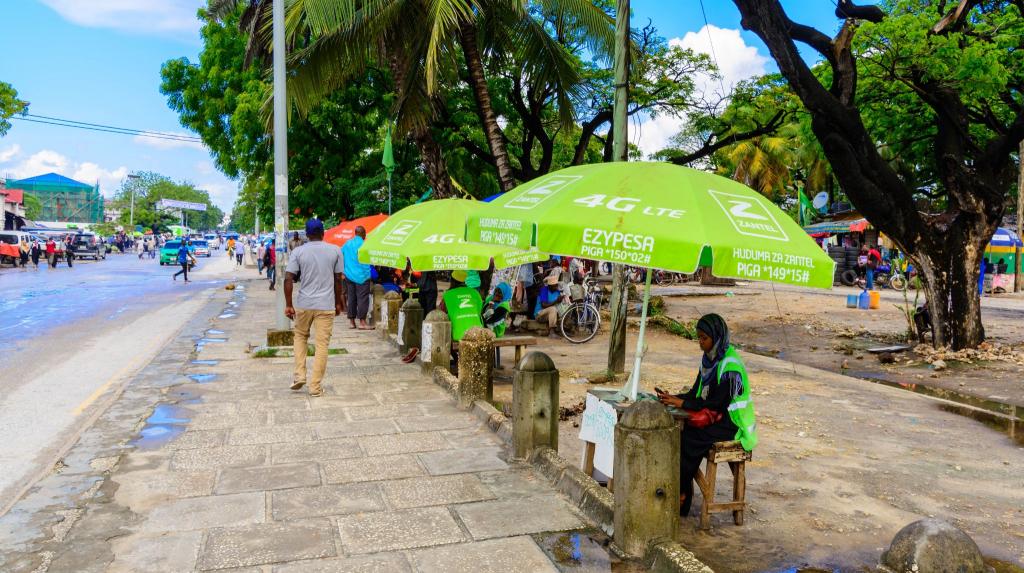
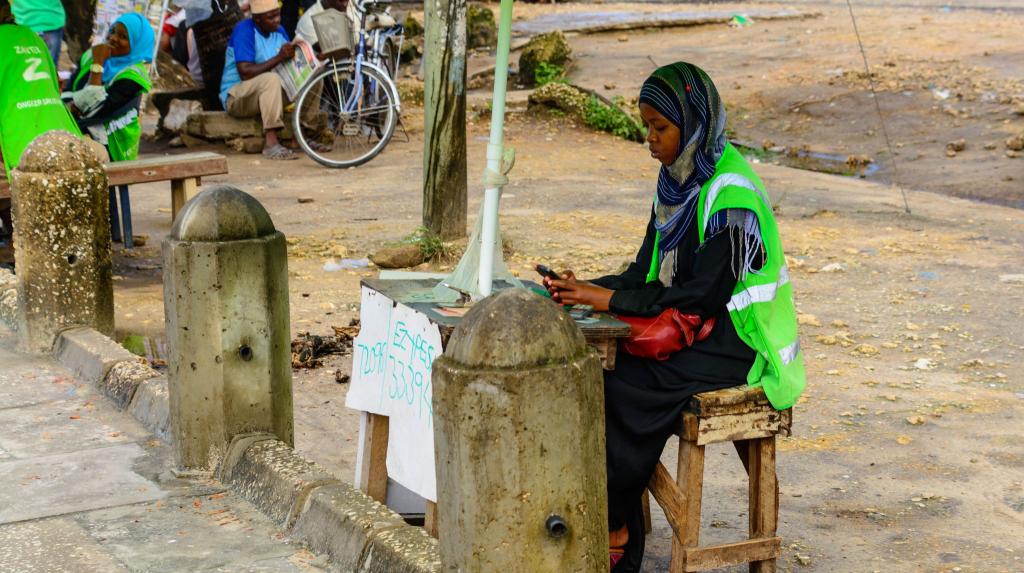
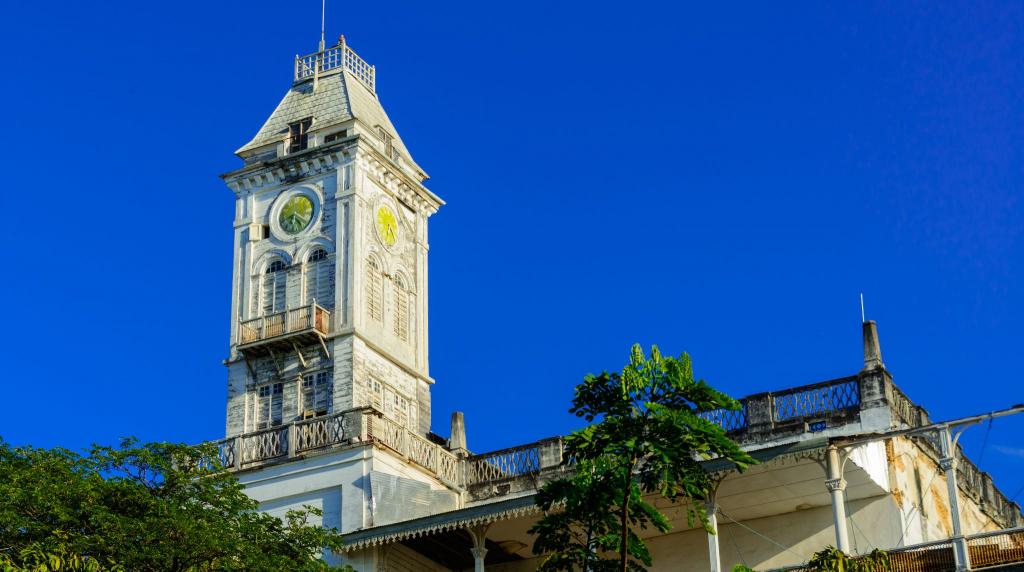
We are welcomed by our hotel with a complimentary fruit drink, check in, take an hour to rest and hire the hotel driver to take us to the Stone Town, which is the centre of Zanzibar City. He will leave us here and come back when we send him a text. The return cost for the whole 7-seater car is $15.
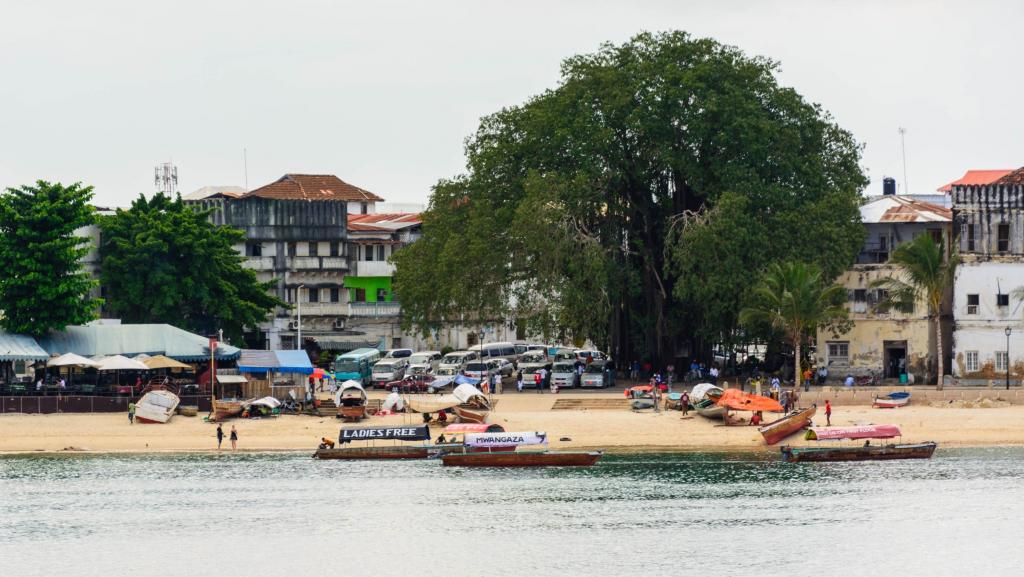
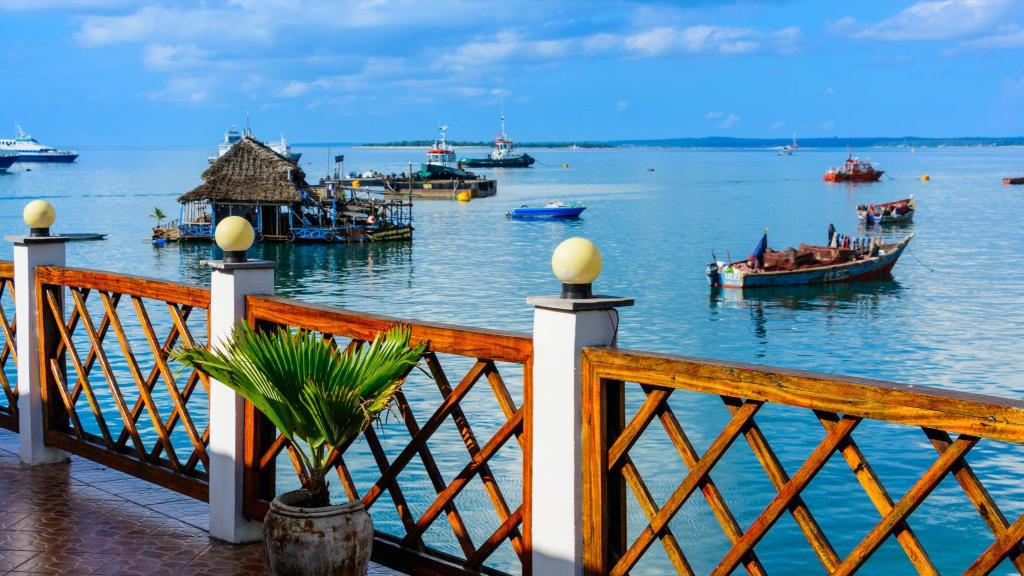
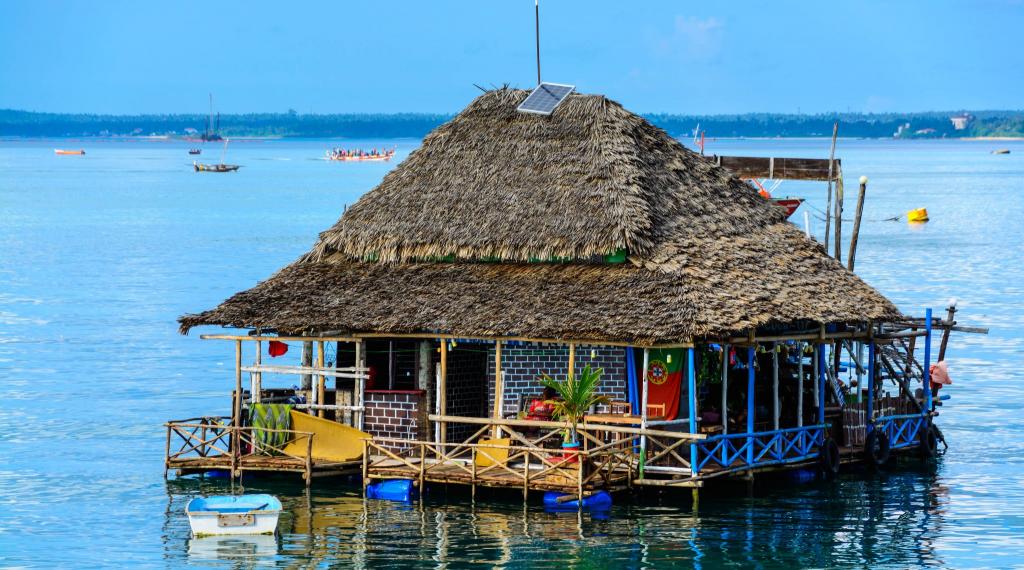
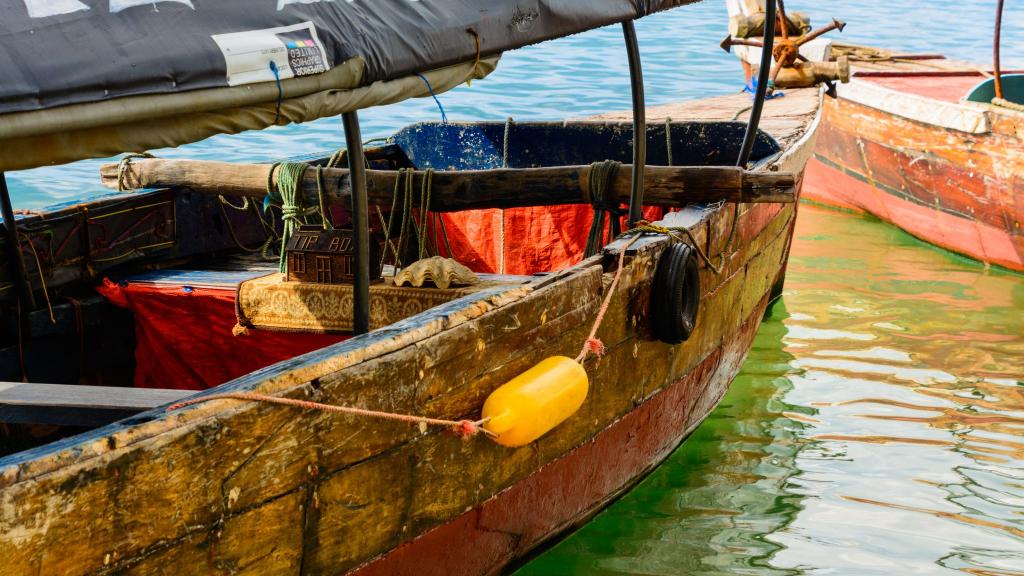
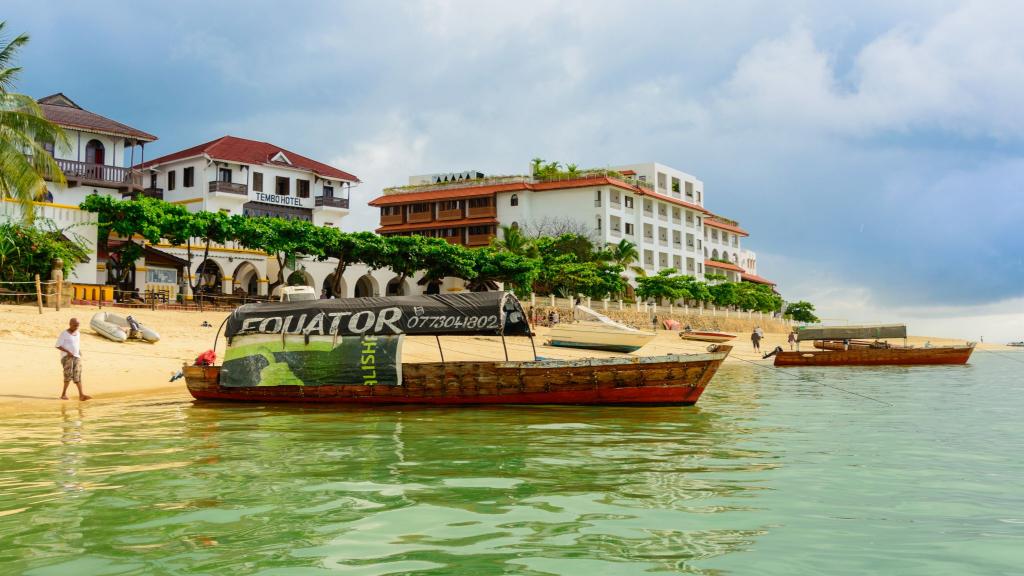
In the Stone Town we go for lunch to the Floating Restaurant located on the pier and after the meal we go for a walk on the beach, watching the small boats and a couple of huts floating on water.
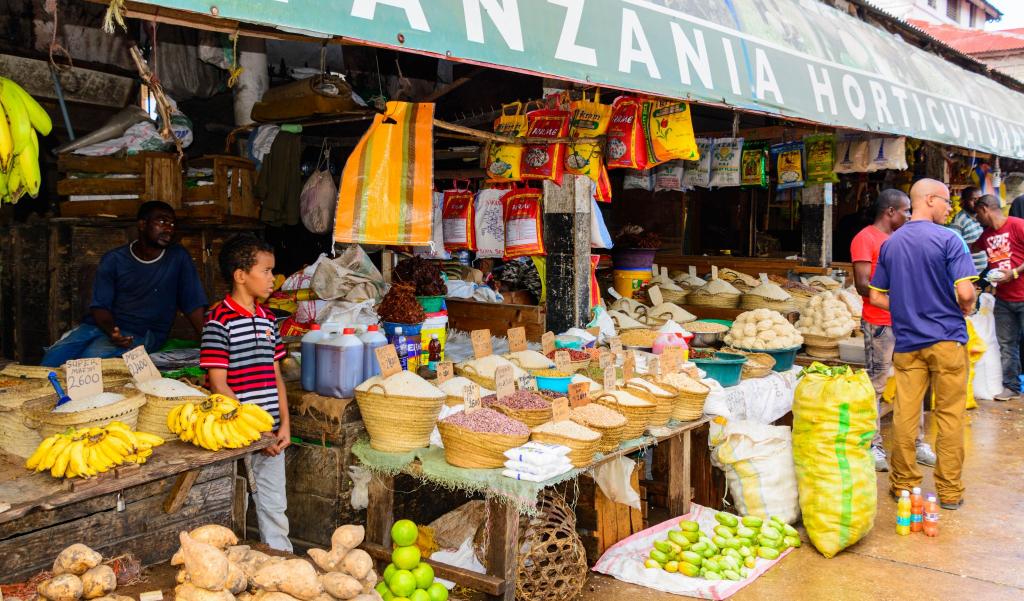
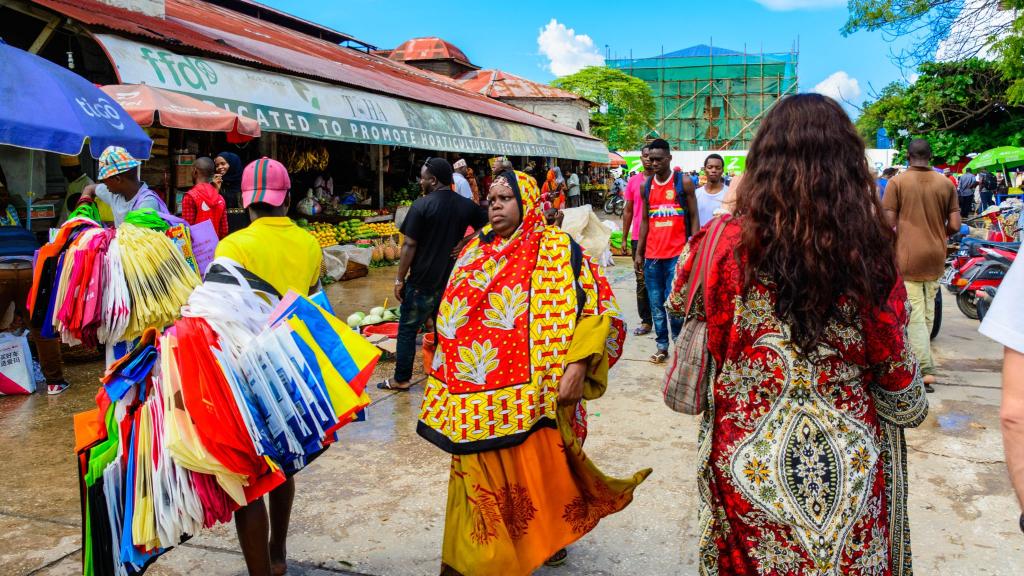
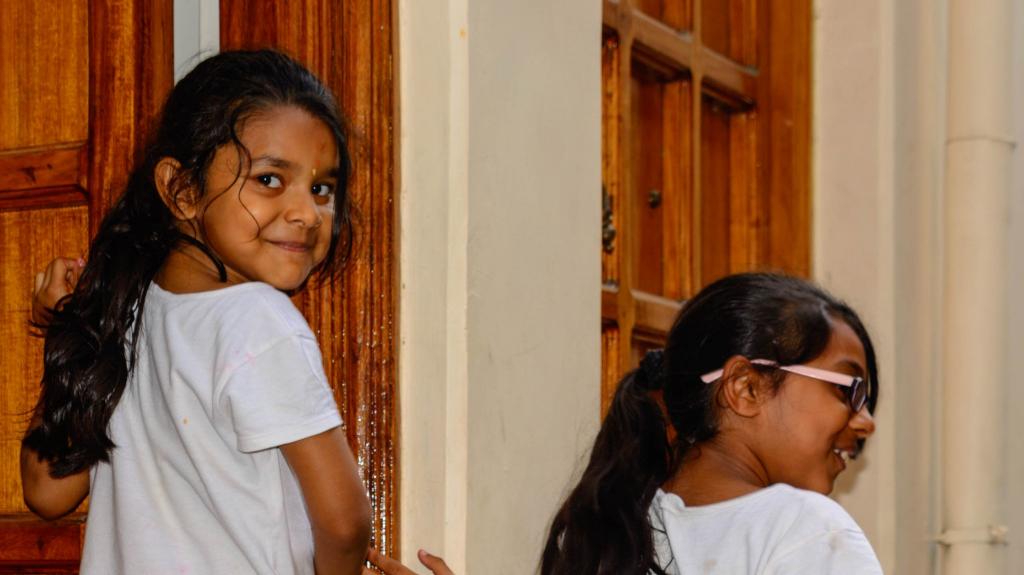
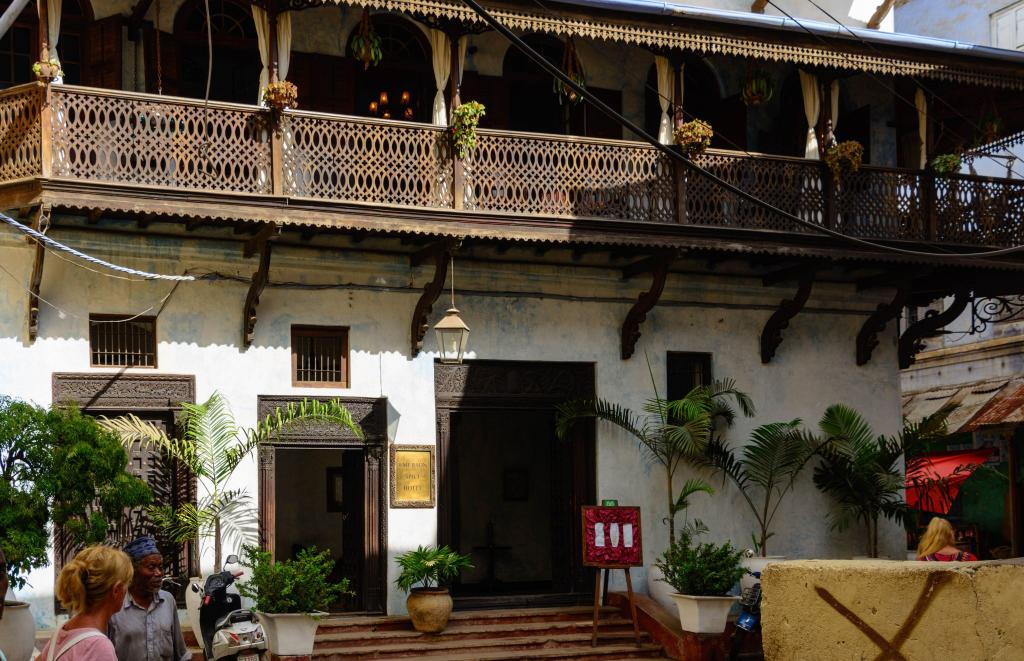
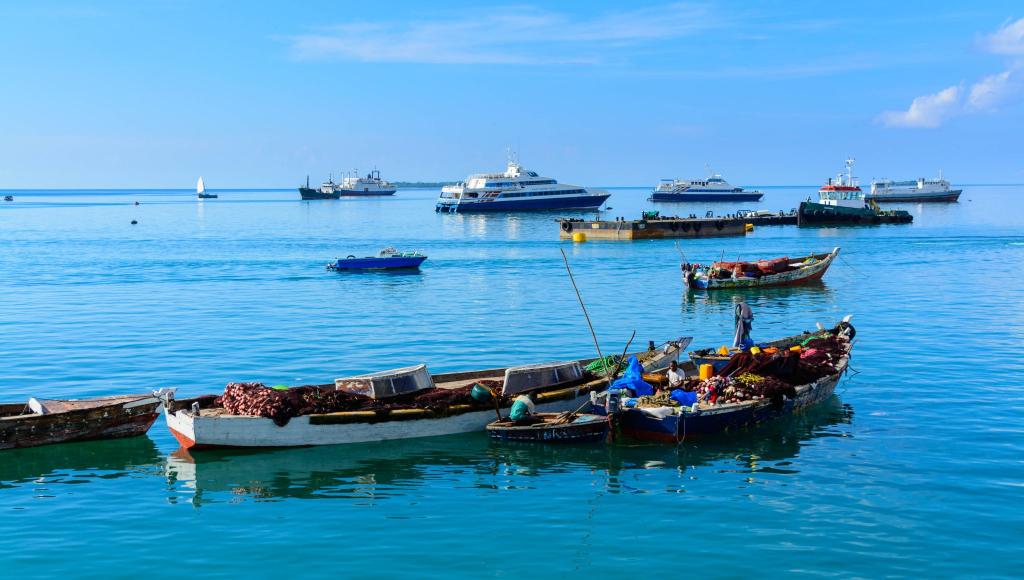
In the evening just outside our restaurant the is a food market with lots of stalls offering grilled meat, samosas, crepes, pizzas (even with Nutella and bananas) and a lot more food, carrying the tempting smell far from there.
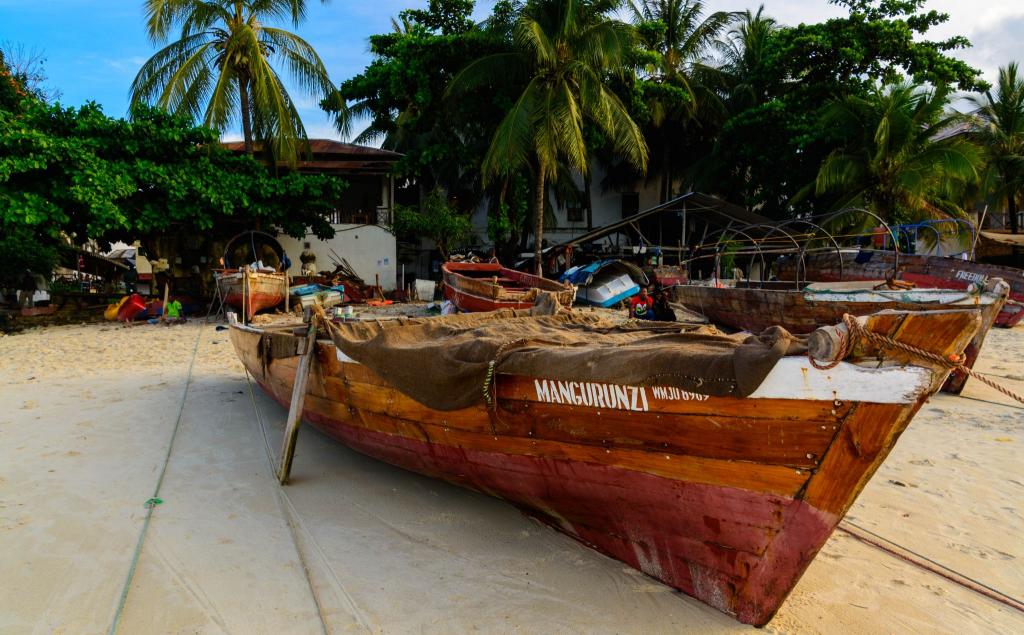
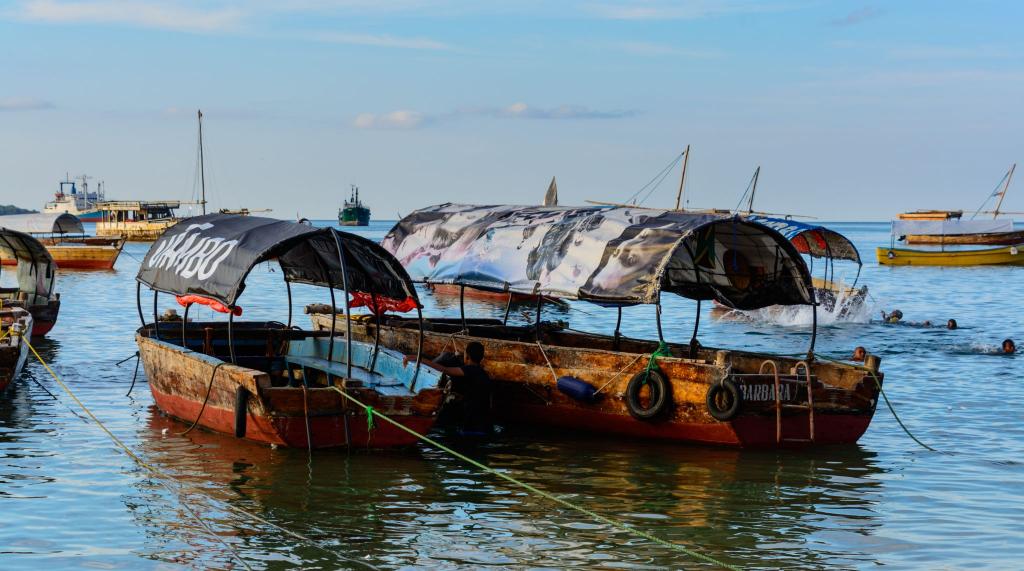
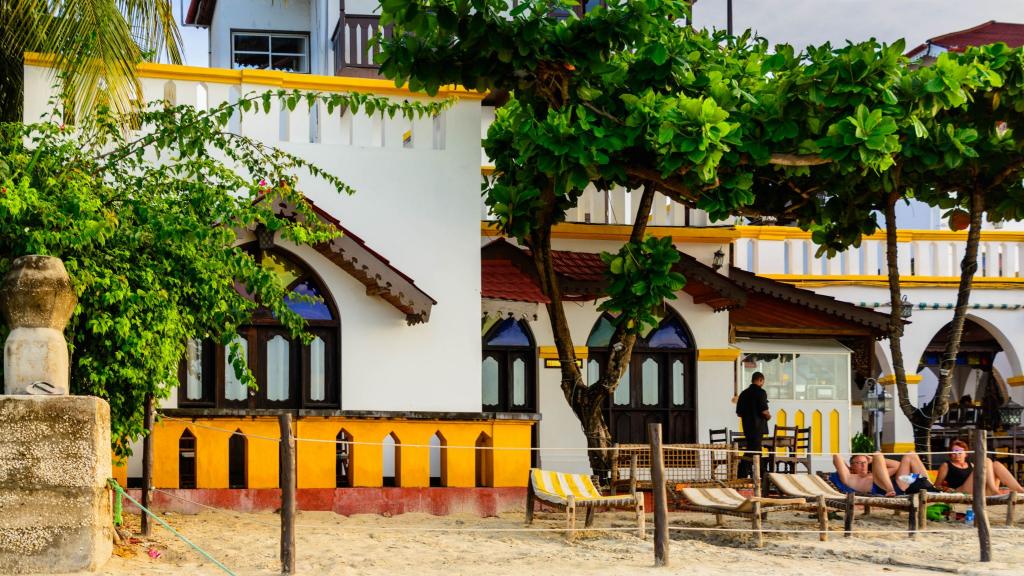
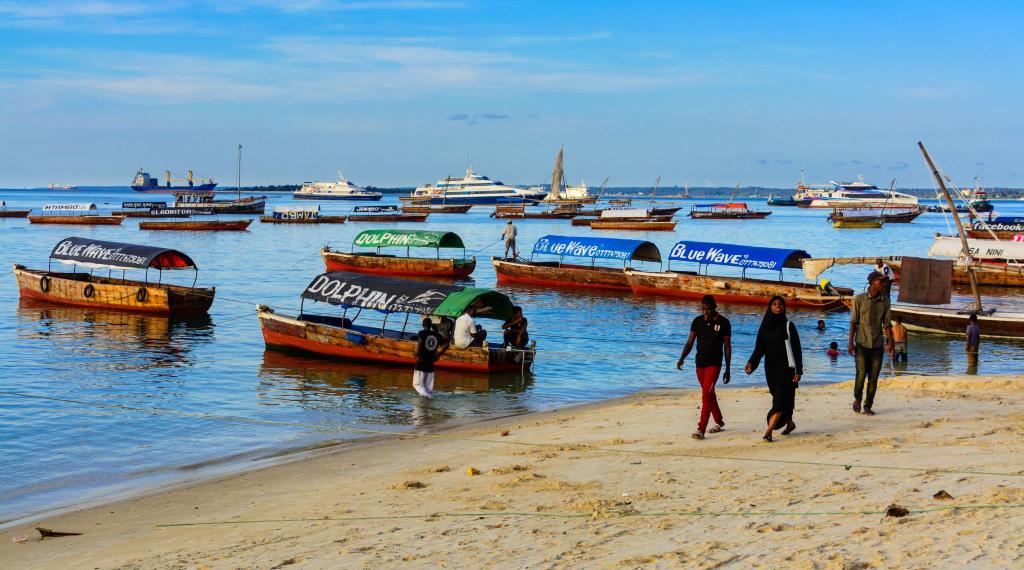
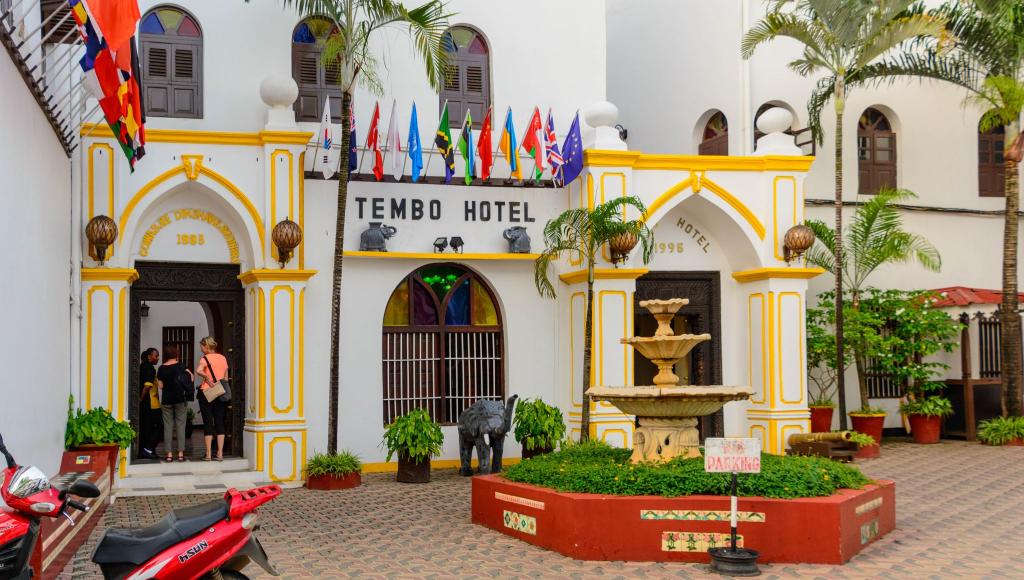
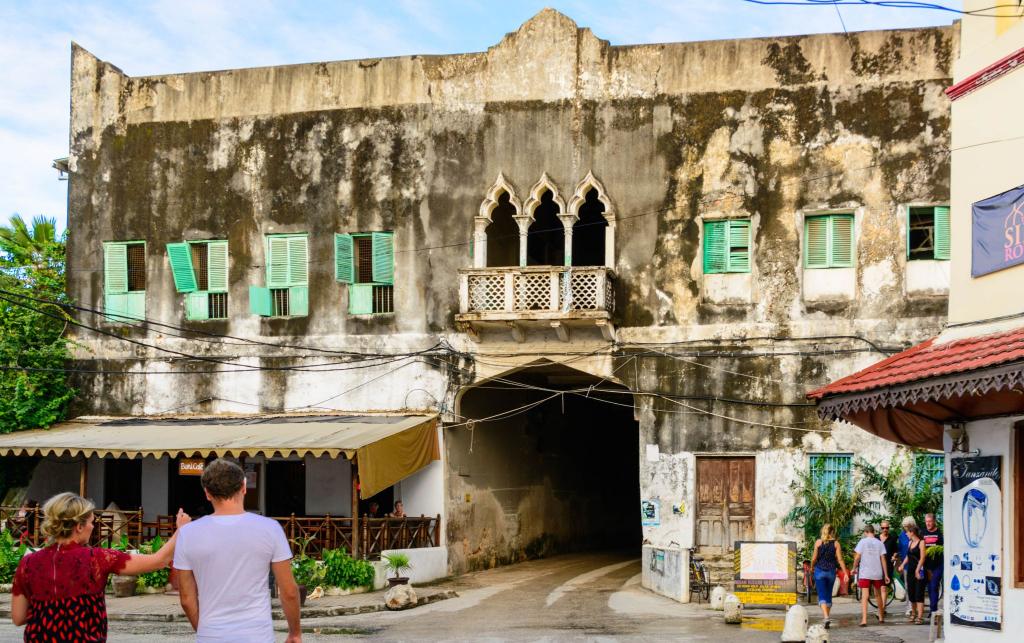
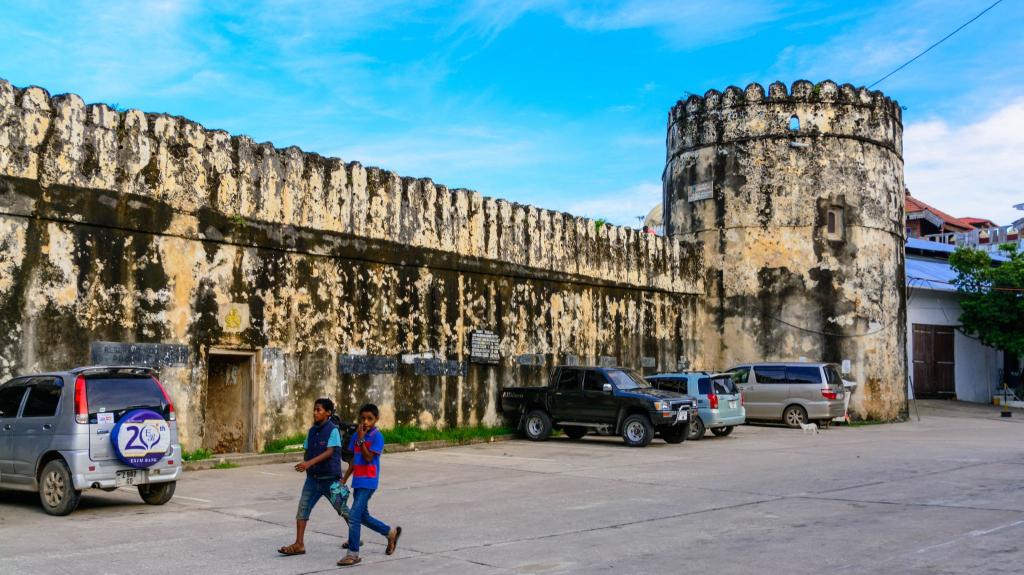
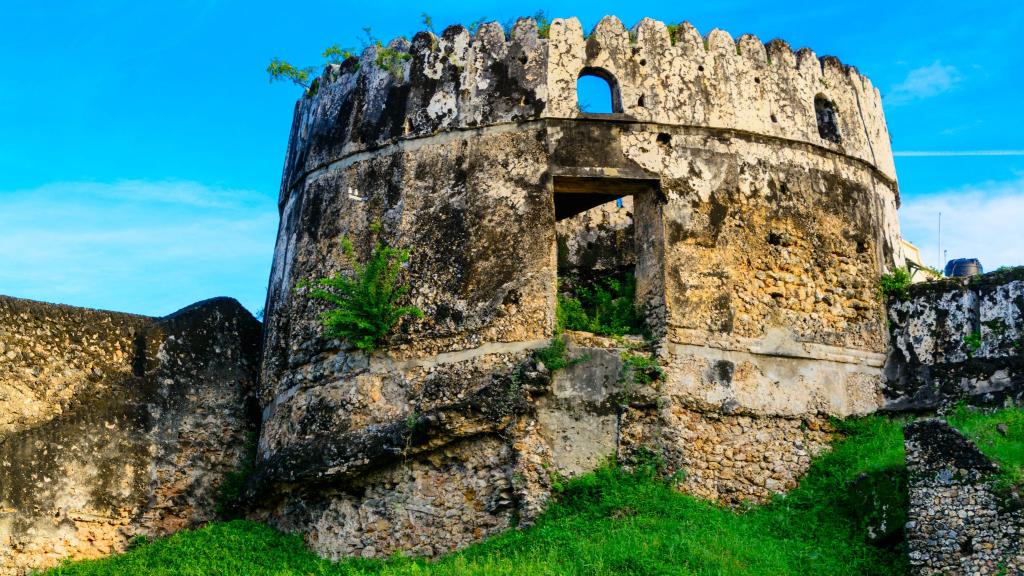
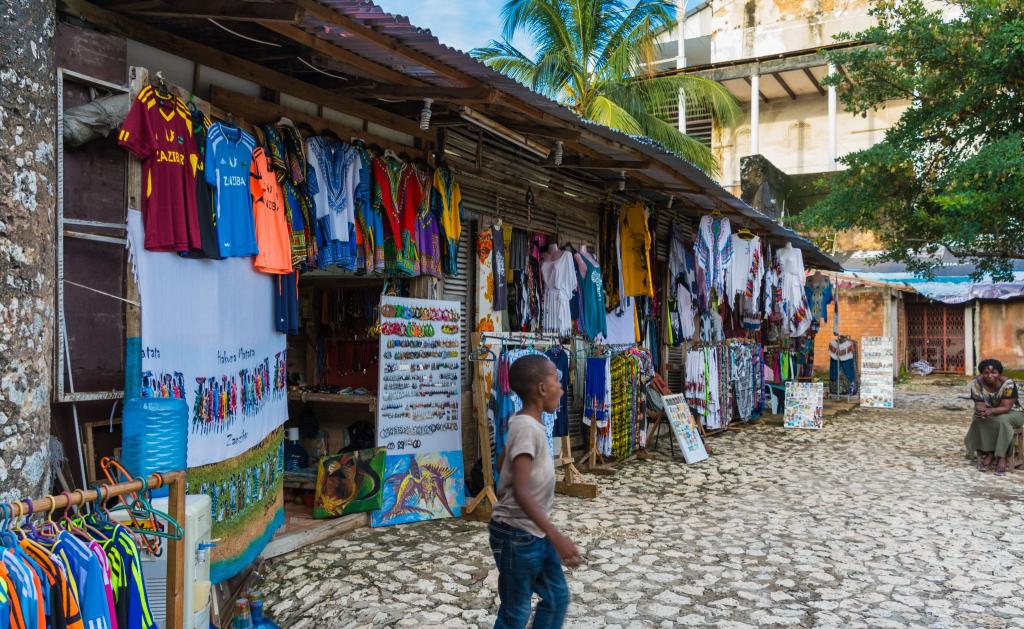
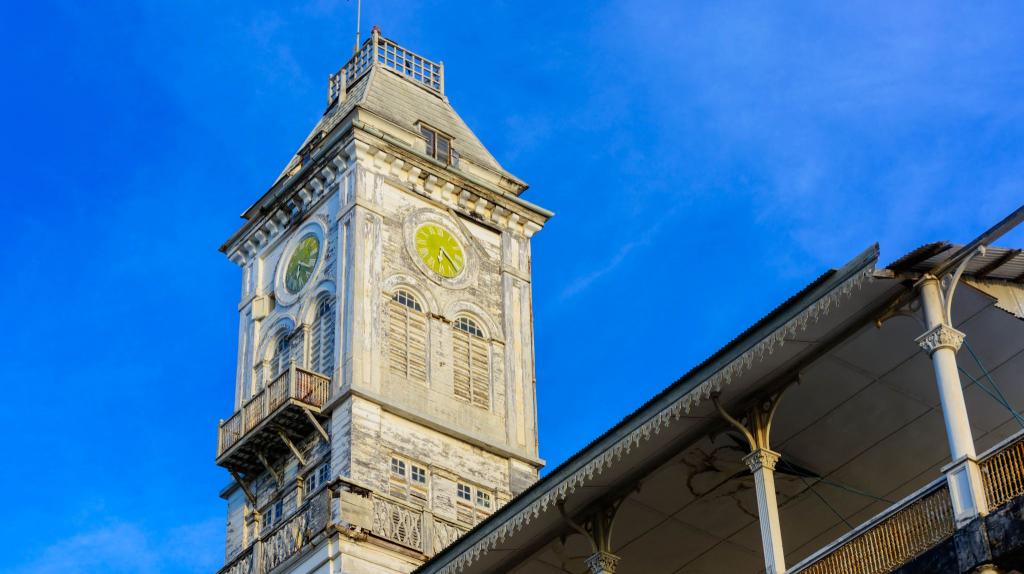
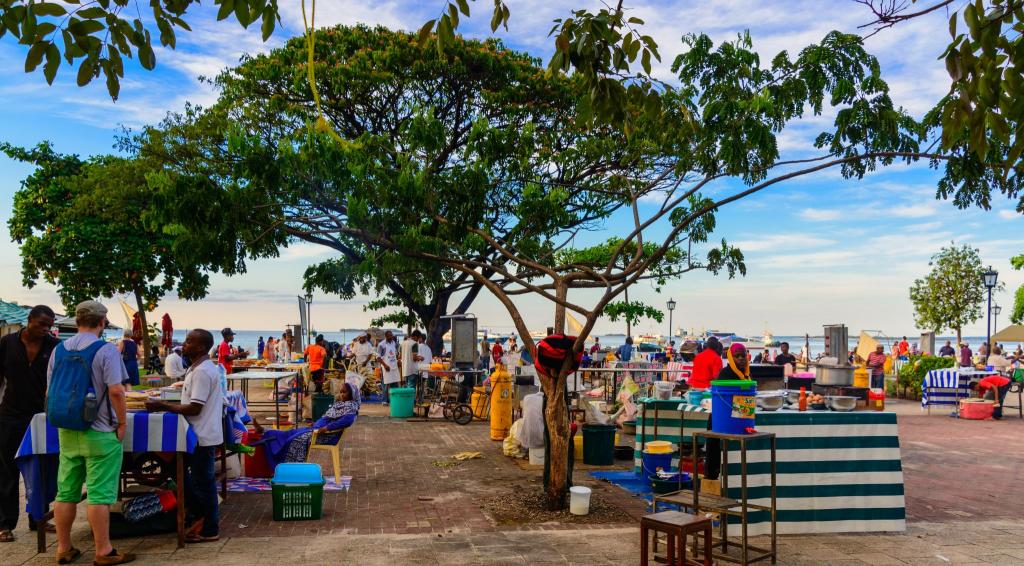
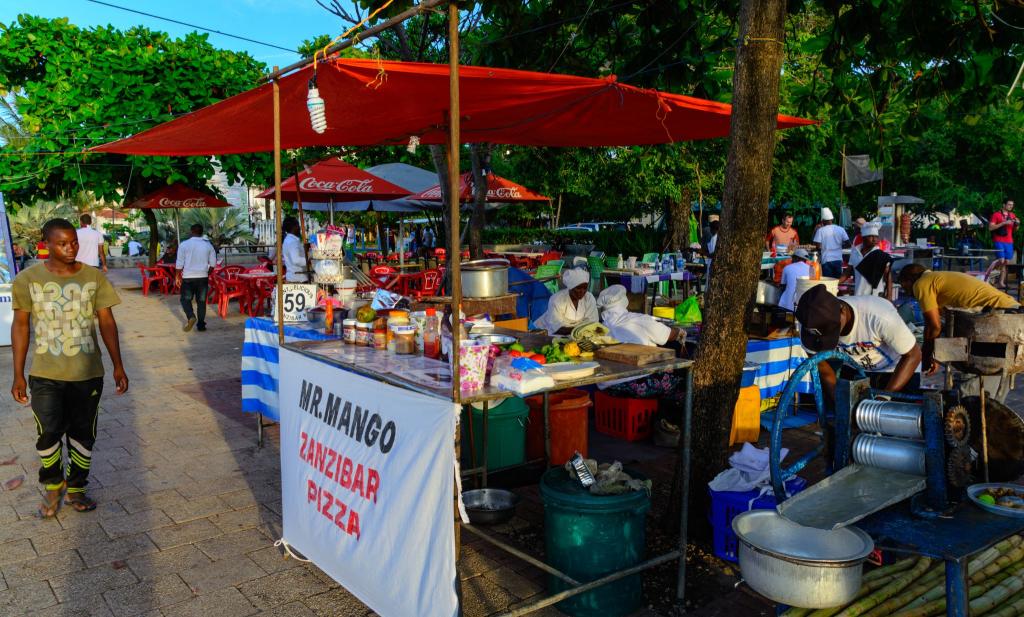
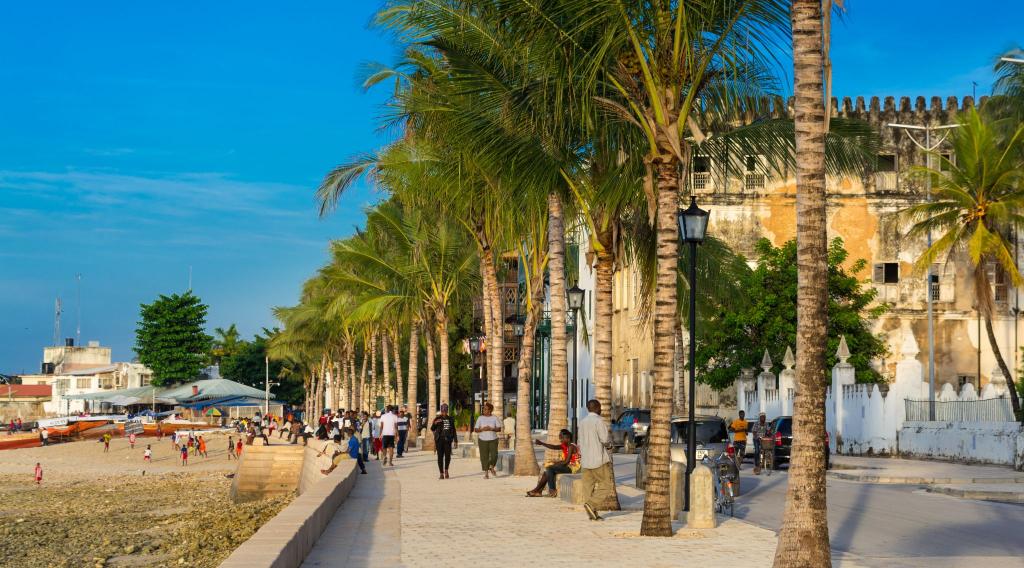
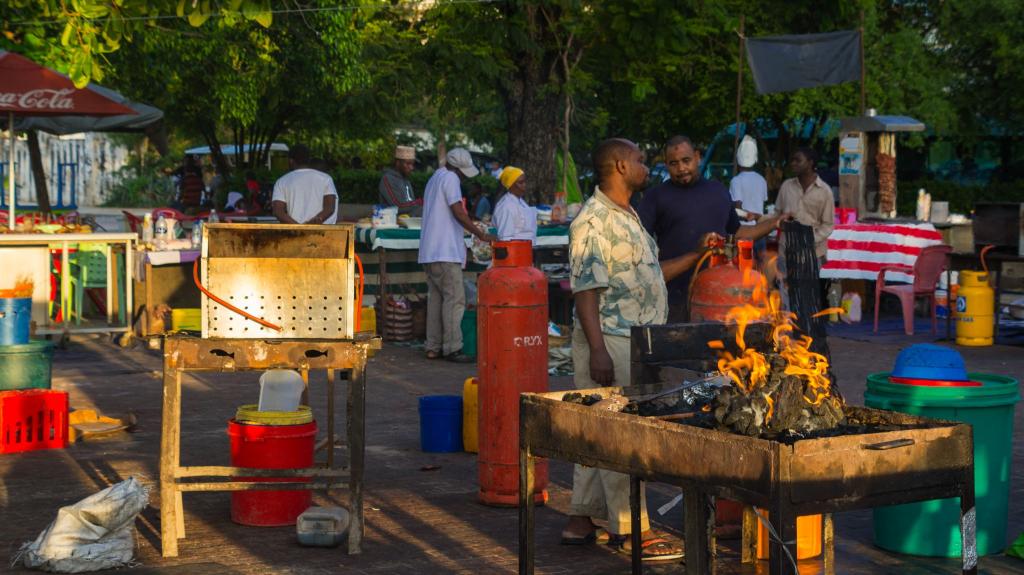
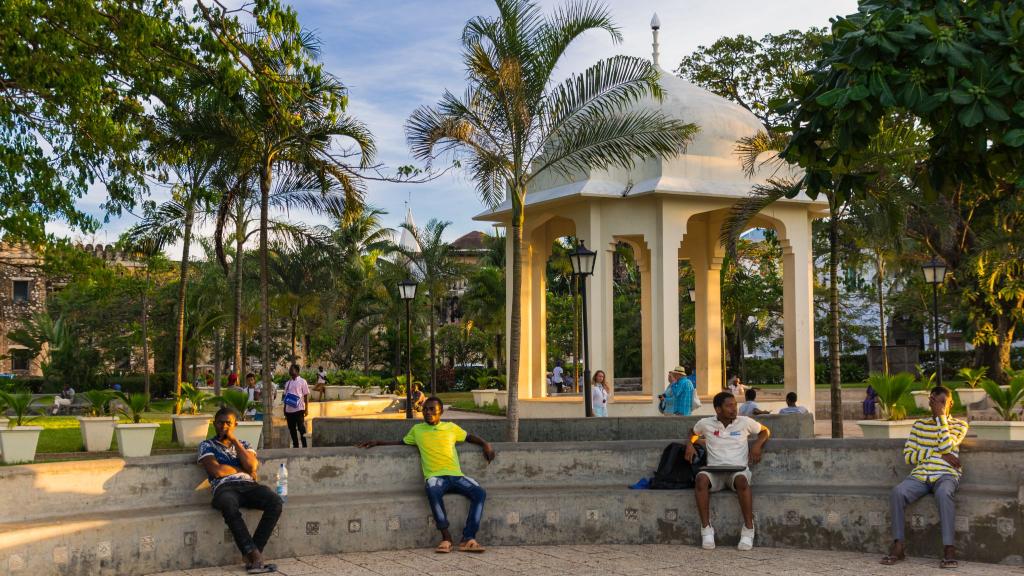
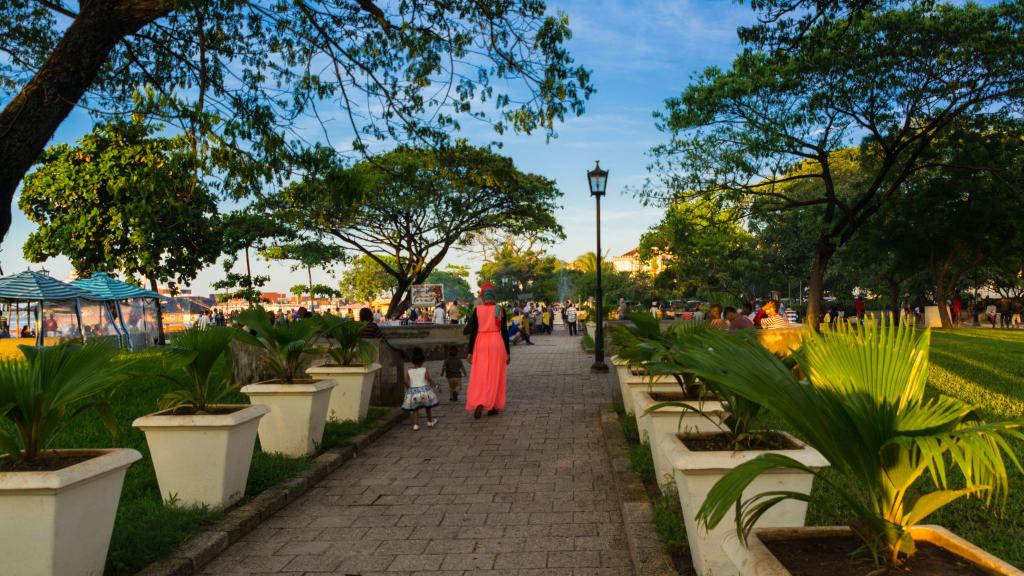
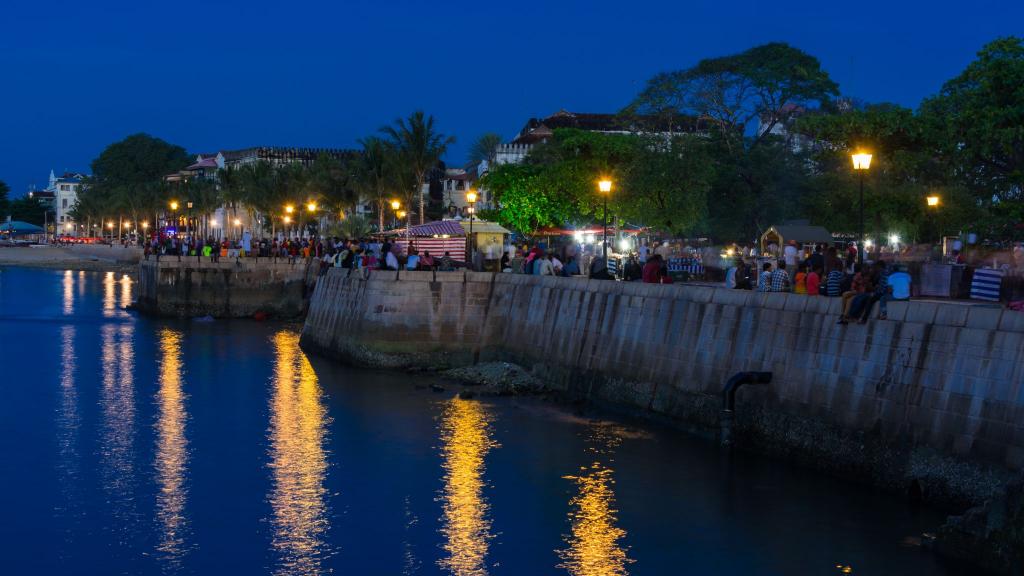
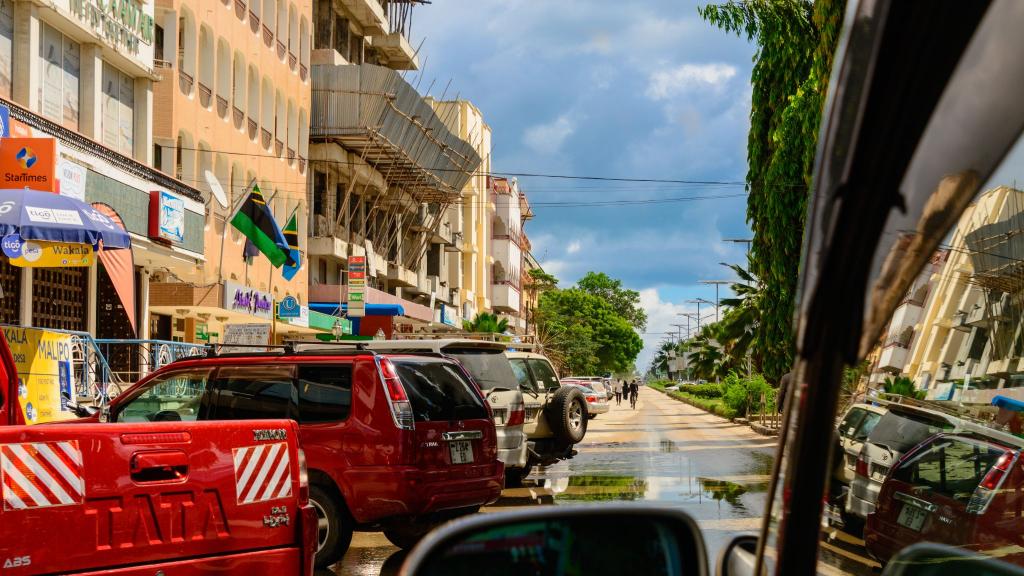
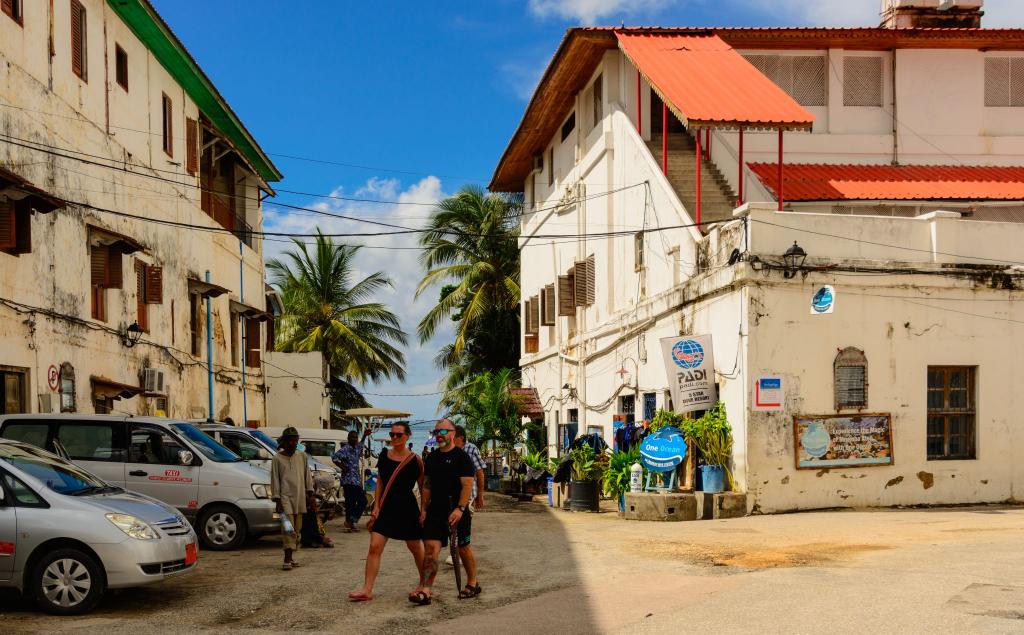
After the first day we have an impression that the town is a bit neglected and some areas are not safe, but the tourists we met as well as our hotel staff assured us it’s very safe here and that there is nothing to worry about. The paradise view is a bit disturbed by a lot of rubbish lying on the streets and a lot of brazen touts.
Our timetable for today is very intense. We’ve planned three trips - Spice Tour, which is a trip to the spice farm, afterwards to Prison Island and finally a guided tour of Stone Town.
We’ve managed to negotiate the price of Prison Island tour and Stone Town guided tour for $40 and for the whole group.
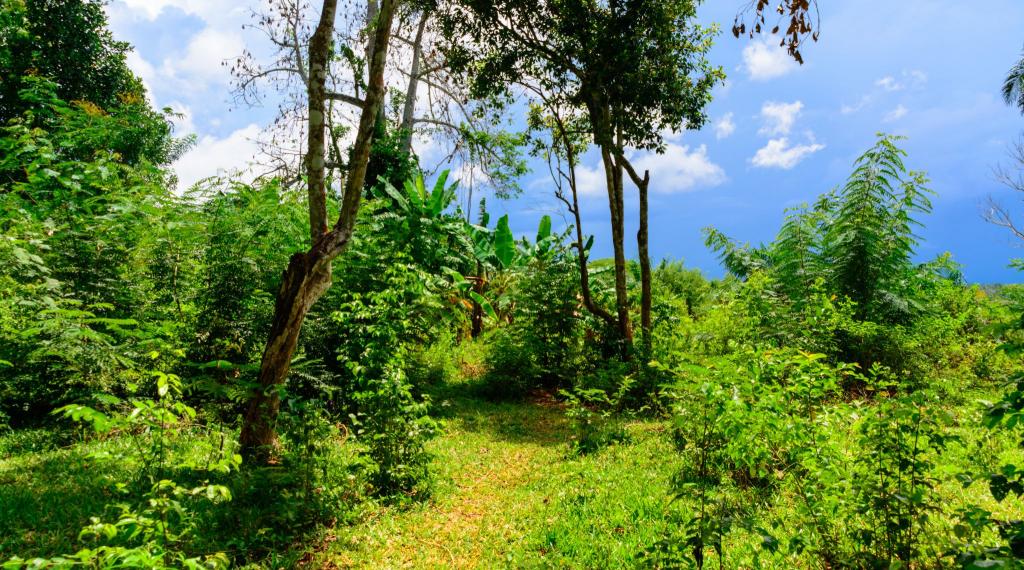
The first trip, called Spice Tour is free and covers the sightseeing of the spice plantation, where they grow, for instance, cinnamons trees, cloves, turmeric, coffee, pepper and many other plants, from which spices are made. Apart from that there is a lot of fruits, such as sweet grapefruit, mandarines, oranges and bananas.
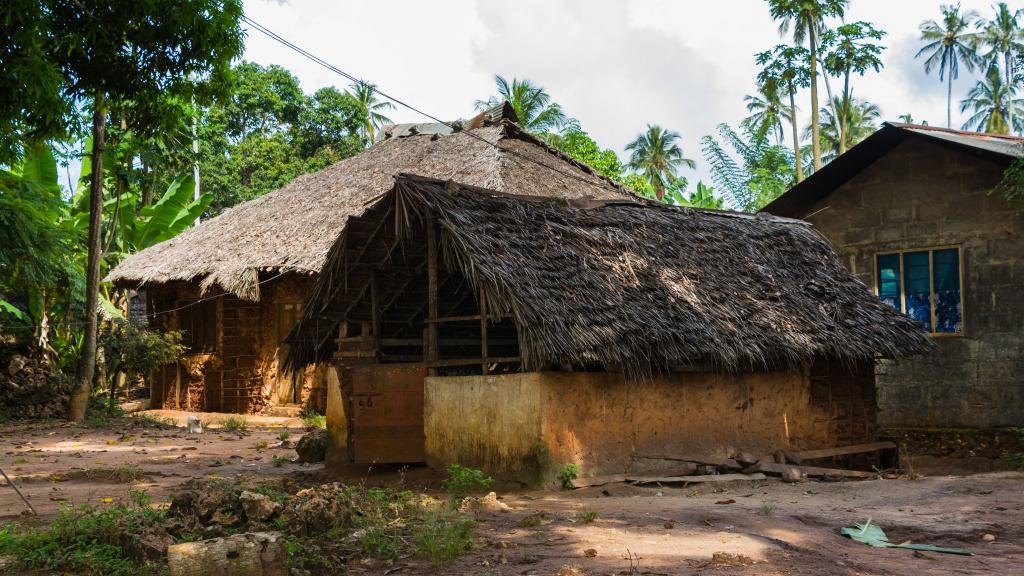
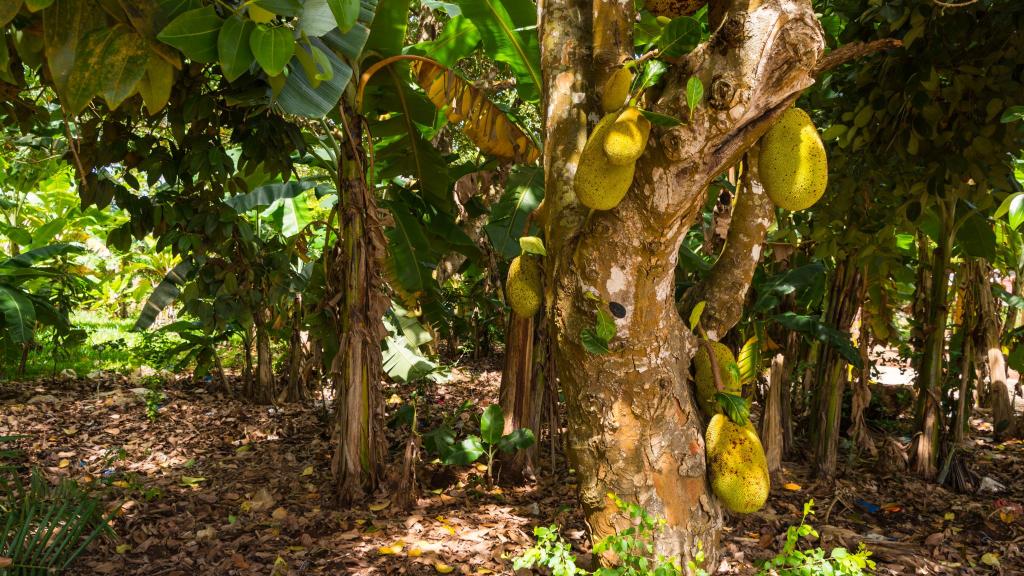
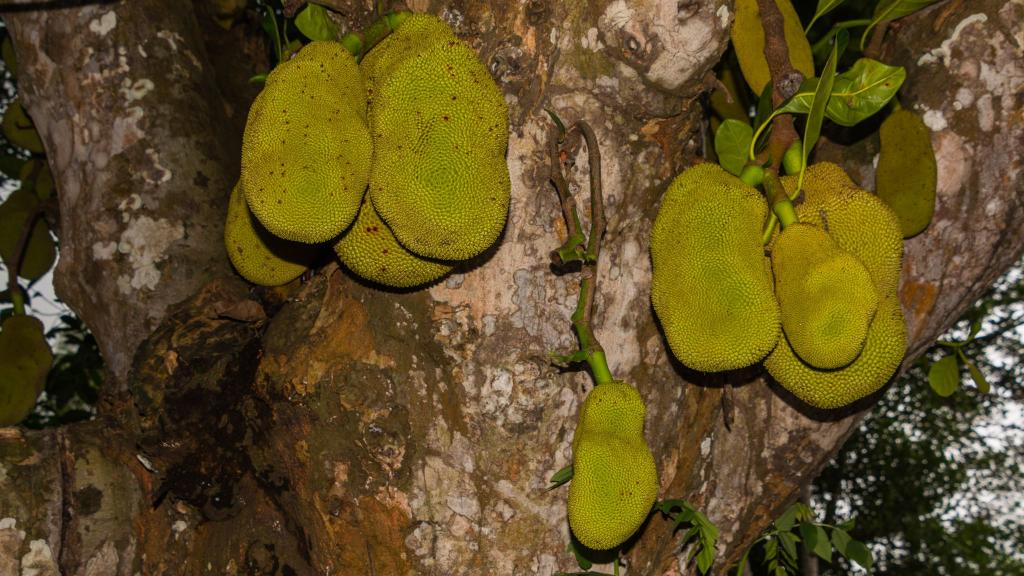
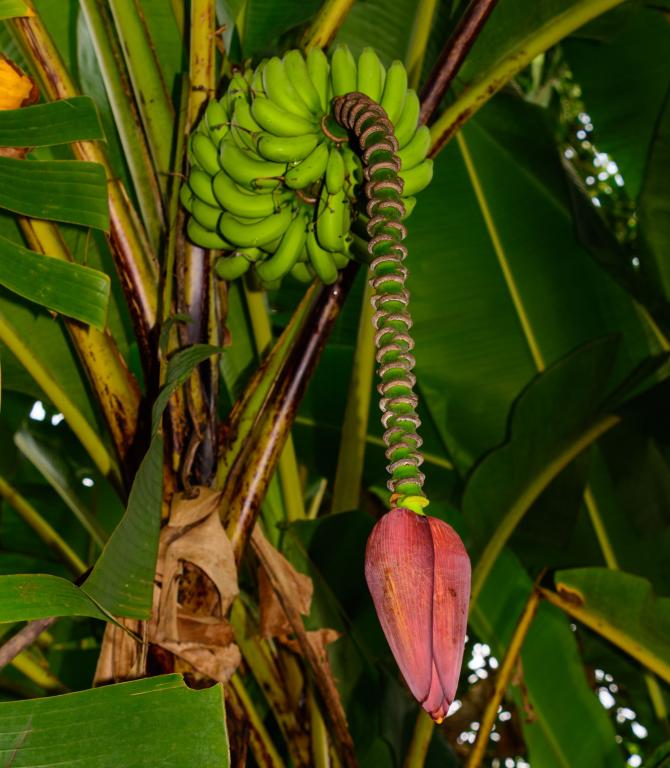
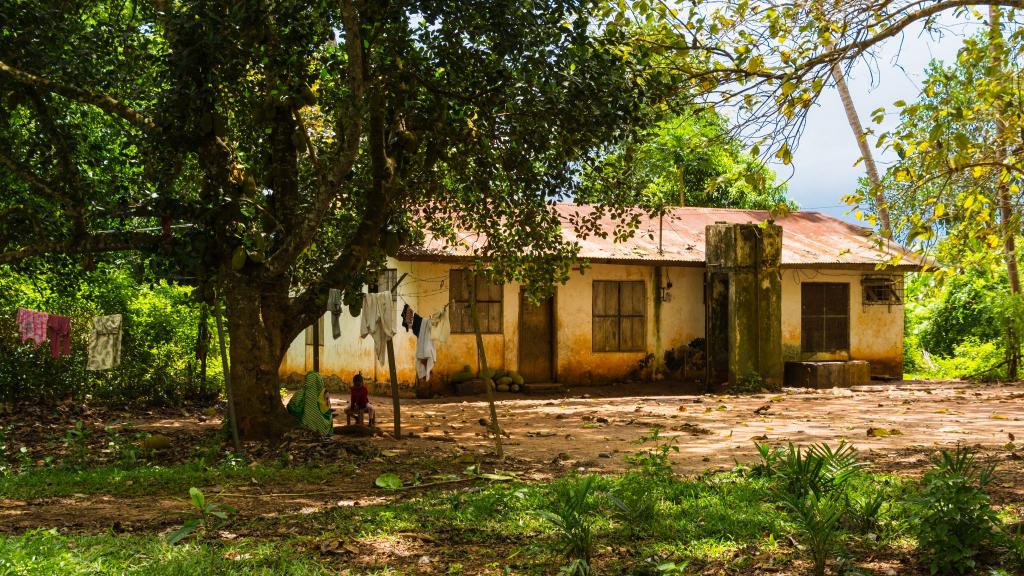
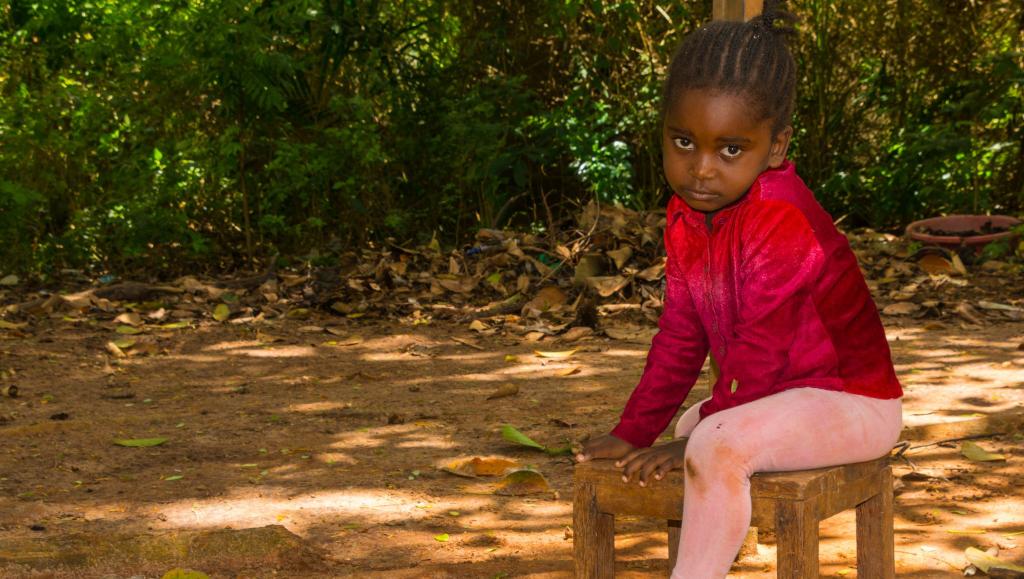
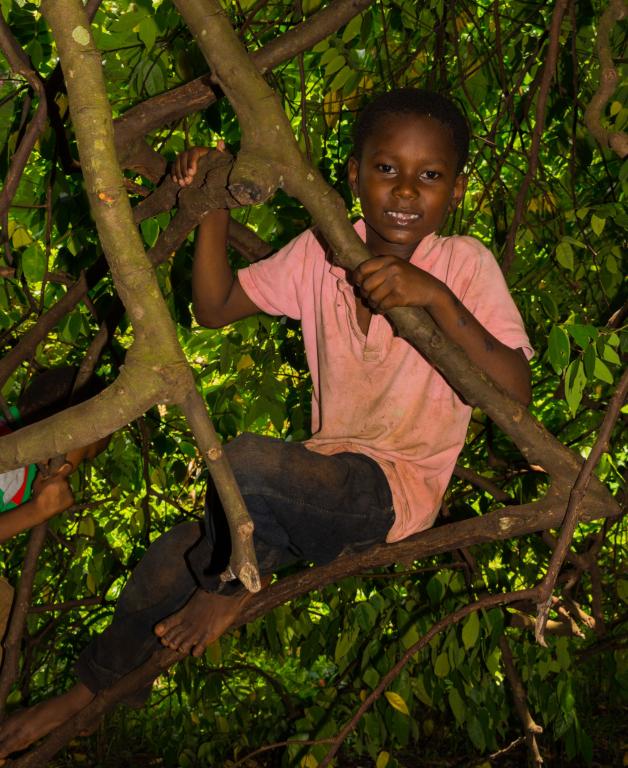
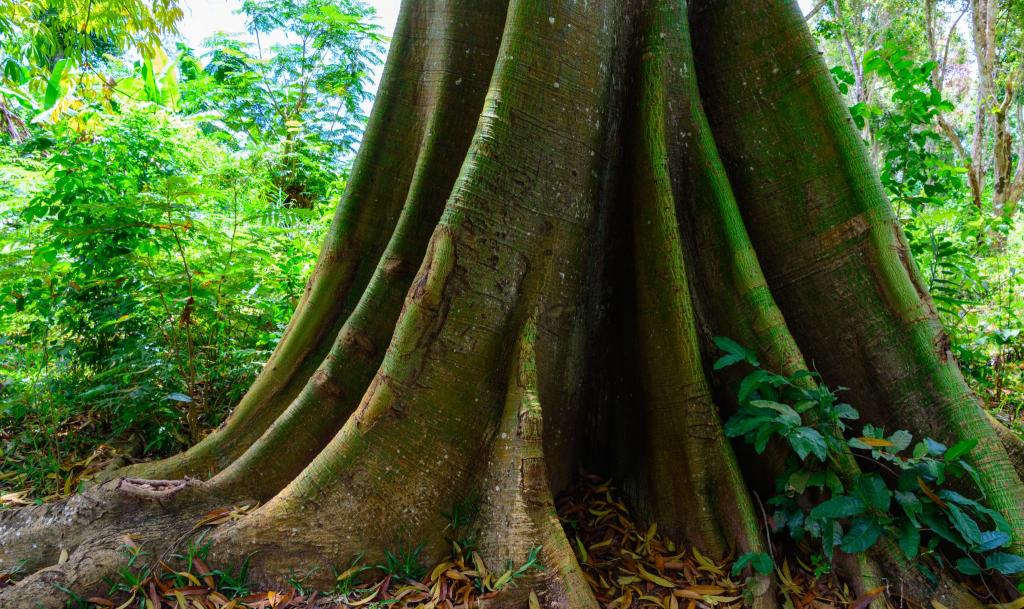
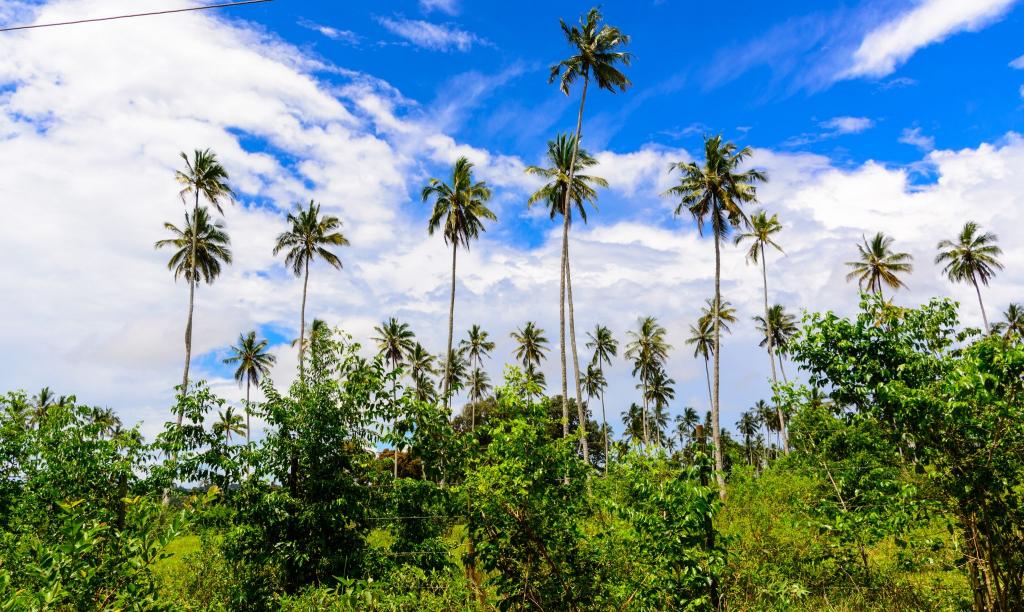
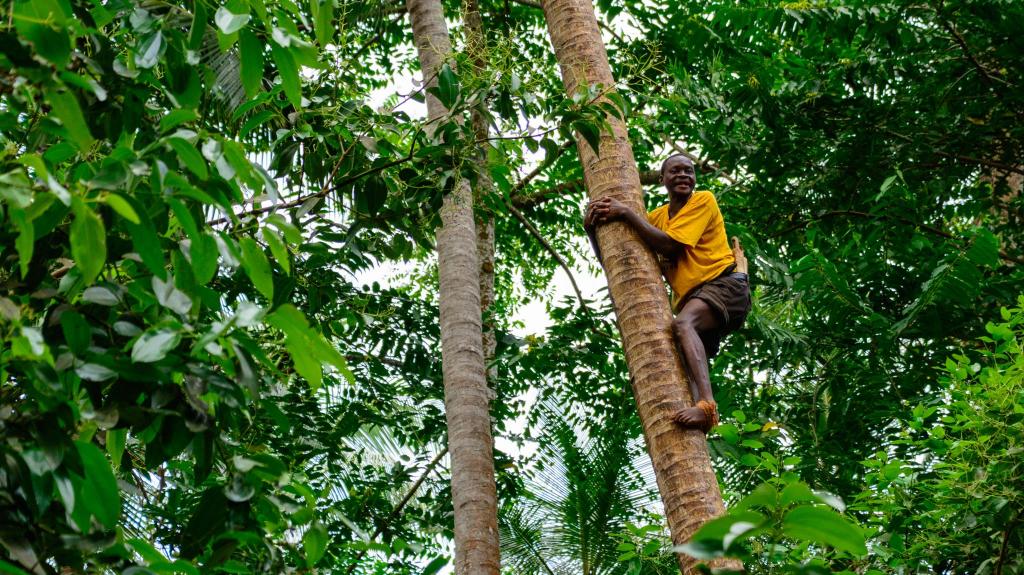
At the end of our tour the native singing “Hakuna Matata” climbed a coconut tree only with support of grass, which he used to tie around his legs to help him climb by pushing from the tree.
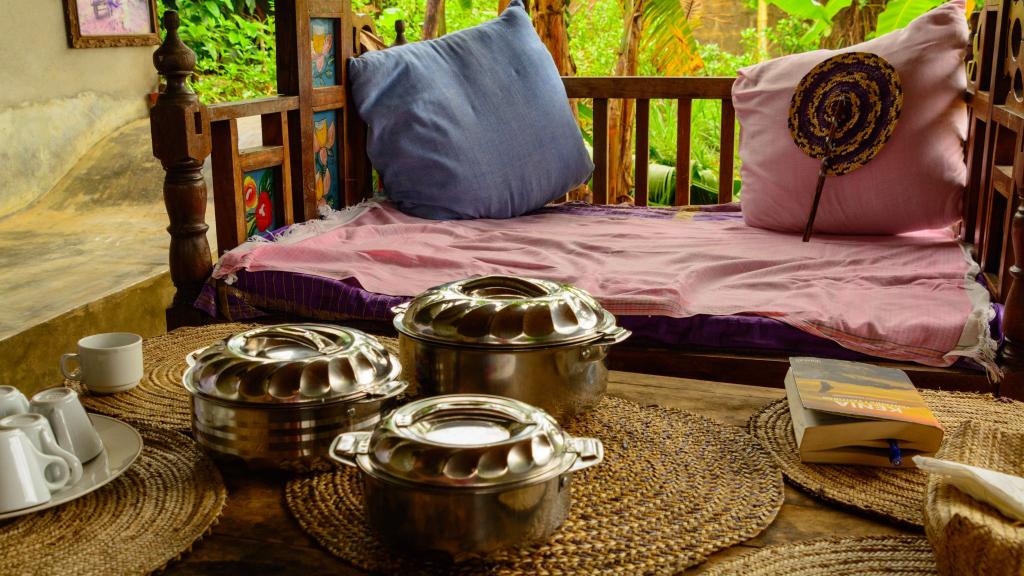
After the tour we drive to the local family, which, for $10 per person, prepared us and huge lunch with lots of local dishes, spices and fresh fruits for desert. The falafel with coconut spices is heaven in the mouth! In addition, a lot of rice, beans, manioc, grilled fish (also delicious), bread similar to Naan and freshly squeezed fruit juice. We had the opportunity to try some local cuisine, which was very tasty.
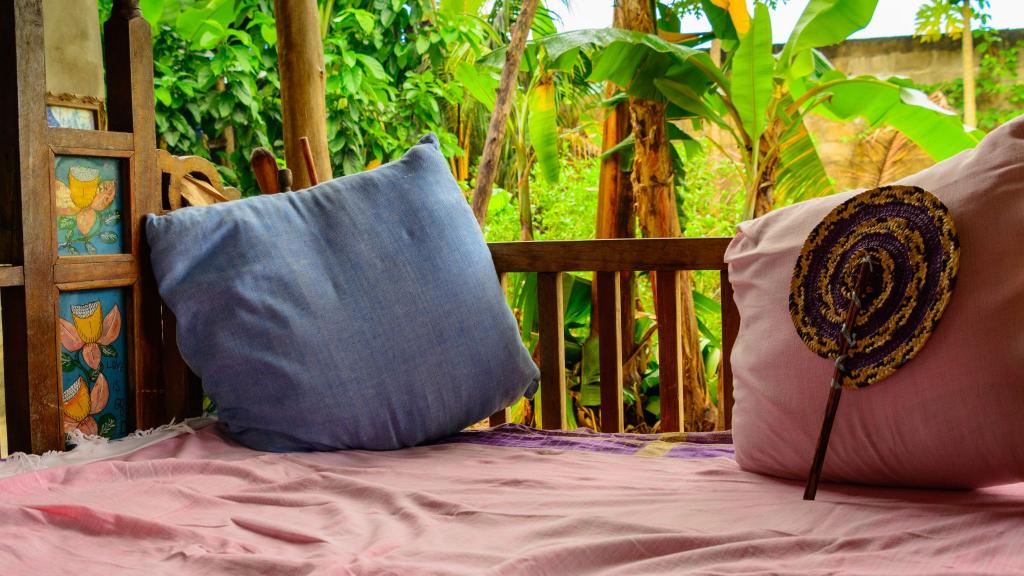
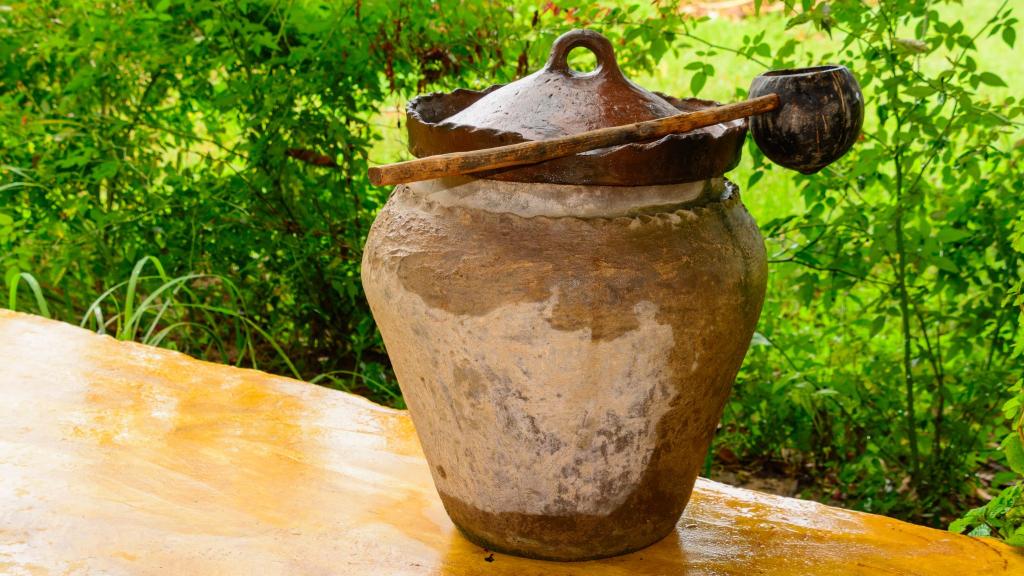
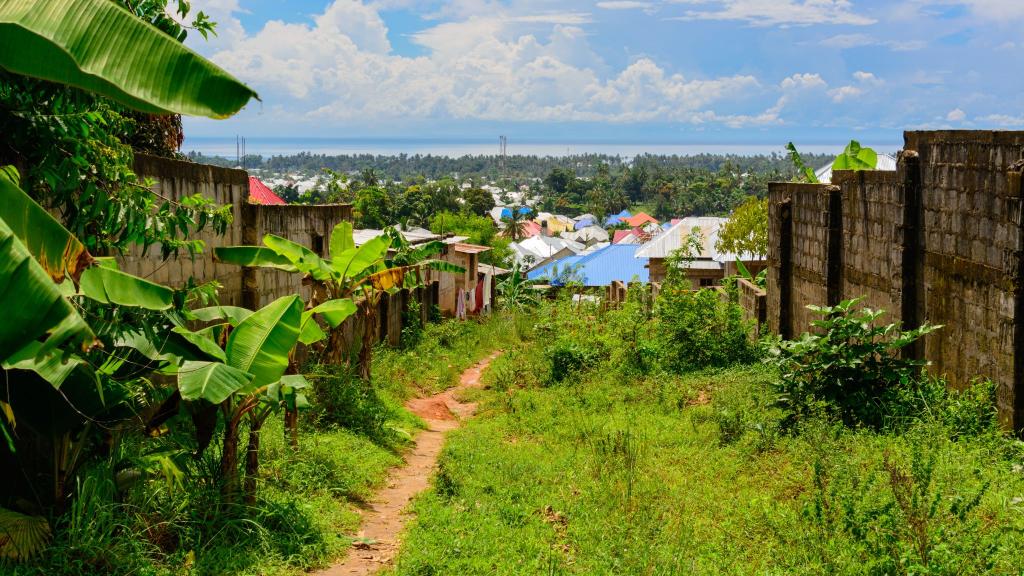
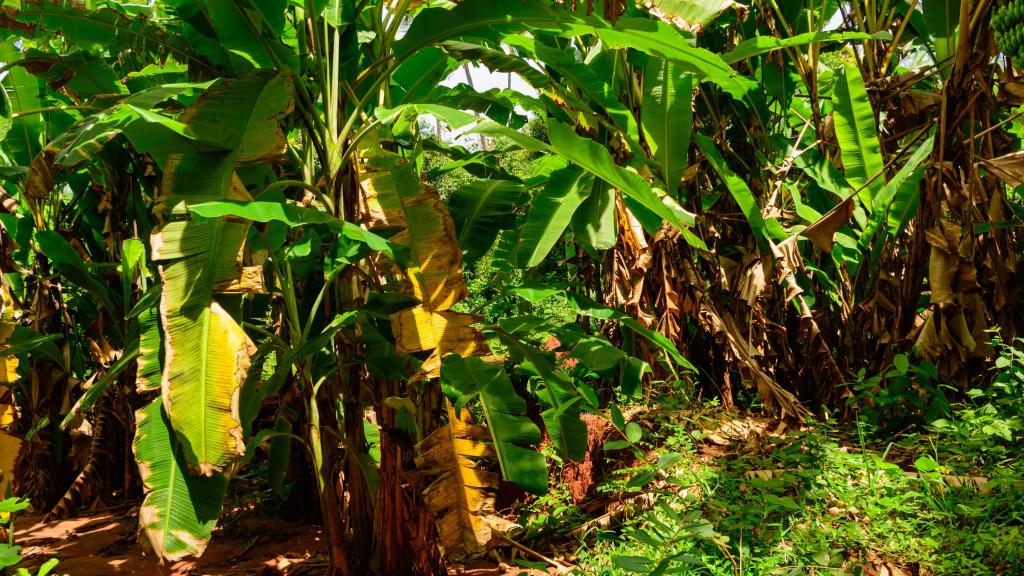
Later we went to the city centre where we rented masks and snorkels, hired a boat and went to Prison Island. The name of the island comes from the fact that a big slave market was built here, but when the construction was finished, the Tanzanian government banned slavery, so officially the complex was registered as a prison.
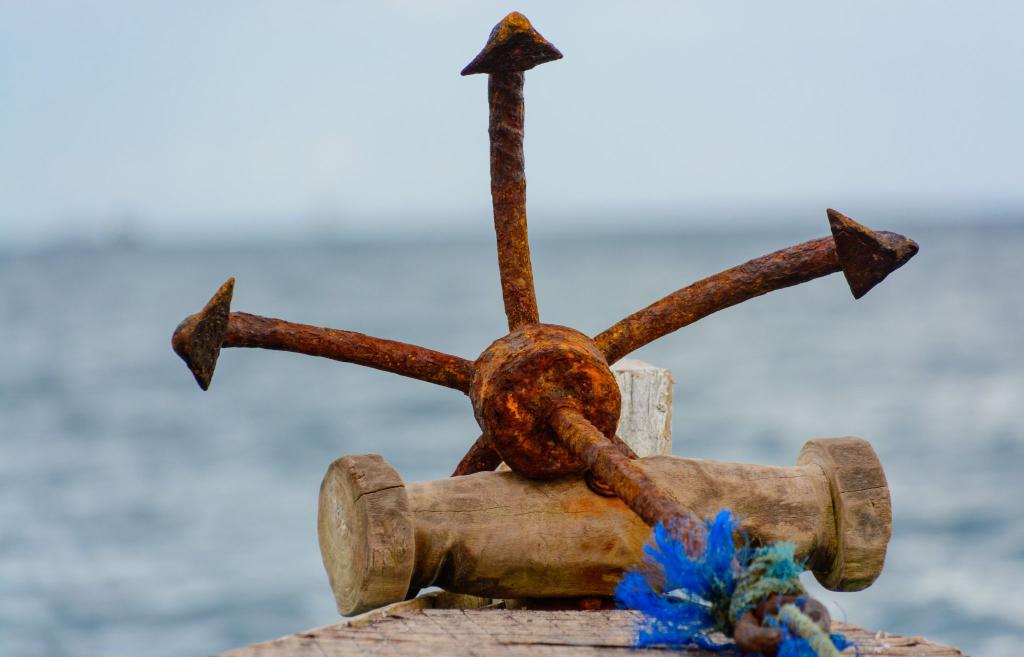
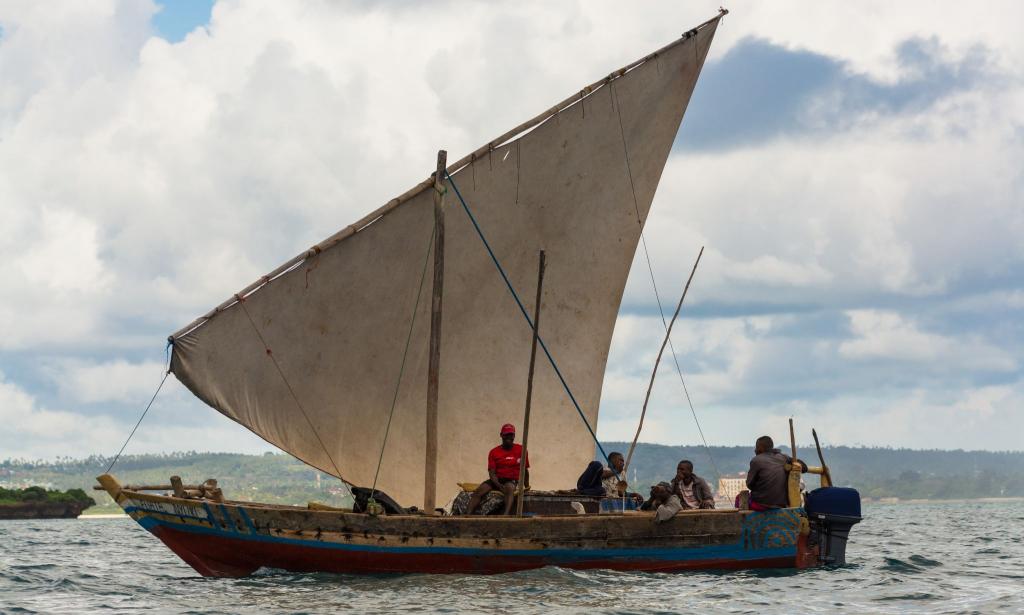
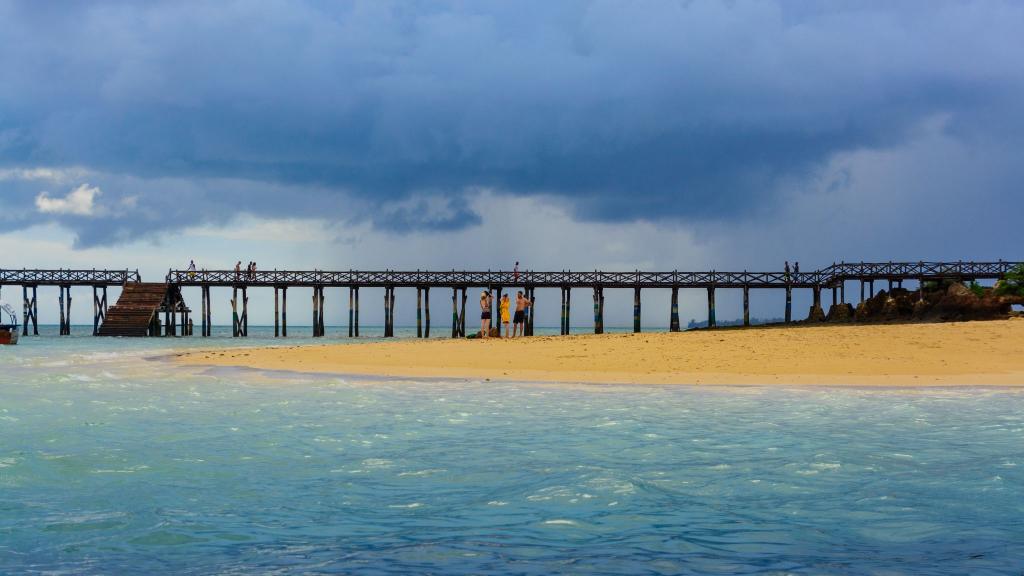
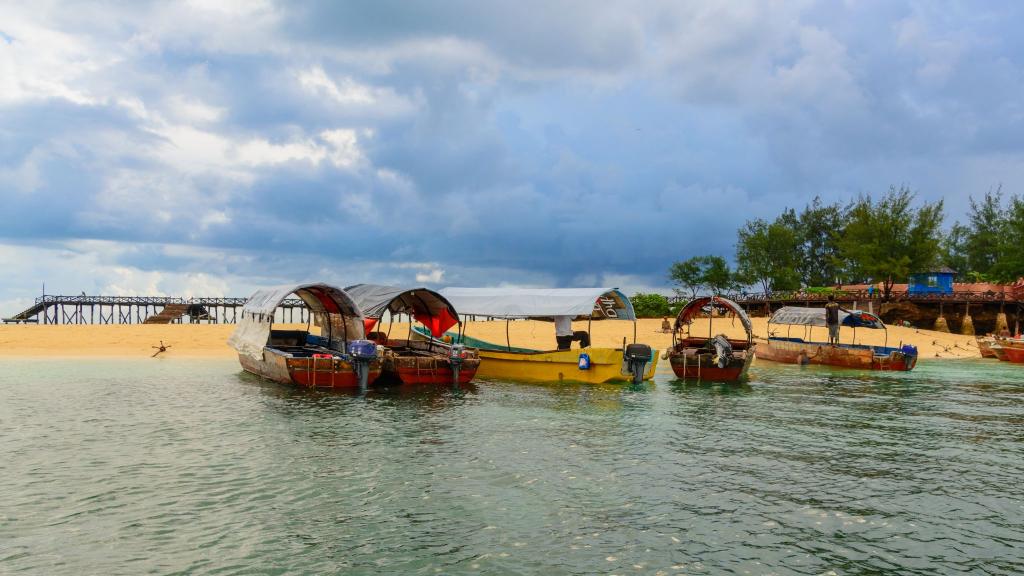
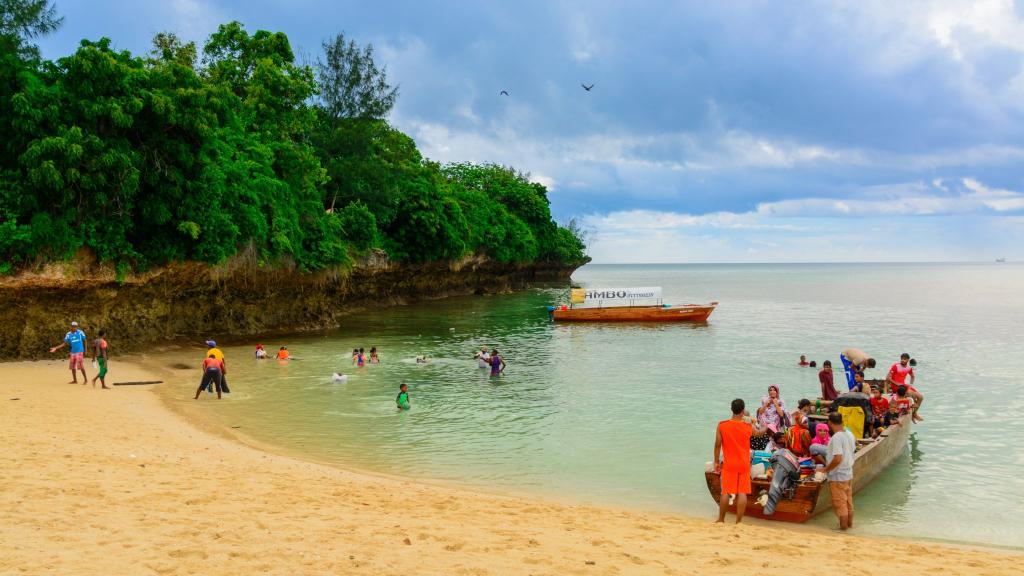
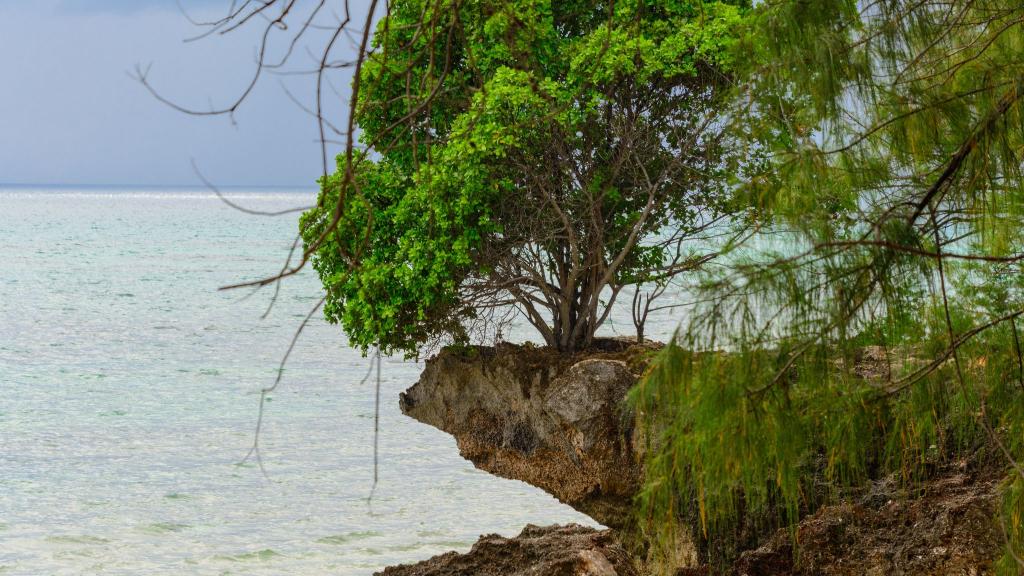
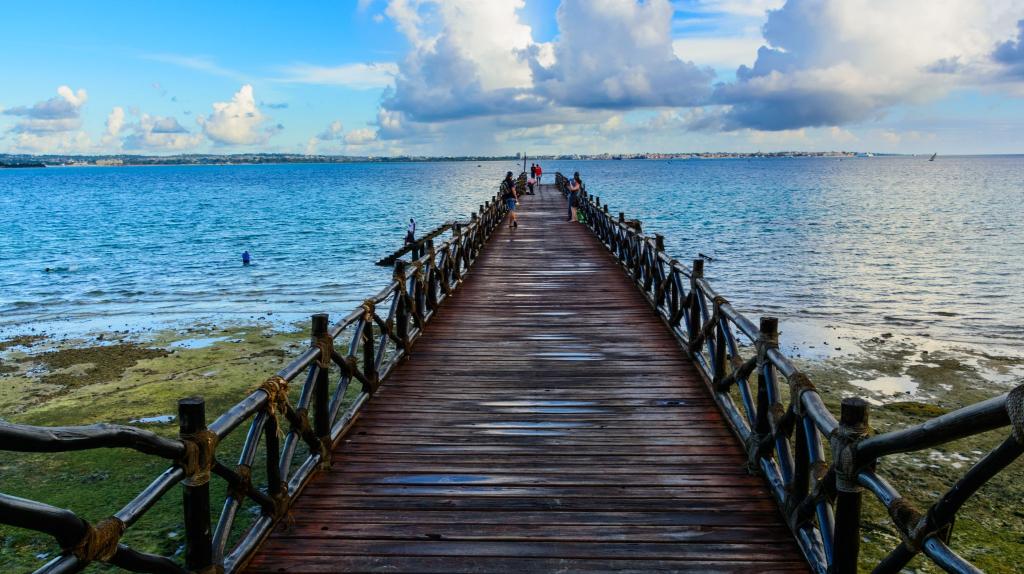
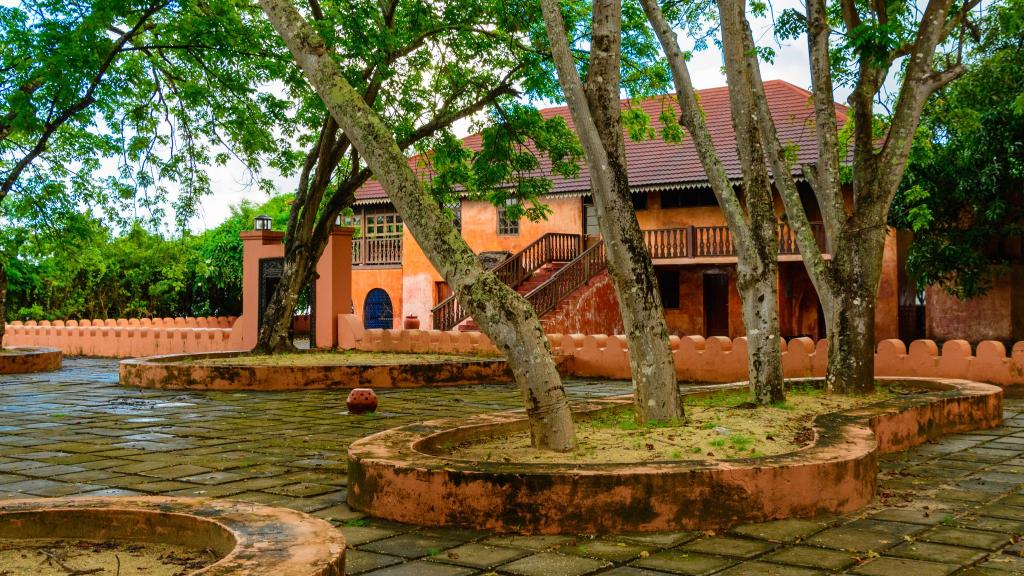
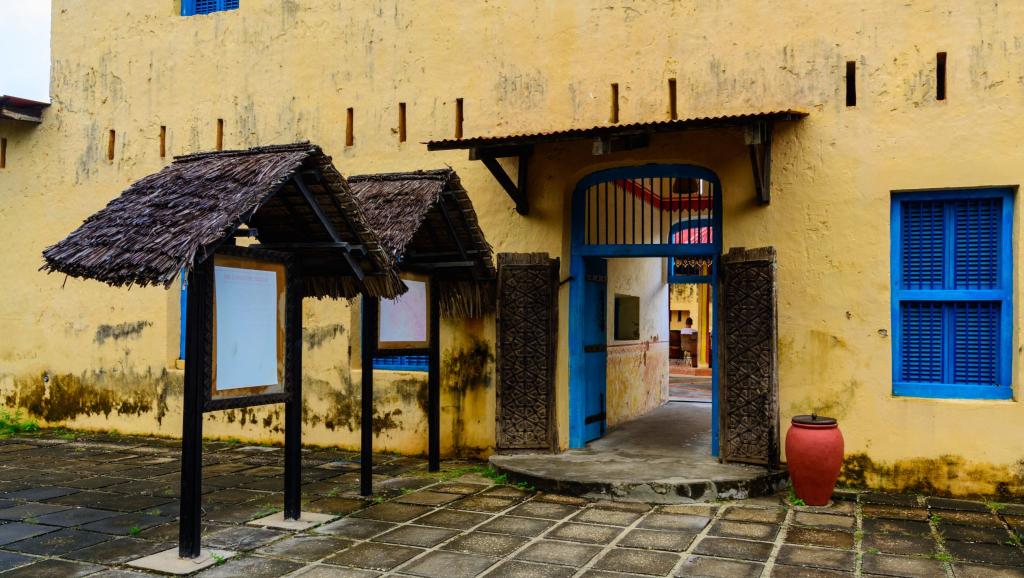
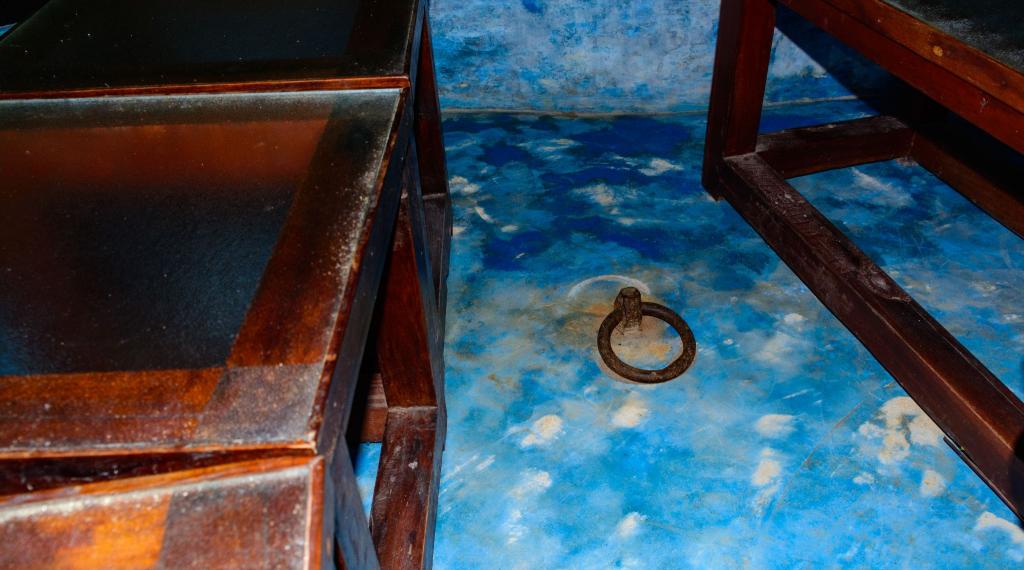
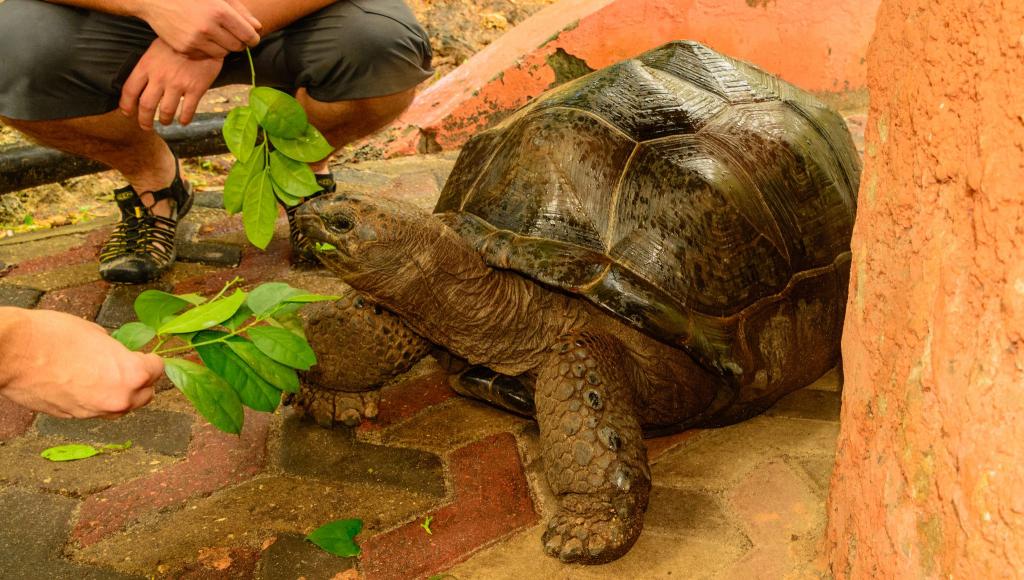
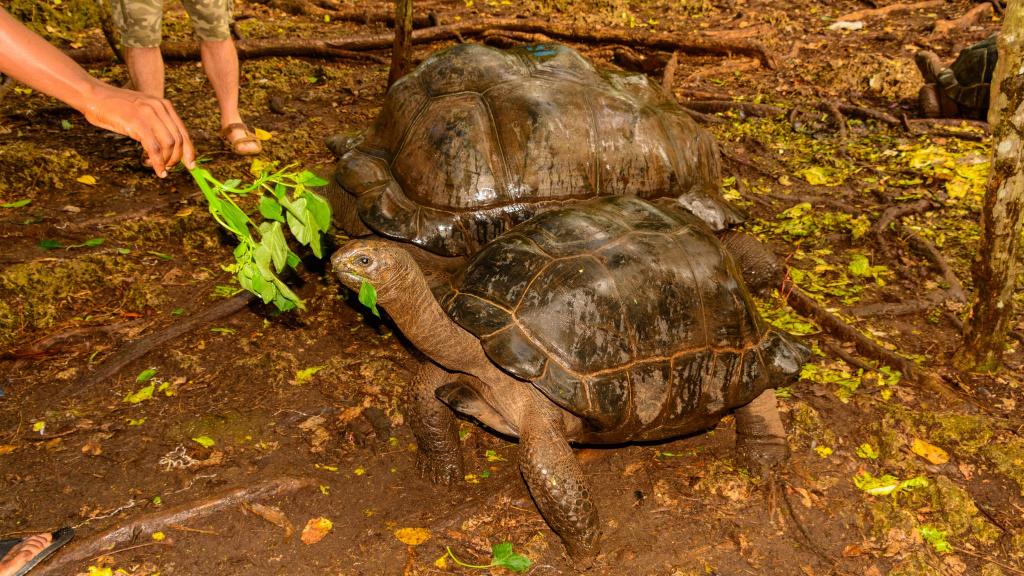
On the island there is a turtle farm. The oldest one is… 192 years old! One can feed them with leaved branches, which they adore. The turtles are huge and can weigh even 200 kg.
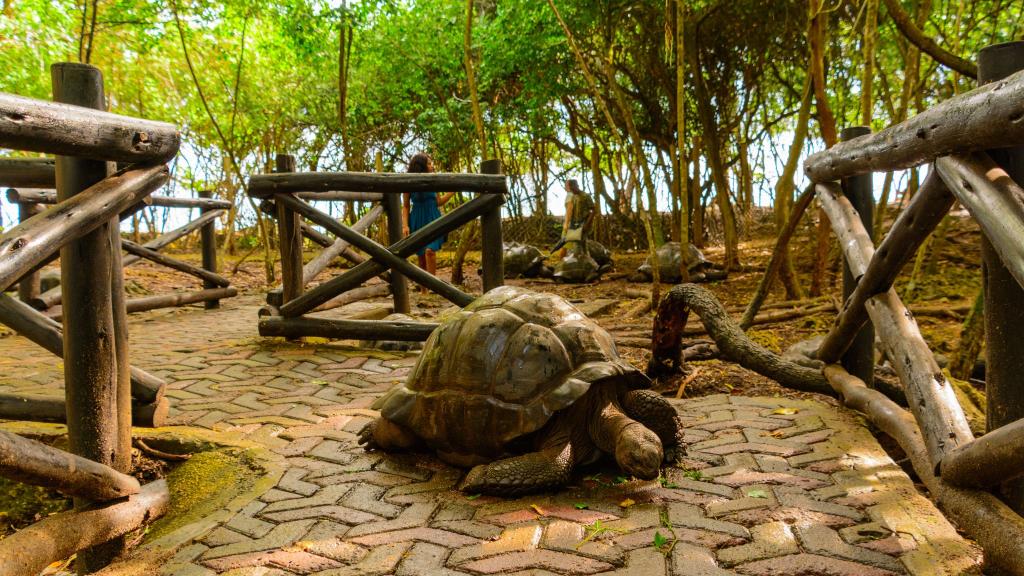
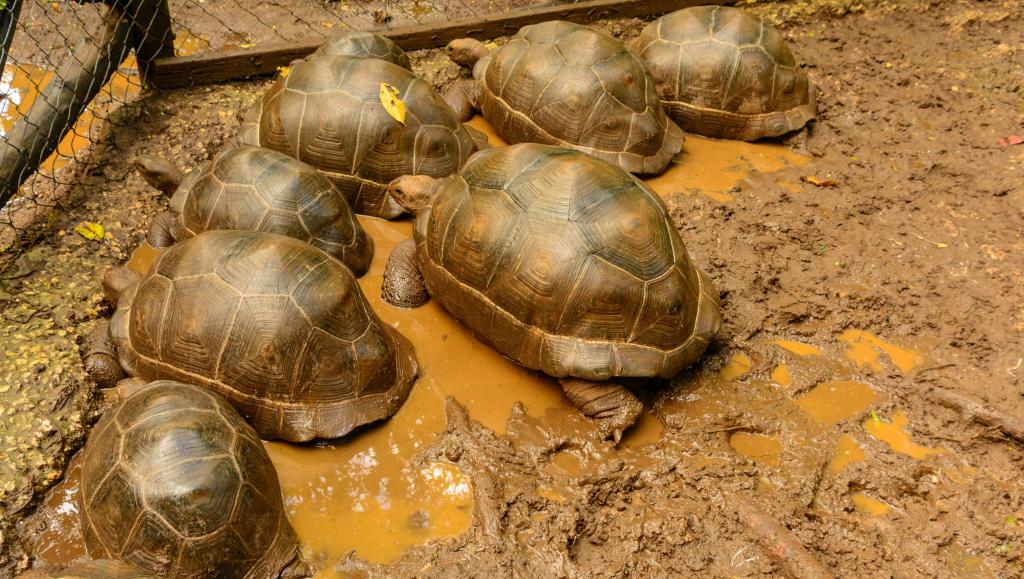
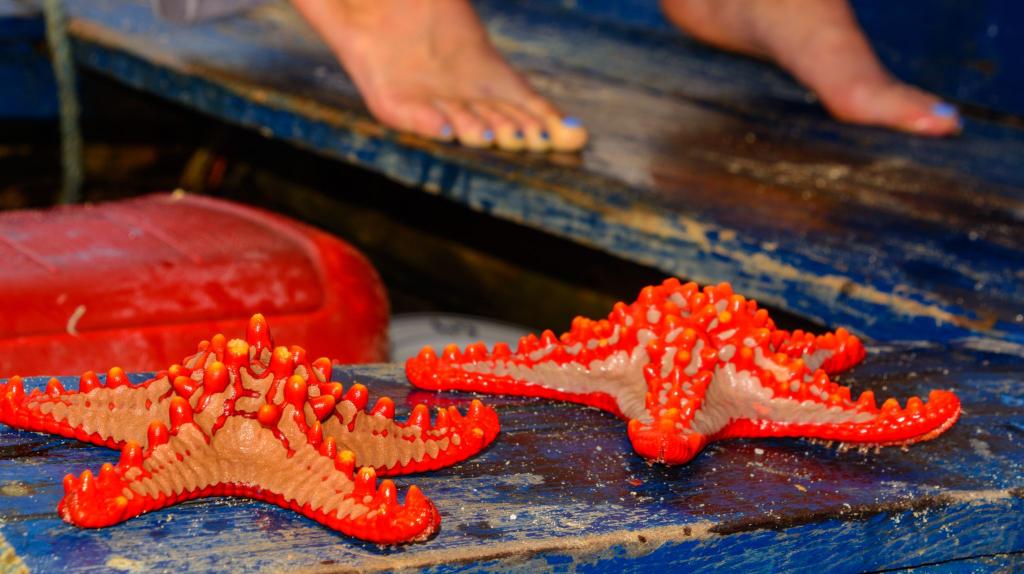
From there we go a bit away by boat to see the coral reef, where we jump into the water to snorkel and see the underwater life. Around the reef there are plenty of small fish with black and white stripes and the reef can be touched by feet in some places.
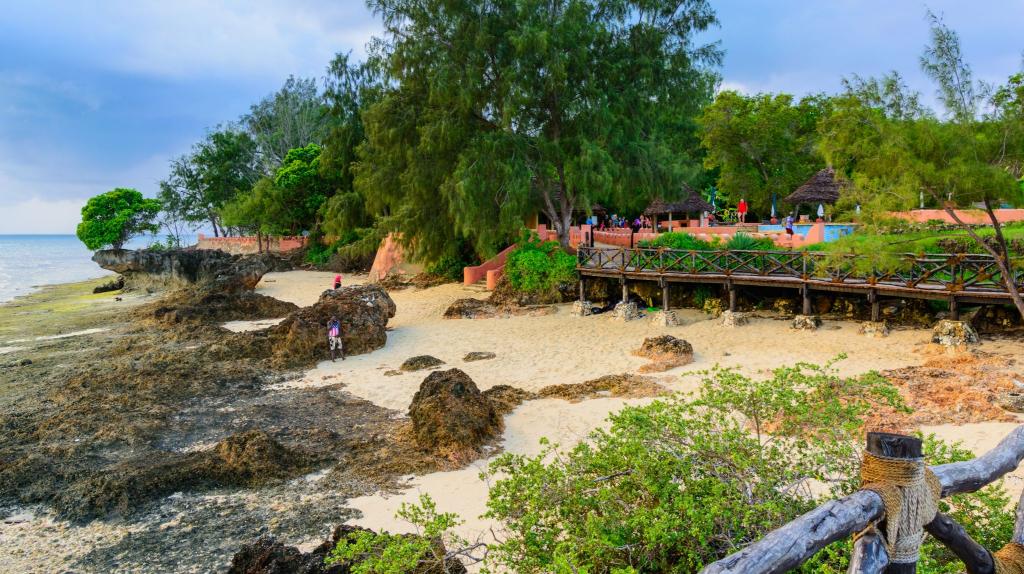
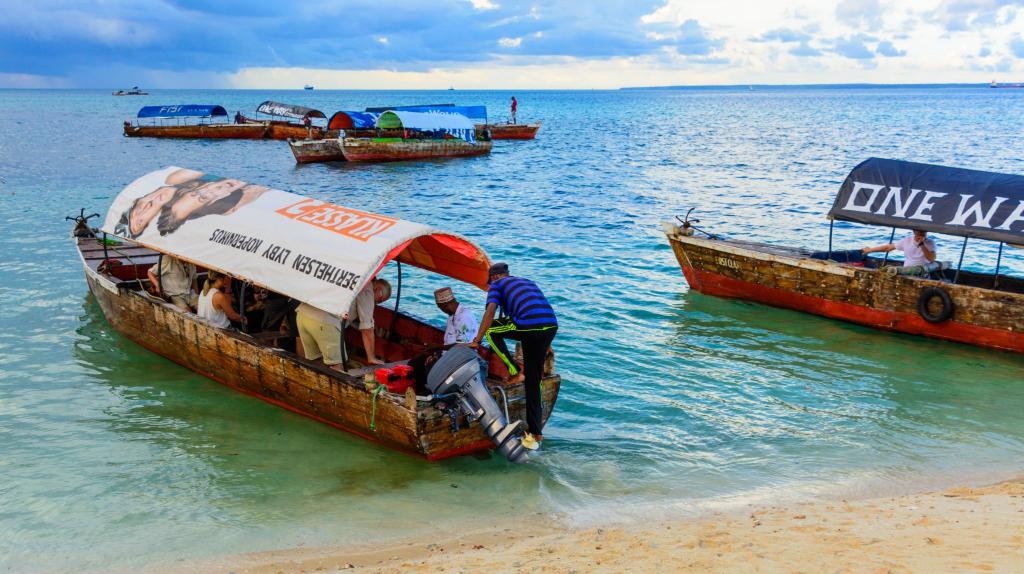
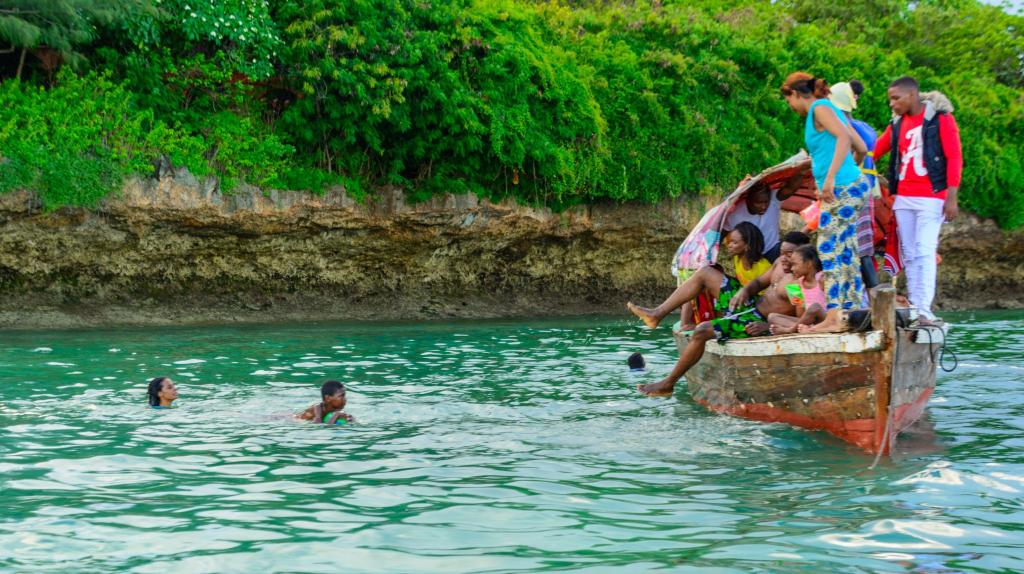
We finish another trip and go back to the shore, from where we start our last tour - the Stone Town. The guide leads us though some small alleys, firstly to the Hindu district, where the facades of the buildings and the copper doors are decorated with Hindu sculptures and carvings. We walk into one of the exclusive hotels in that district, which is totally furnished in the Indian style and in the middle of the hall there is a swimming pool.
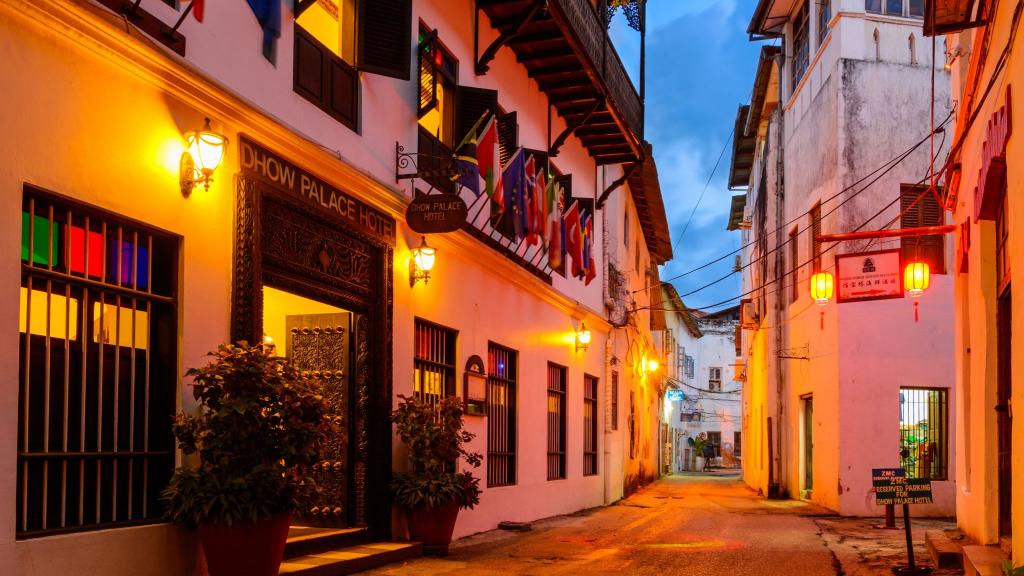
Afterwards we walk through the Muslin district, pass by a mosque and further we get to the square, where there are plenty of people in white robes sitting and just watching TV in the television on the wall. According to tradition the square is a meeting place and this tradition is still very much alive.
We move on to the Slave Market, which was open until 1871, when slavery was abolished. Now there is a church built there.
We start walking towards the beach, but on the way we stop for delicious freshly squeezed fruit juices. I chose mango, papaya and banana. Again today I’m very happy!
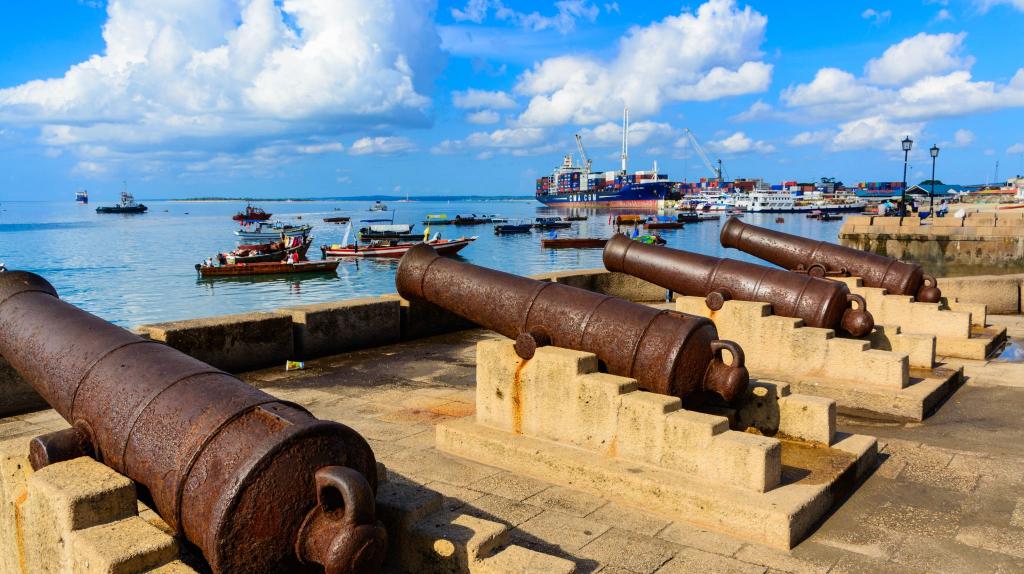
After fifteen minutes we get to the Old Fort, inside of which there is an amphitheatre, a bit resembling the Colosseum, but a lot smaller of course.
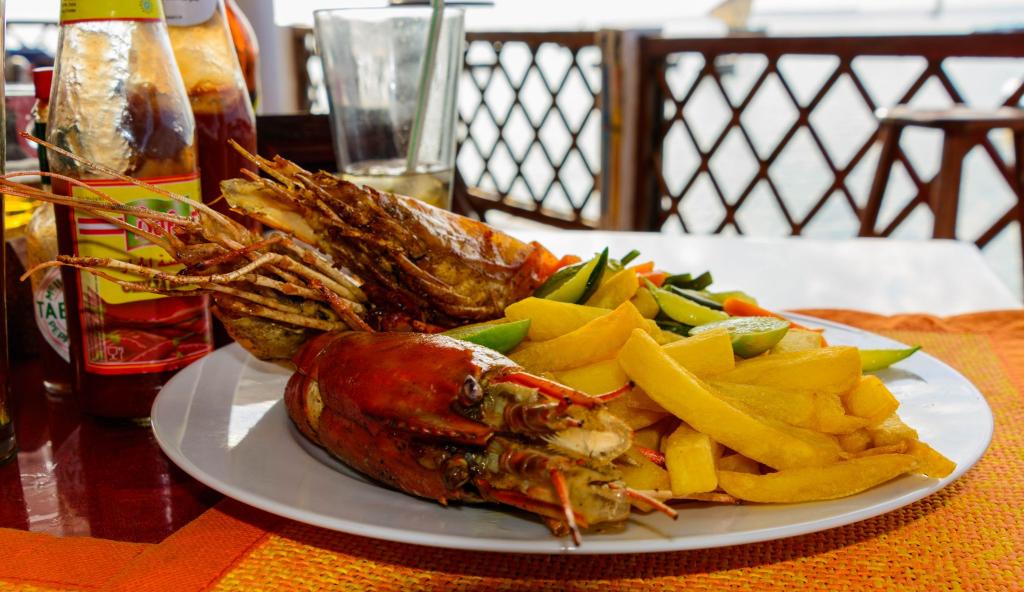
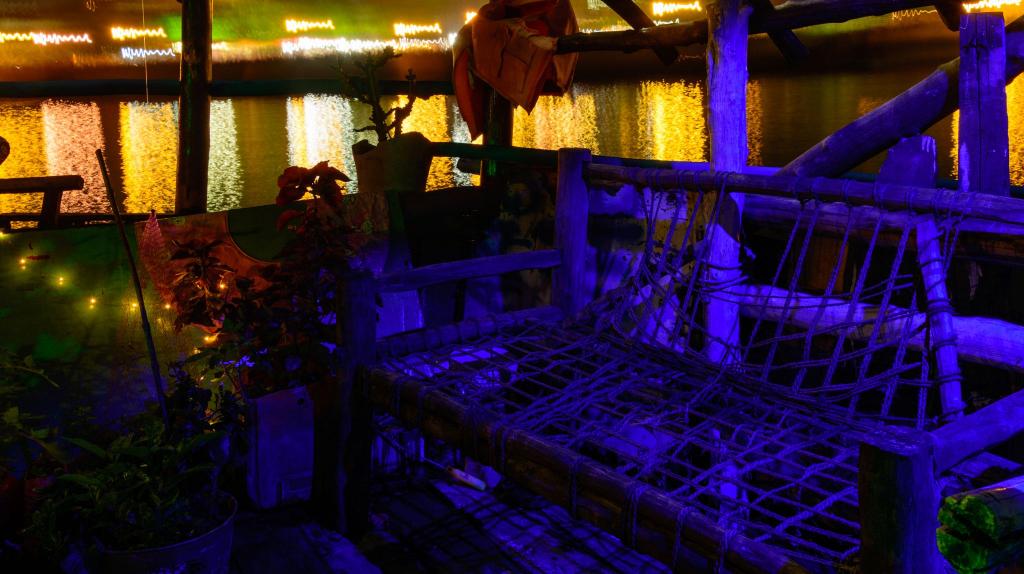
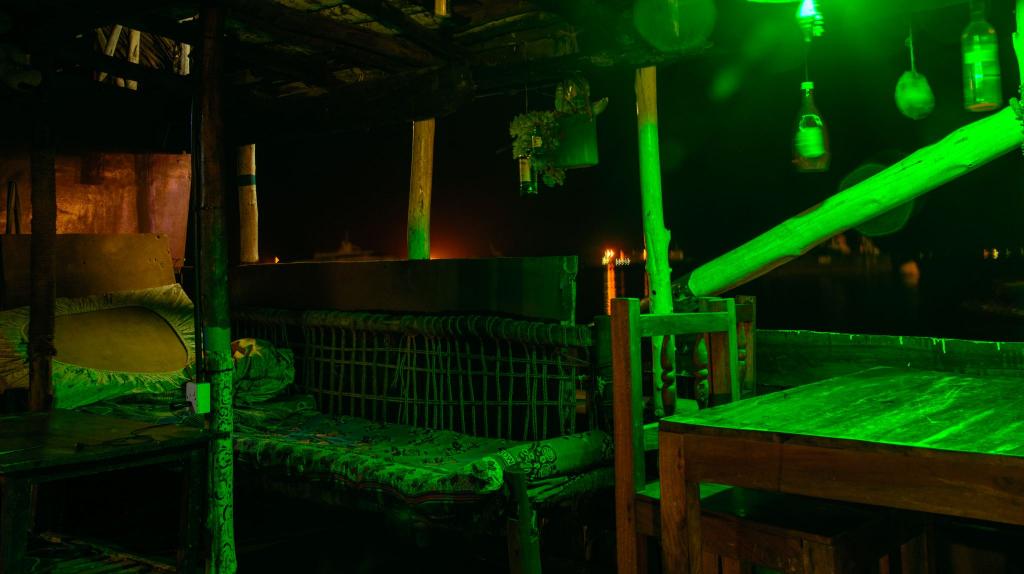
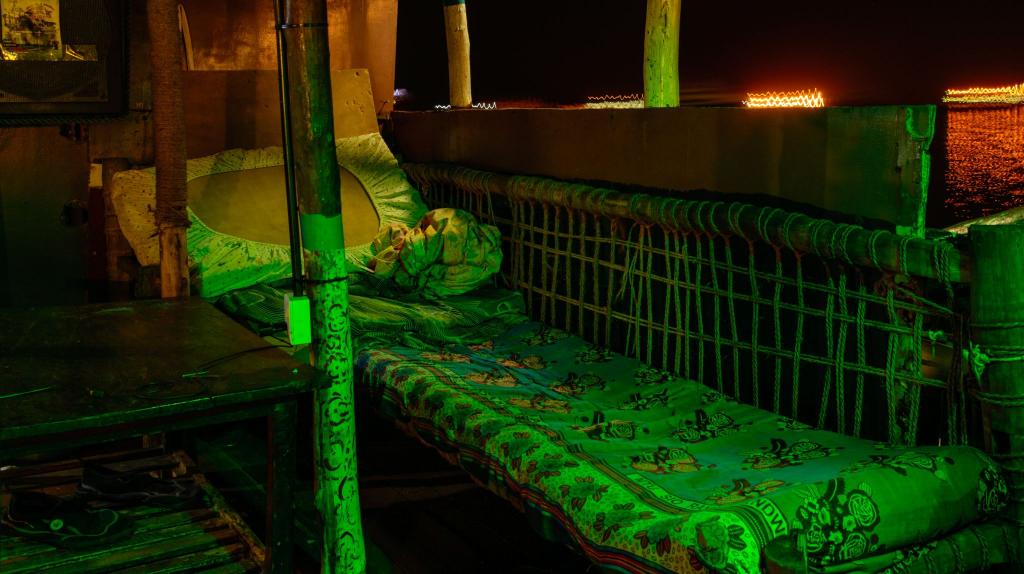
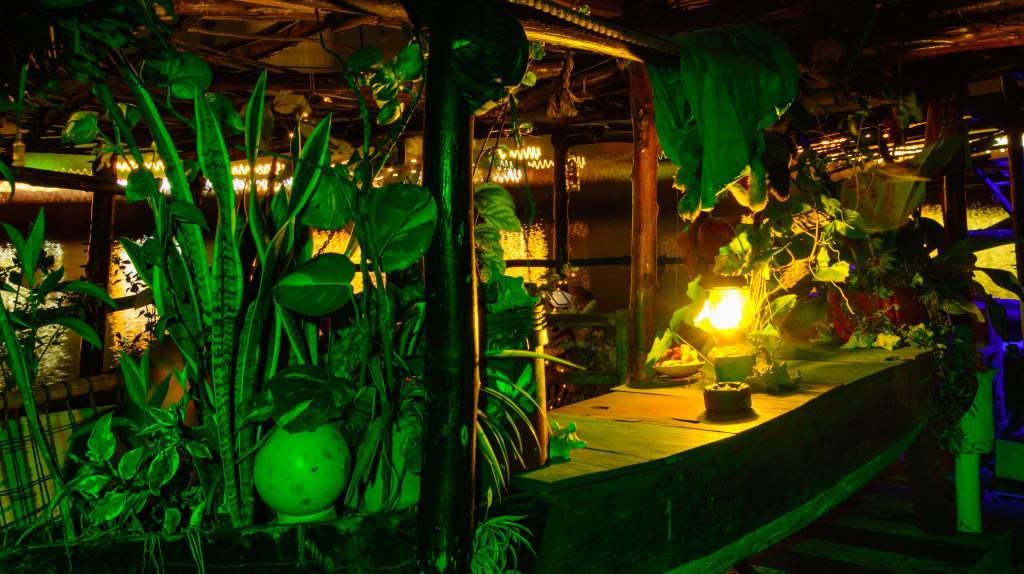
Finally we make a phone call to the restaurant in the hut on the water we spotted yesterday. After a few minutes the owner comes to pick us with his boat. The restaurant is all in wood, with wicker chairs, a bed, where we can relax listening to the sound of the water, a few lamps and small Christmas tree lights pinned to the wooden railings beyond which there is only water add the ambience to this unique place. From here we can also enjoy the view of the shore, beautifully lit at night. On the top floor there are two double rooms, which can be rented for $50 per room, which is not so much considering this amazing place, that enchanted the whole group.
The only downside of this place is that food needs to be ordered a few hours before and once the order is made, the owner goes to the Food Market on the shore, gets the products and prepares the dish. There is only seafood served here. For later you can order a beer or a cocktail and enjoy the atmosphere of this place for hours.
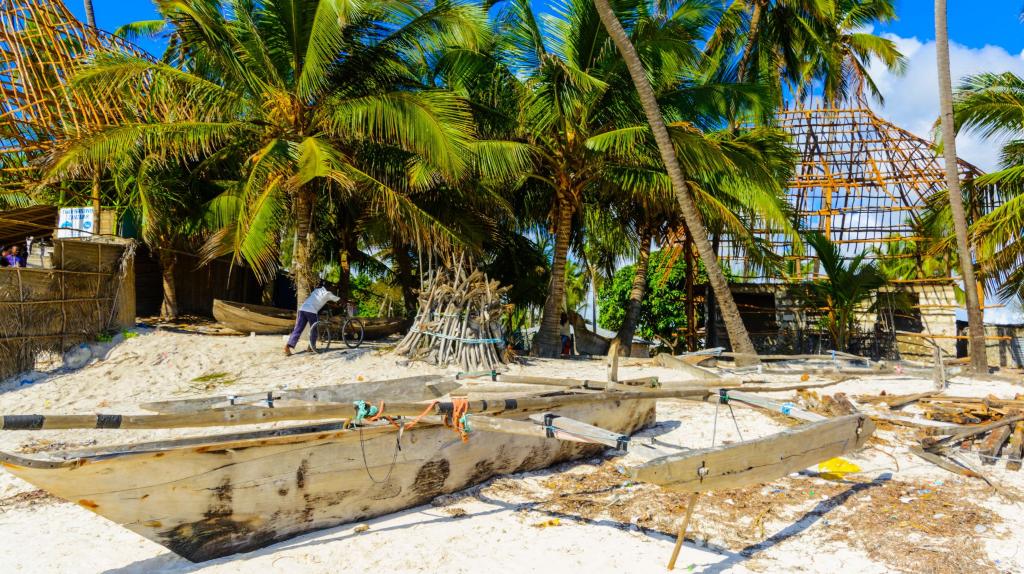
To our snorkelling and diving centre we arrive at 10. There our guide from the centre Jeremy divides us to two groups – the ones who are going to snorkel and the ones who will go deeper with oxygen tanks.
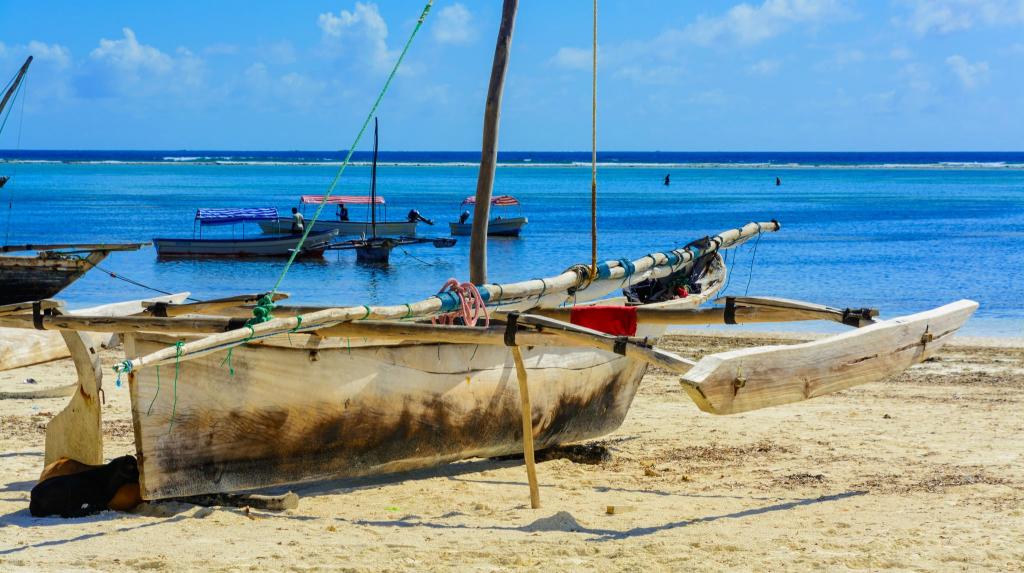
We are split to two boats. I will be snorkelling and watching the coral reefs from above. We arrive at Bill Gates’ private island with an exclusive hotel, where one night costs only a few thousand dollars. The island is heavily guarded and anyone who sets their foot on the beach can be penalized with a $500 fine.
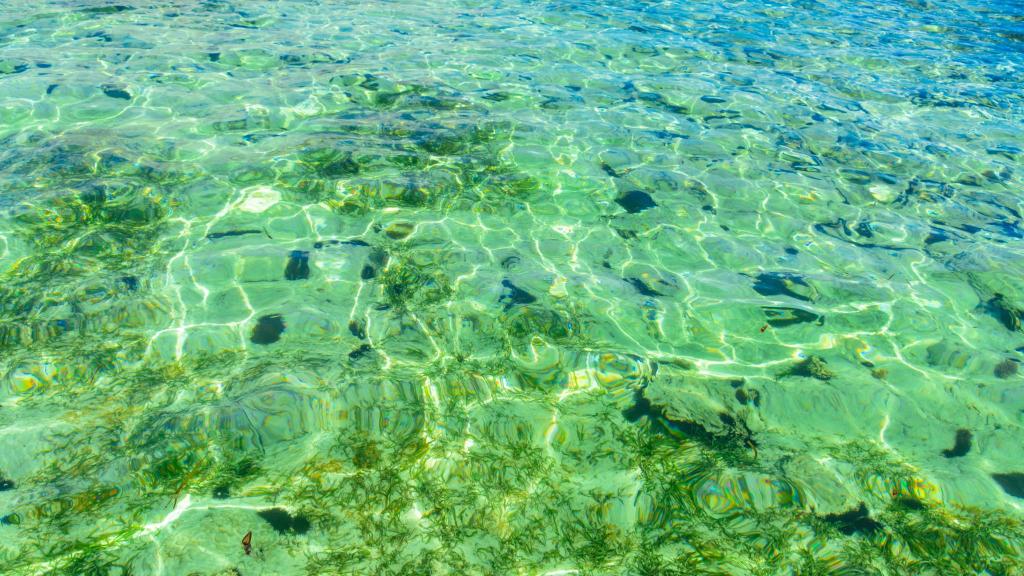
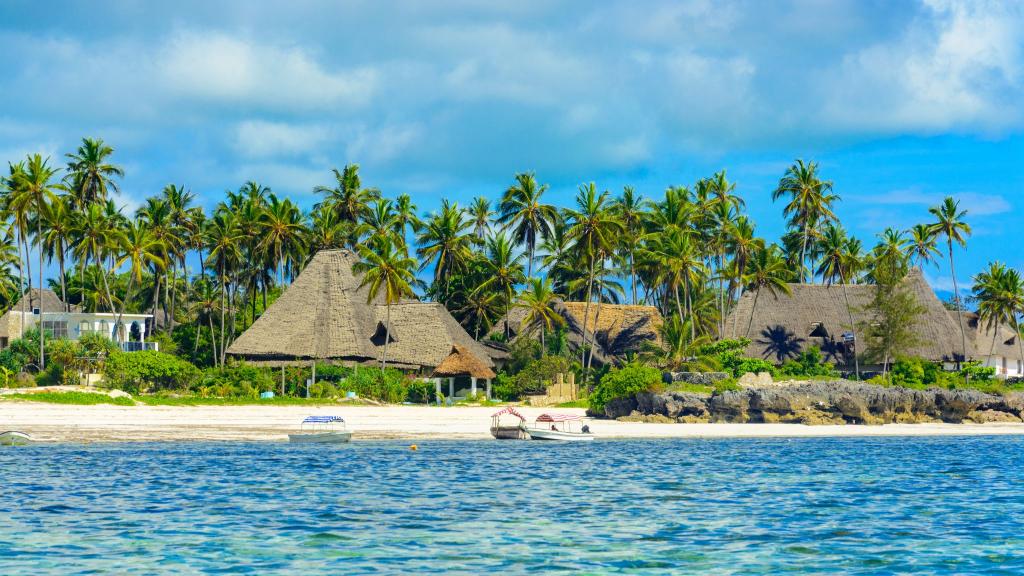
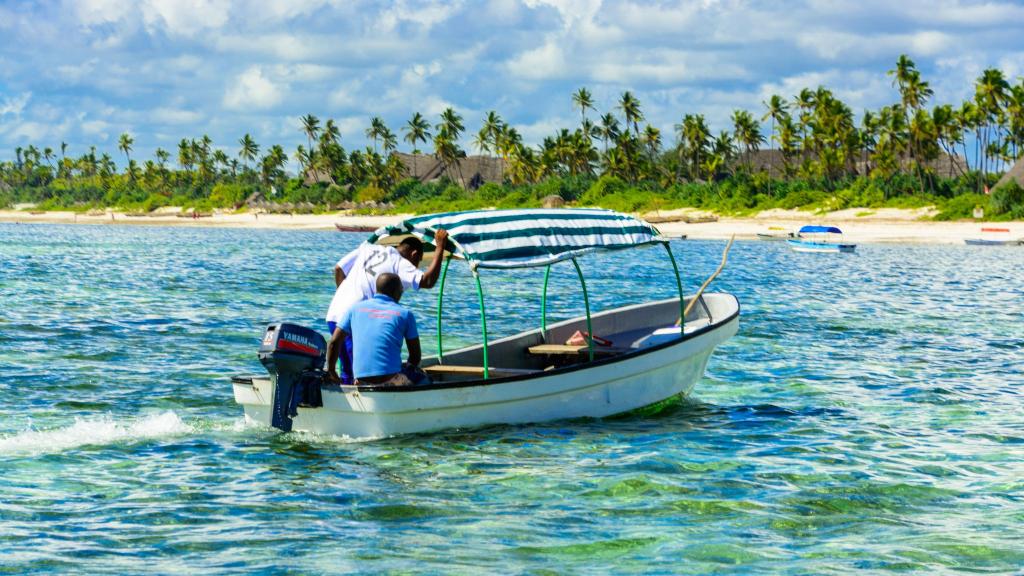
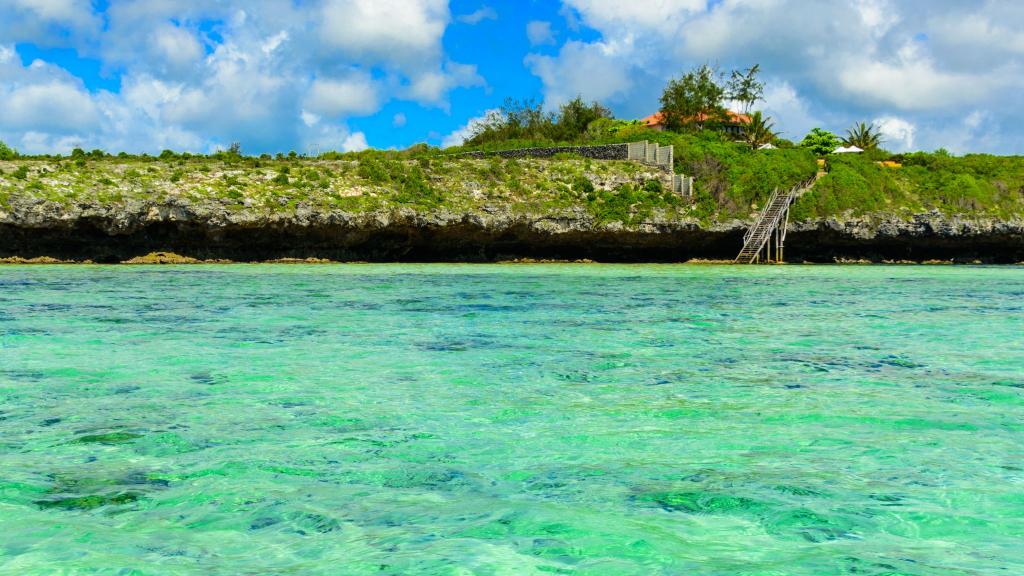
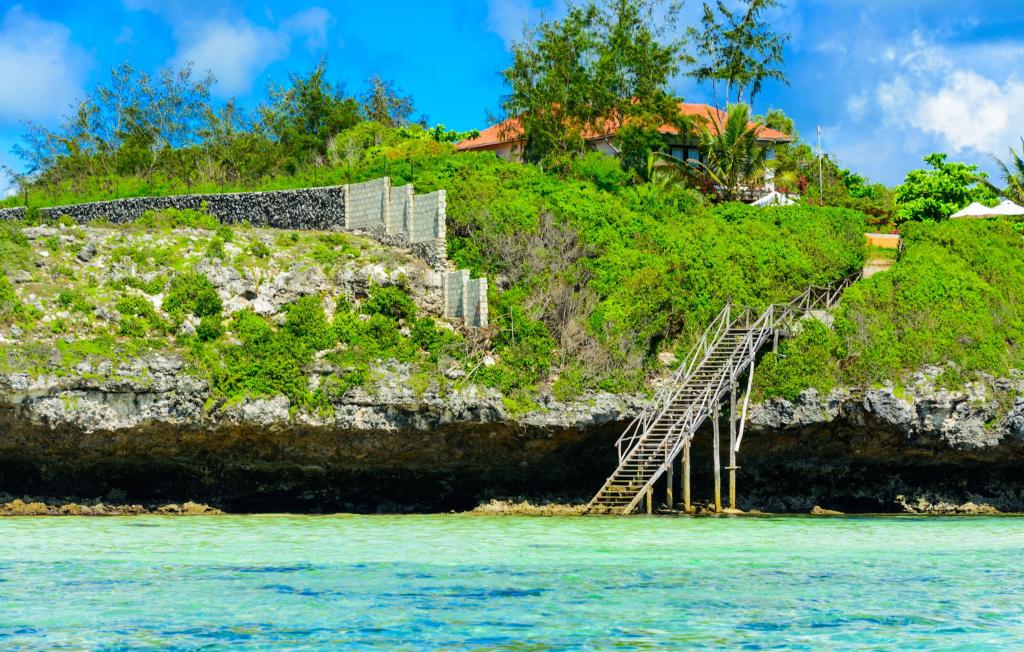
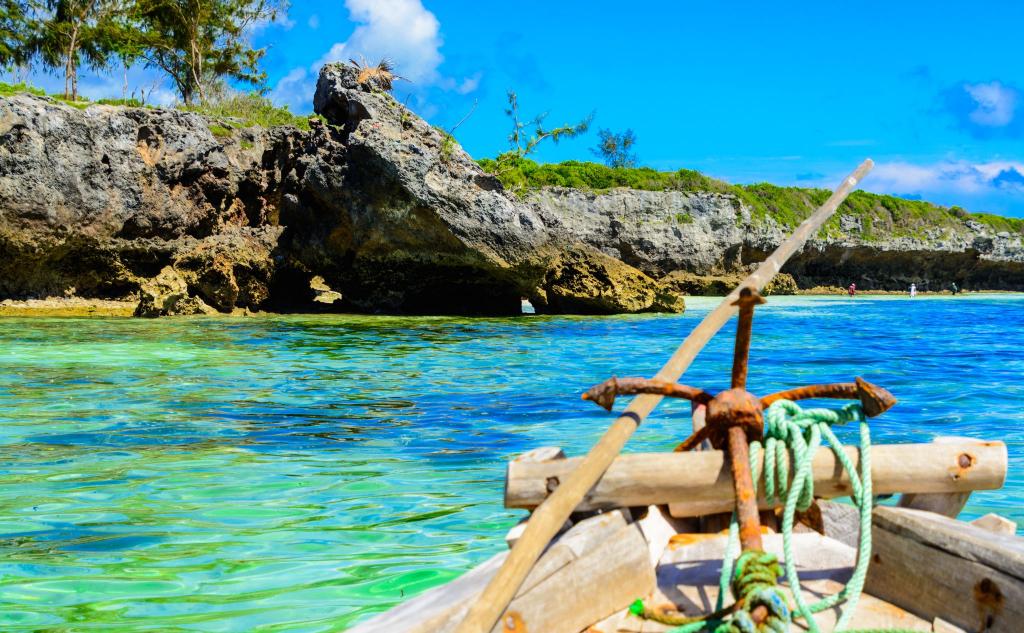
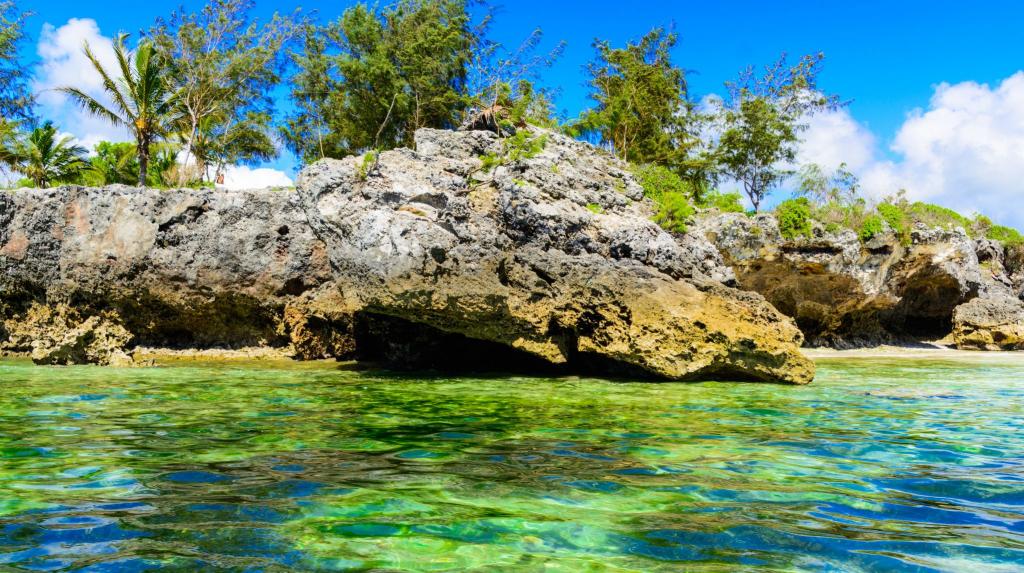
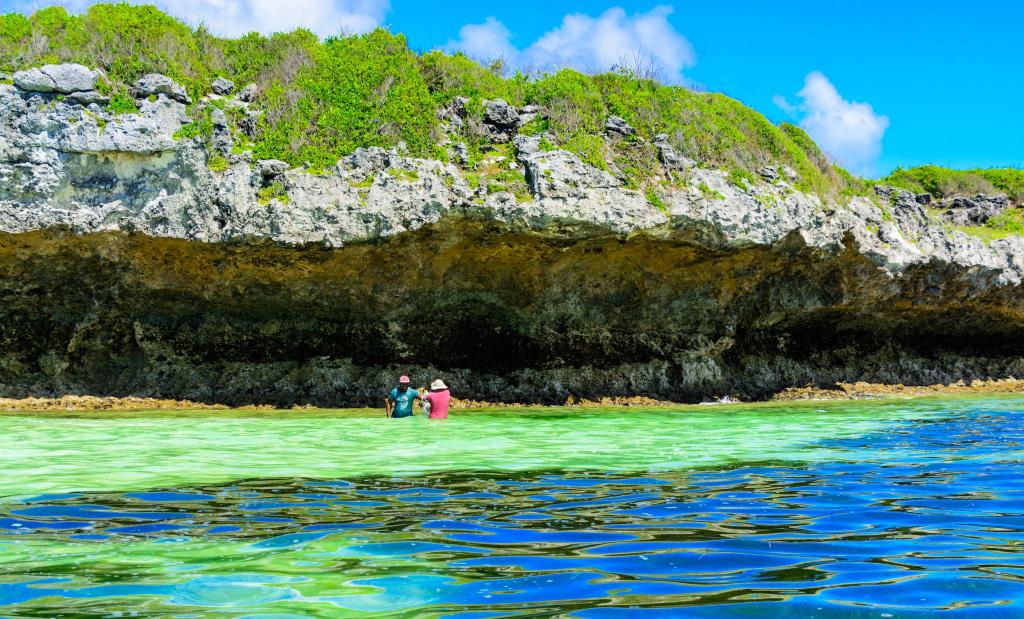
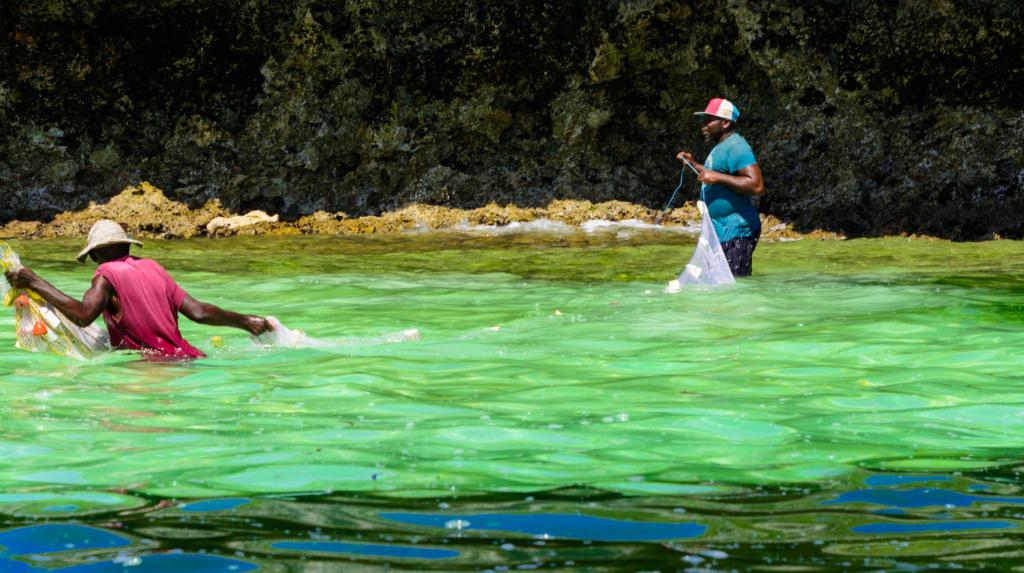
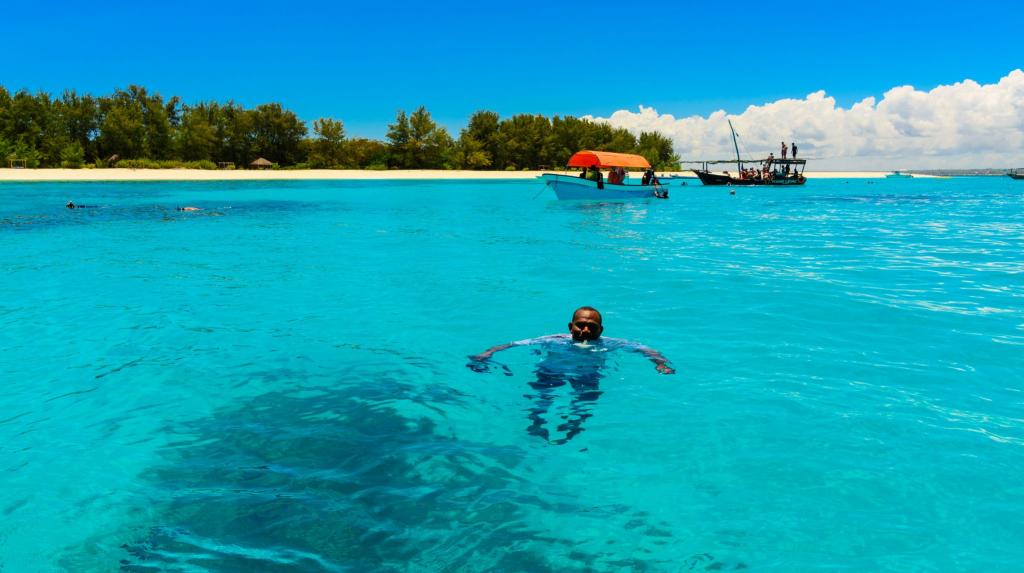
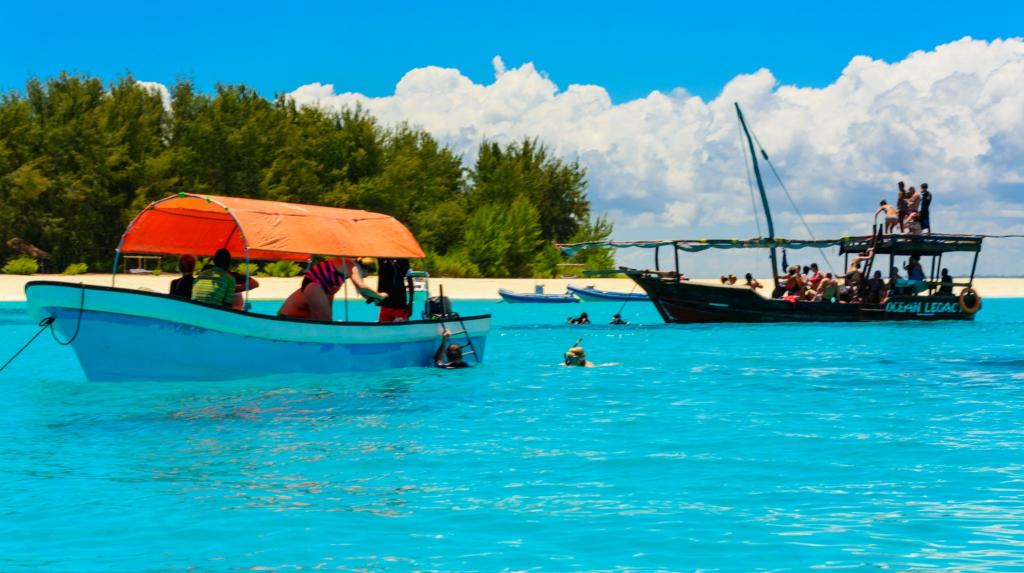
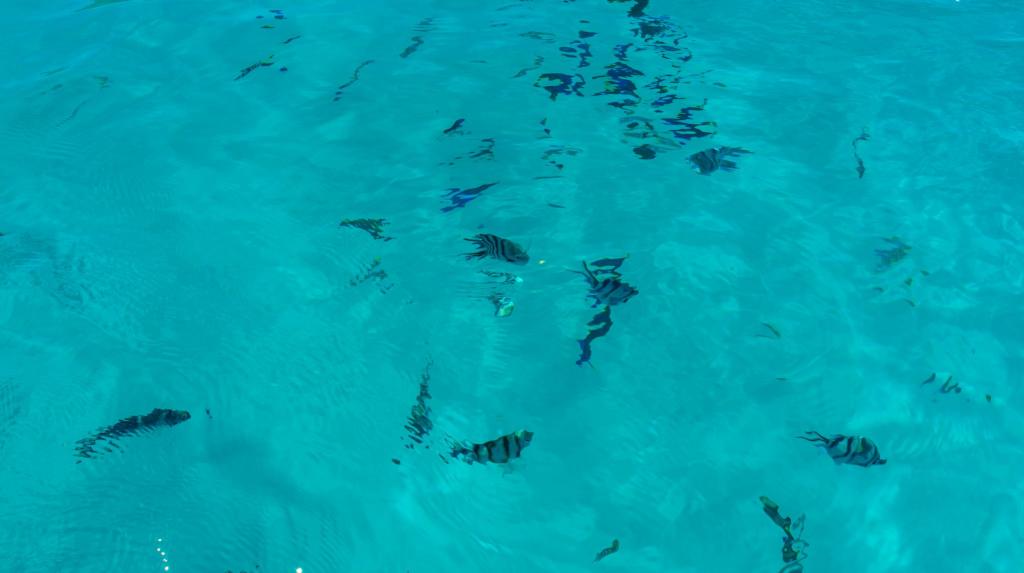
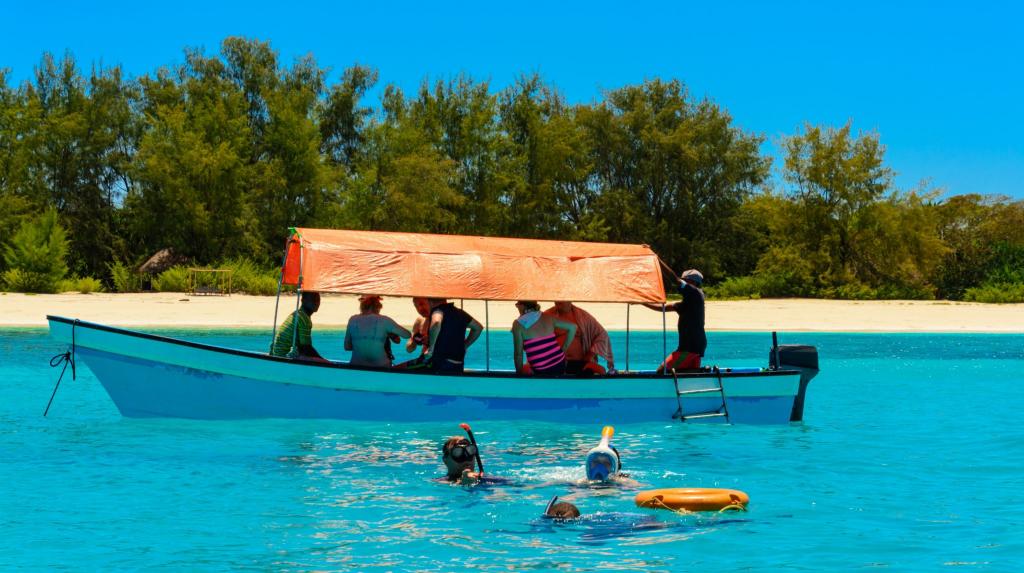
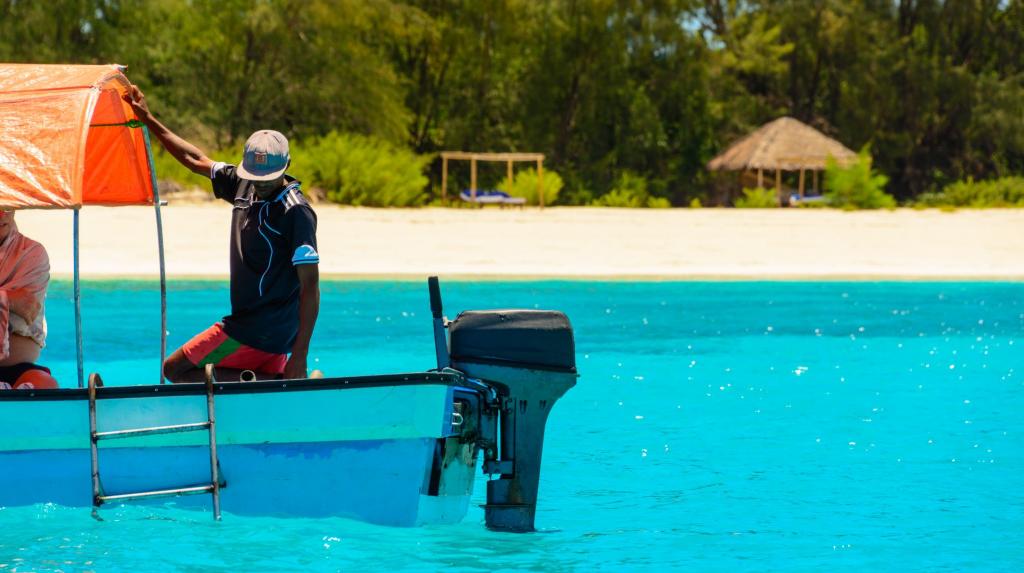
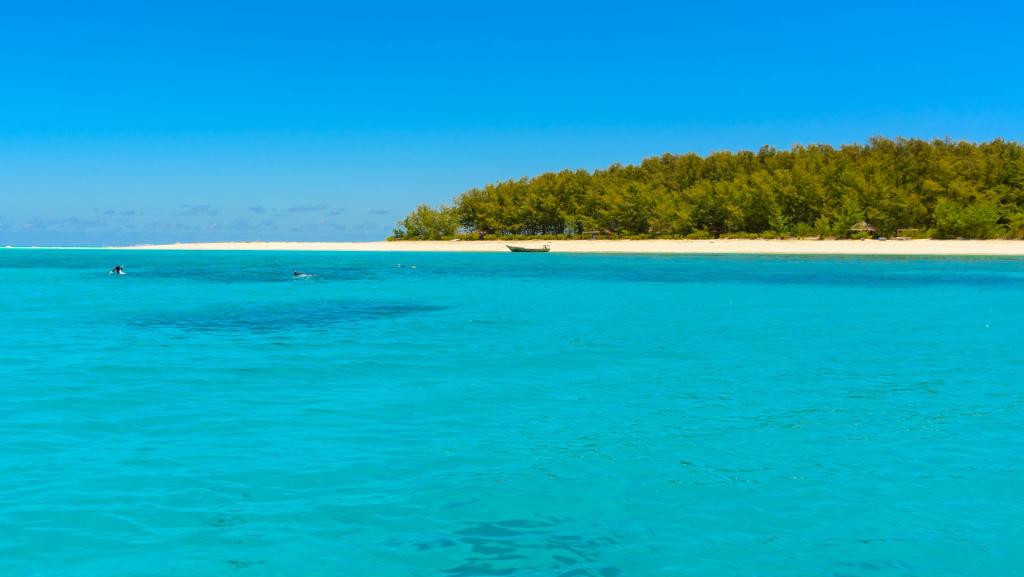
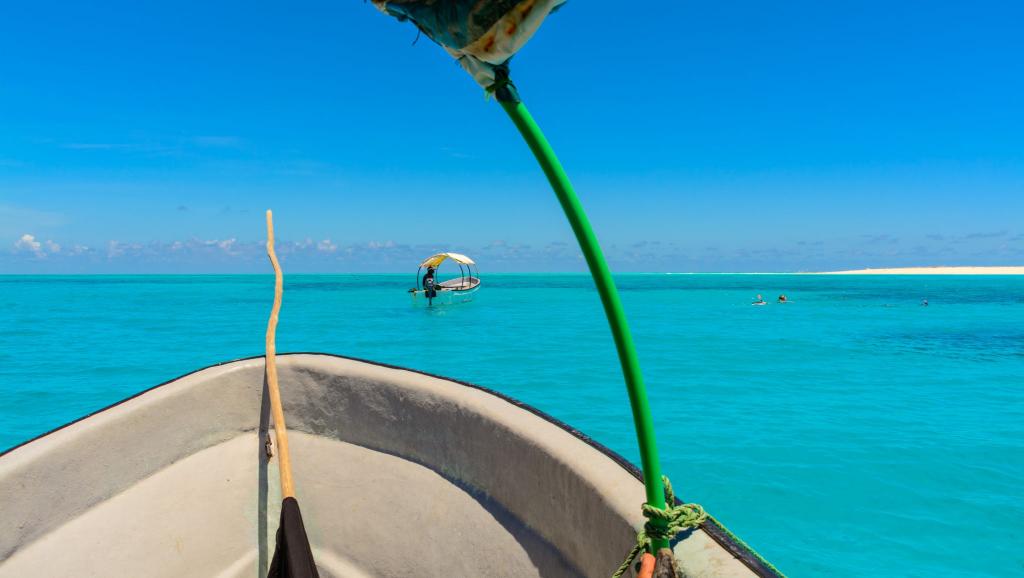
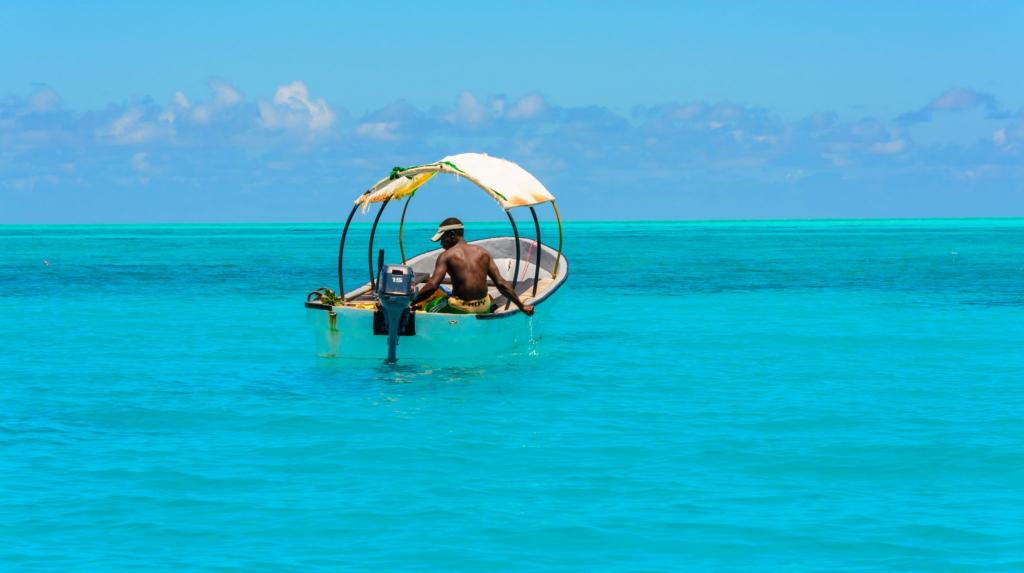
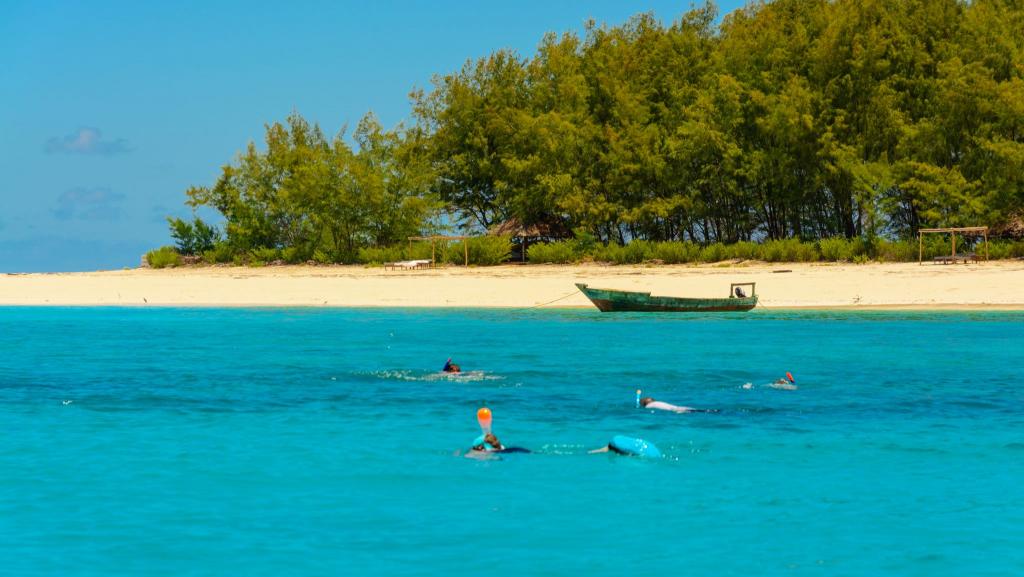
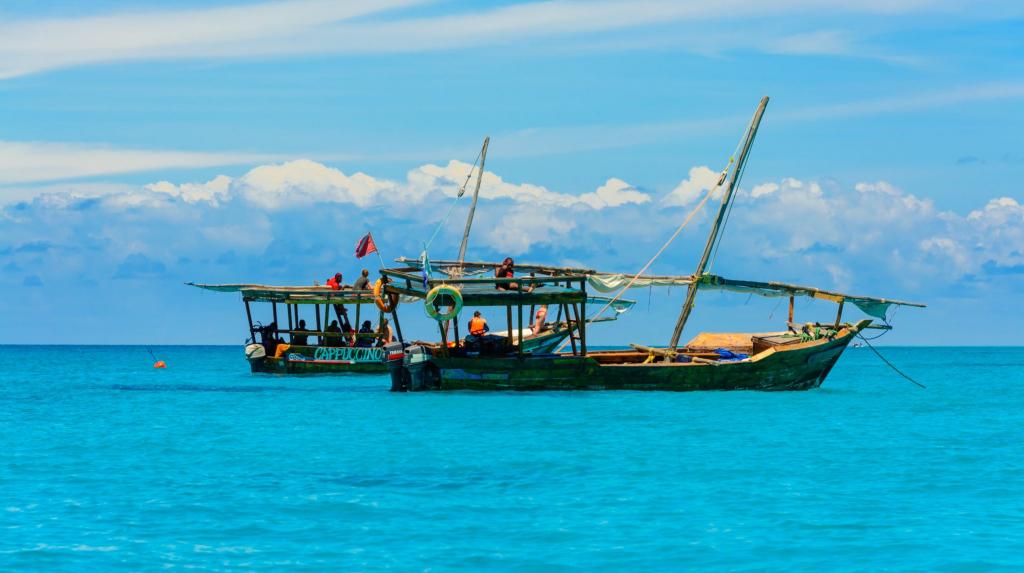
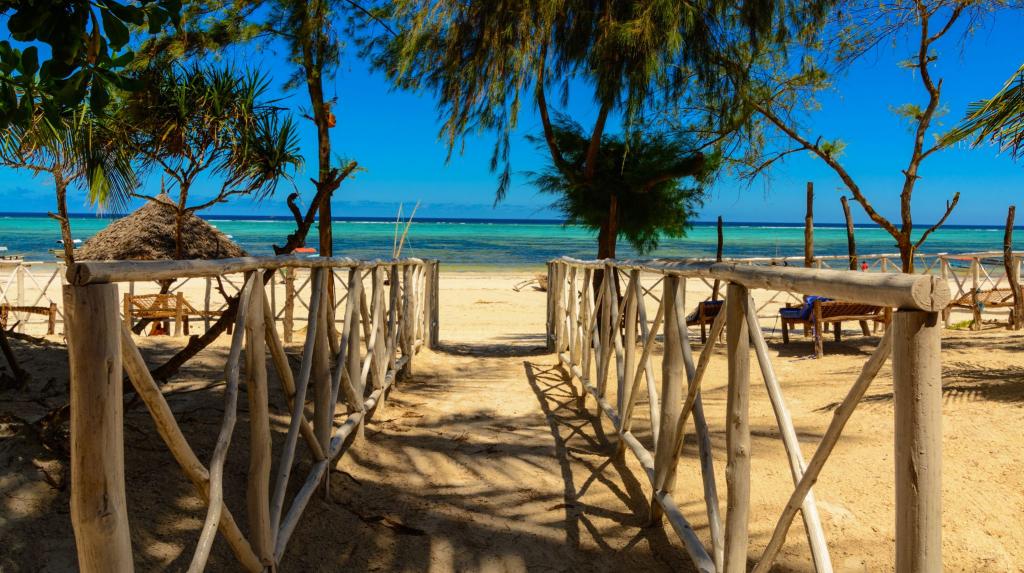
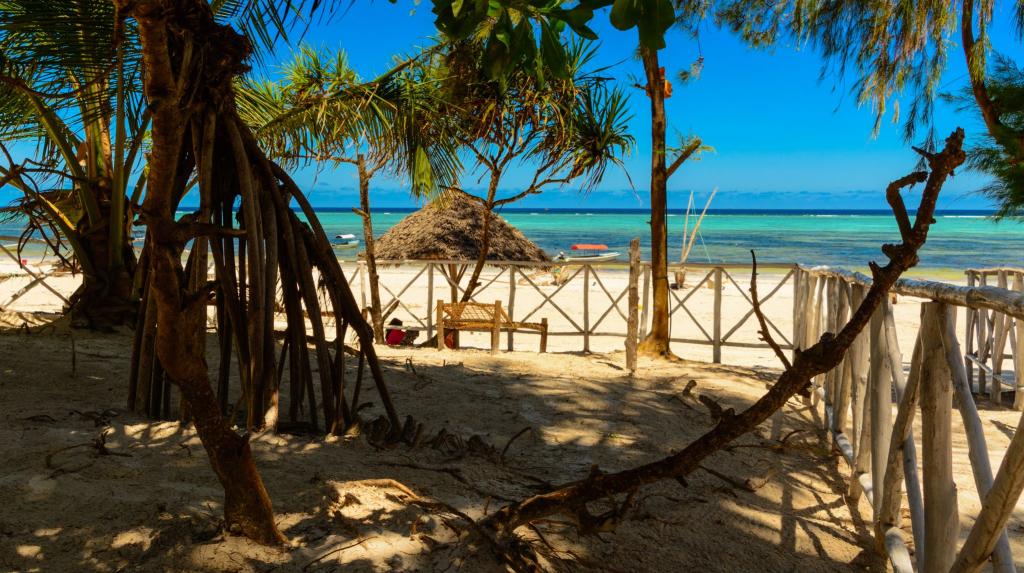
After our activities we go back for lunch to the paradise beach called Pwani Mchangani, from which we left off and where the diving centre is located, once ran by Polish people.
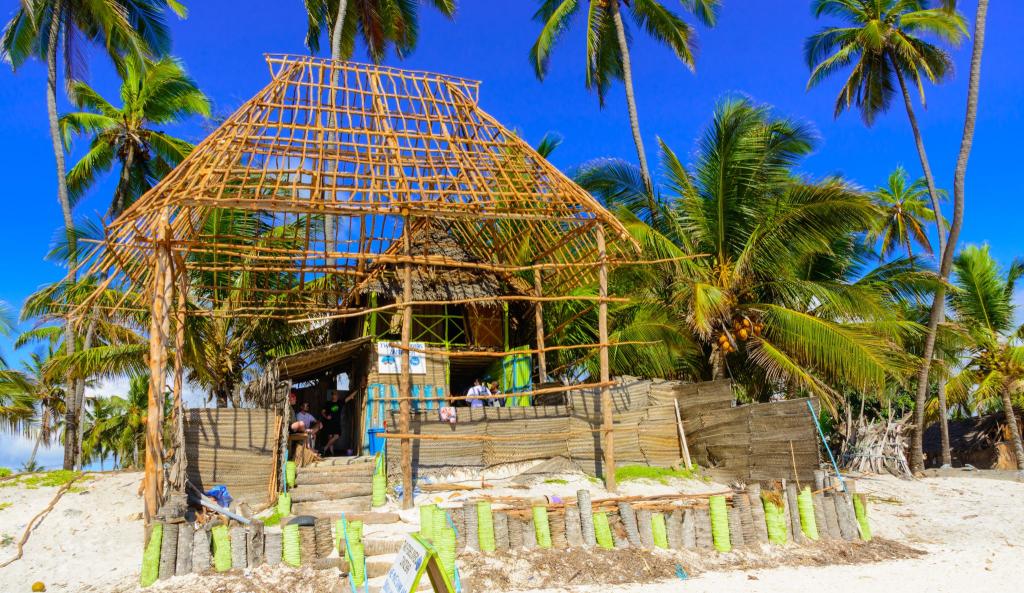
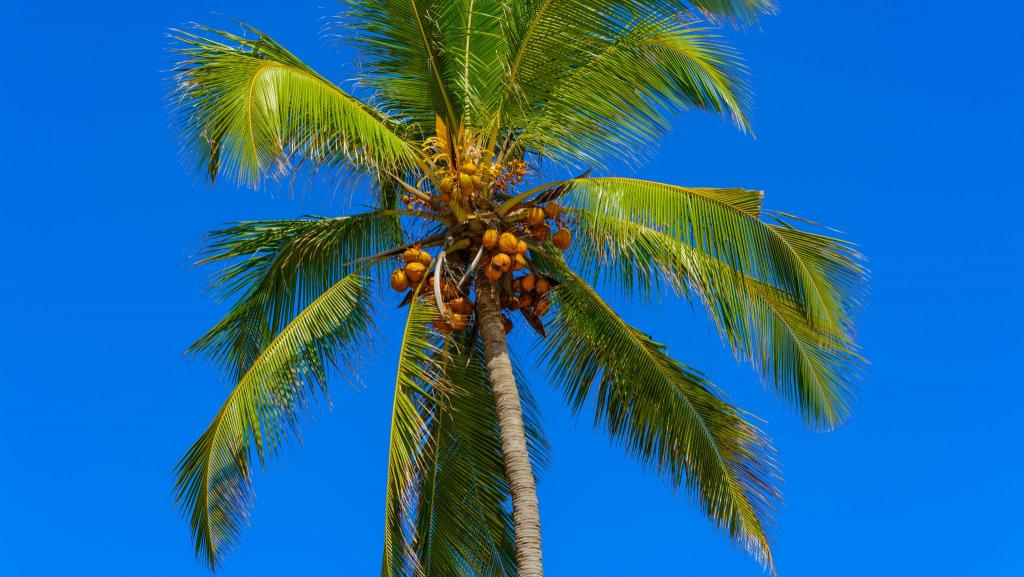
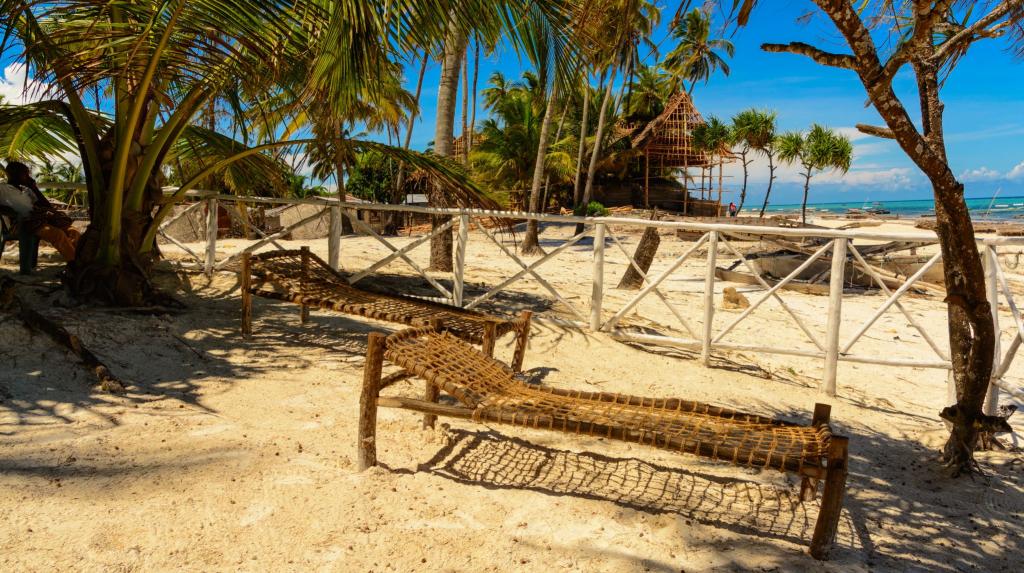
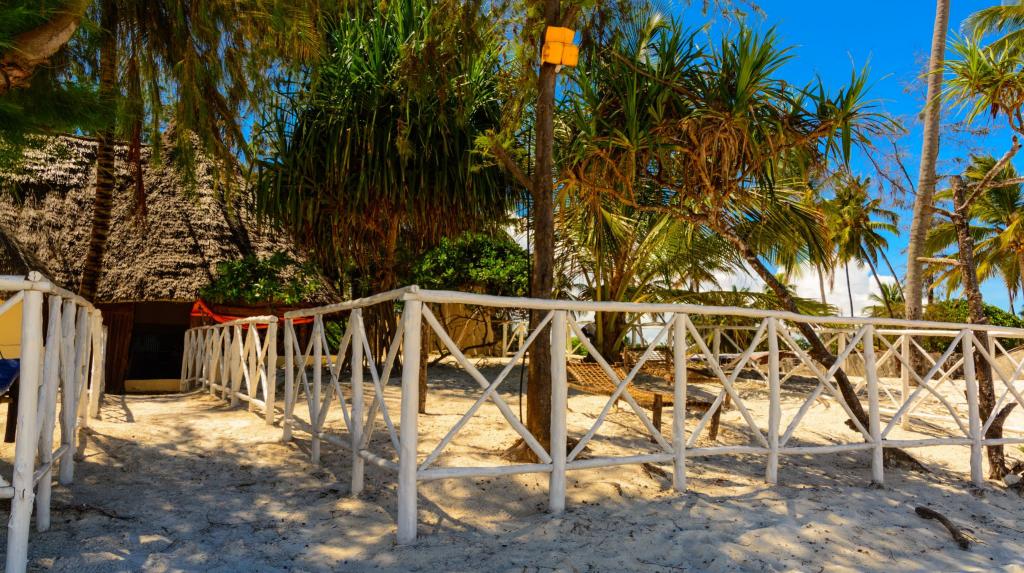
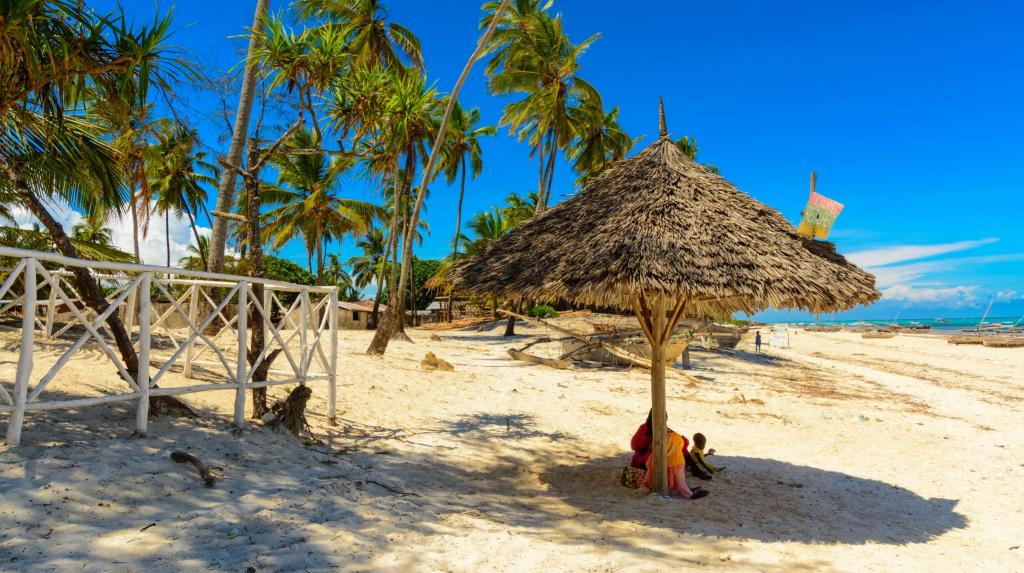
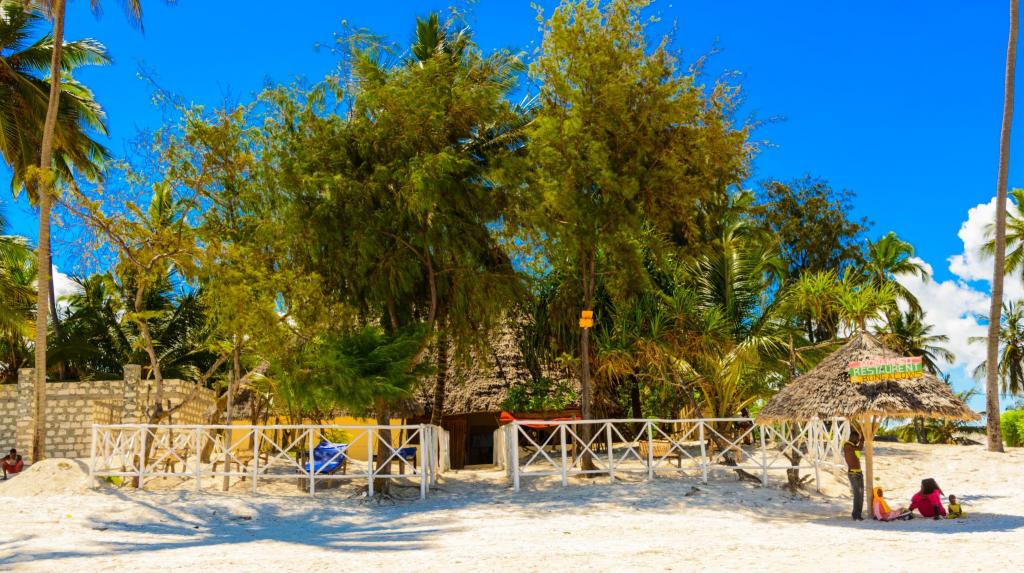
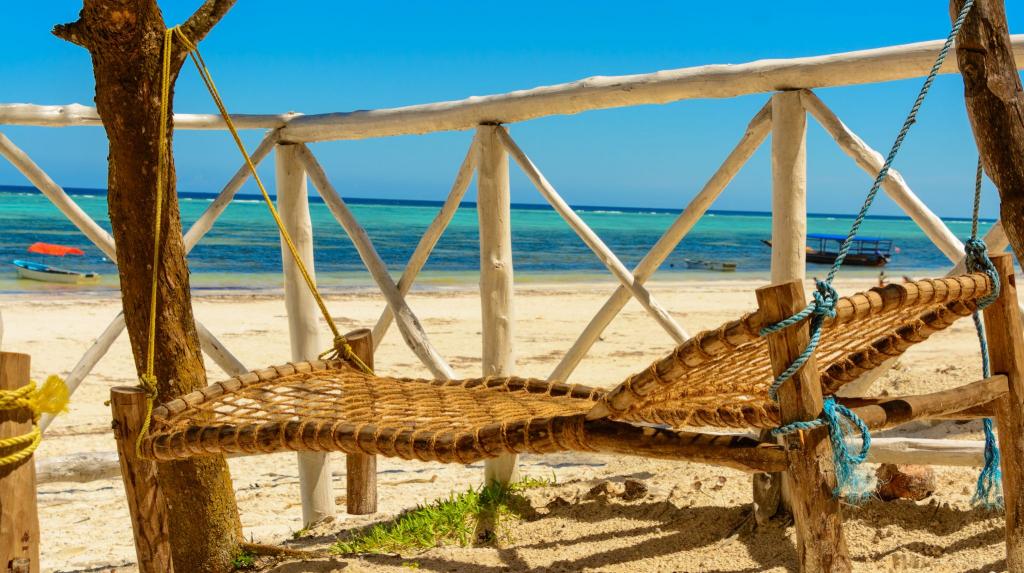
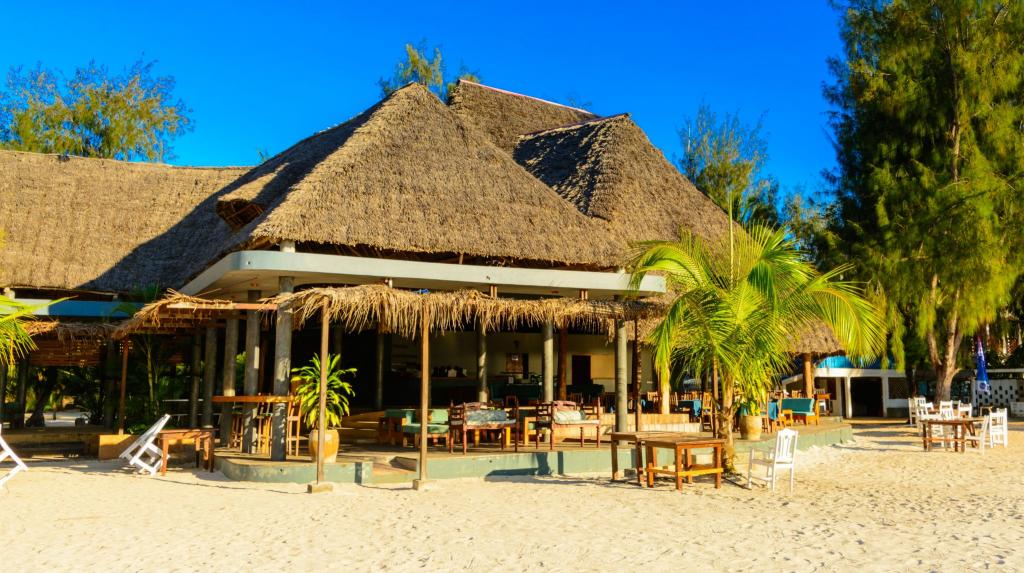
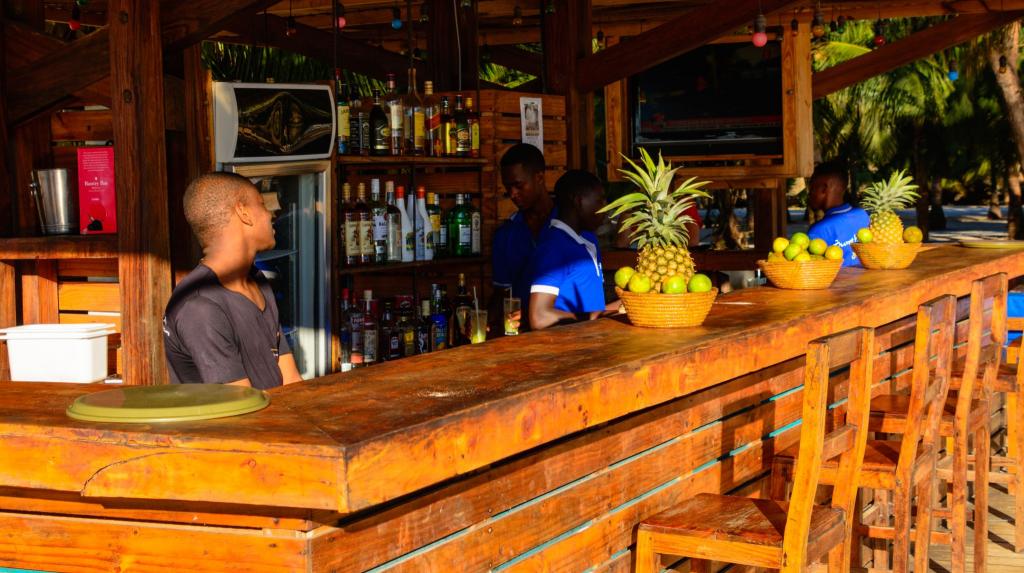
Just beside the diving centre in a small wooden house there is a tiny restaurant and in front of it under the coconut trees there are a few sunbeds, where – just like in the movies – you can lie and sip cold drinks and relax looking at the azure water. The prices in the restaurant is surprisingly affordable.
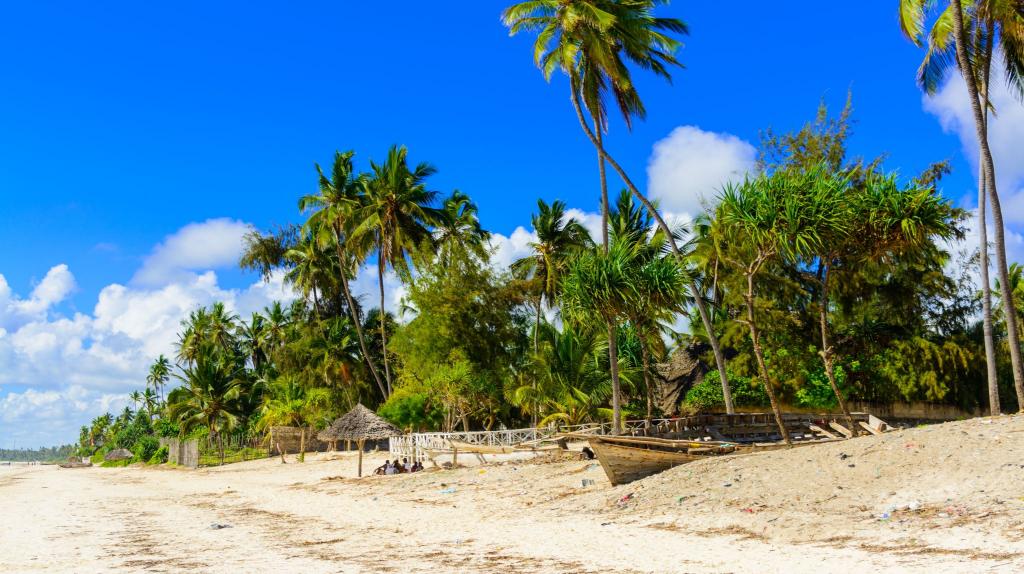
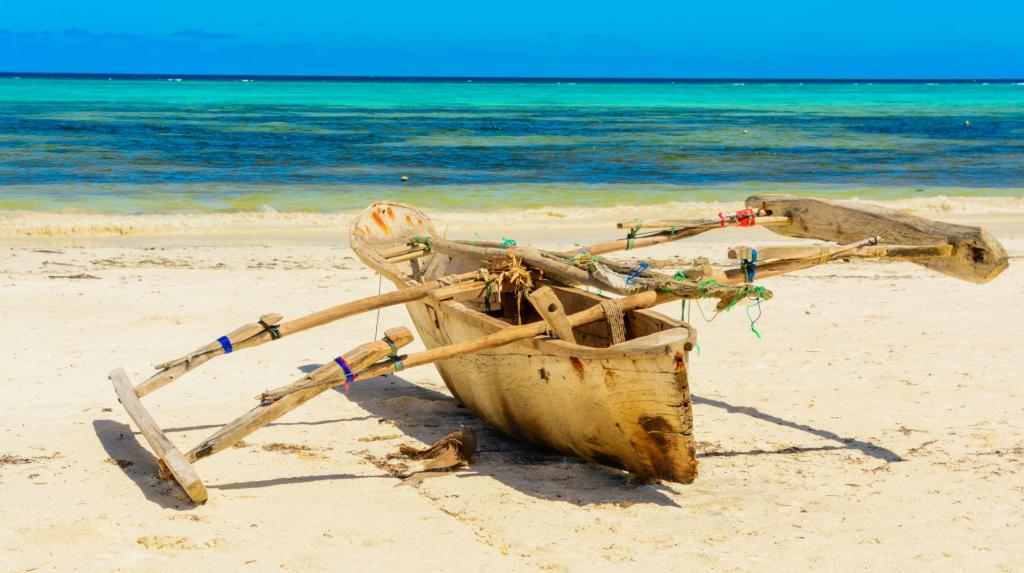
The beach is exceptionally picturesque and there are no crowds here. In the sea there are only a few naked little boys and you can count the people on sunbeds on one hand.
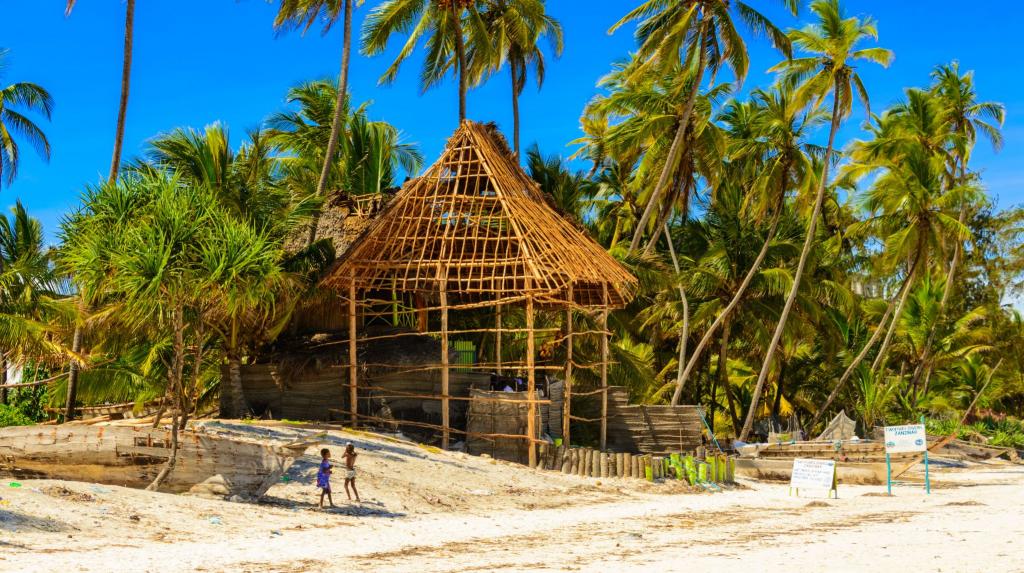
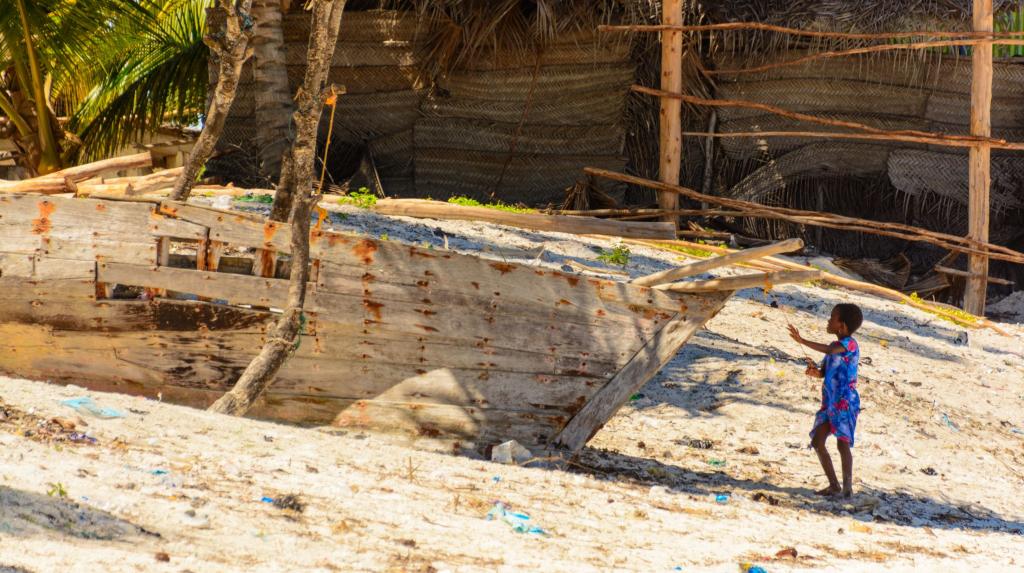
After our lunch and rest we drive for another 40 minutes (mainly on a bumpy dirt road) to Kendwa beach. In the car we realize that most of us got unbelievably sunburnt and now we are red. My back is in such pain that I can’t lean on the seat with it. My legs are also very badly burnt.
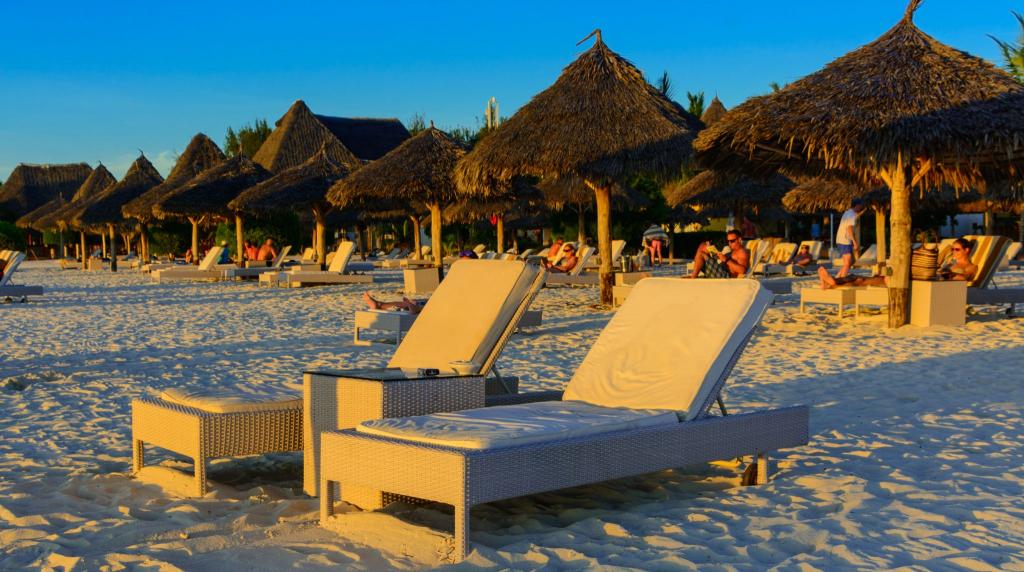
On the beach twice a month there is a famous disco called Full Moon Party. The beach, like the previous one, is very beautiful. There are lots of sunbeds, which can be hired for a dollar, some beds and hammocks, where you can relax with a cold freshly squeezed fruit juice, a cocktail or a beer bought in a nearby beach bar.
There are quite a few prostitutes hanging around here, looking for rich muzungus (this is how white people are called here), but the beach is well protected by the police making it feel very safe here.
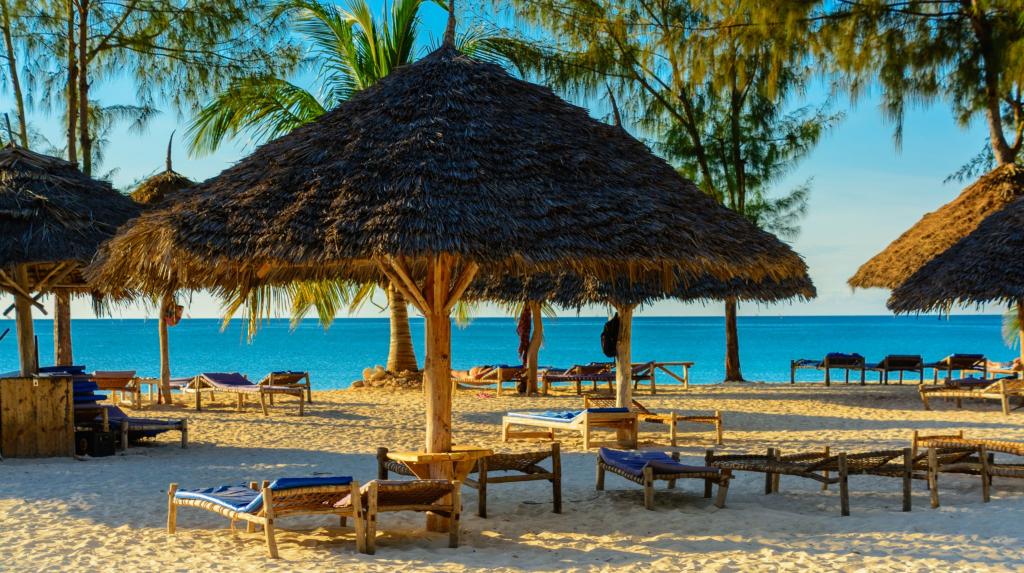
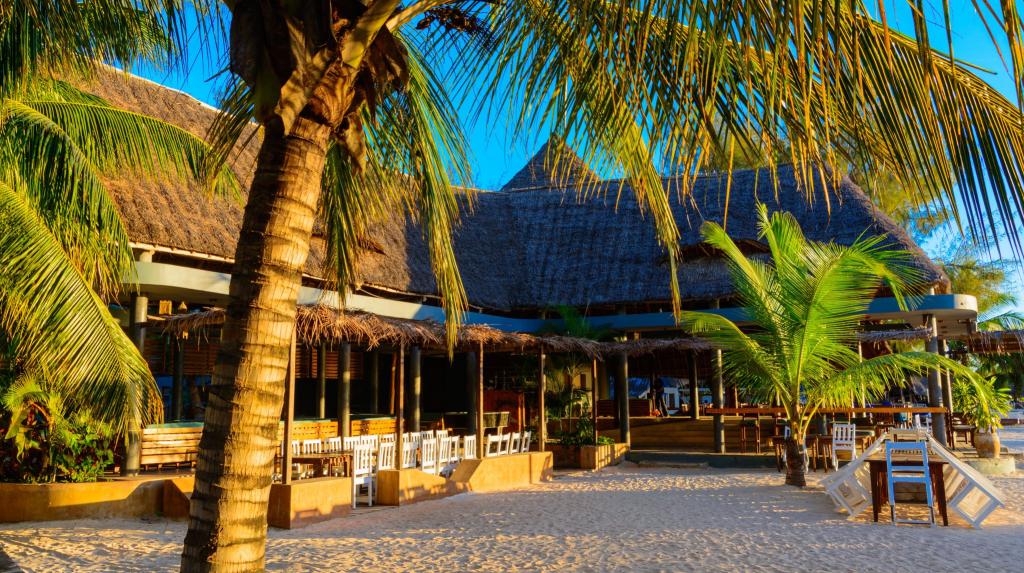
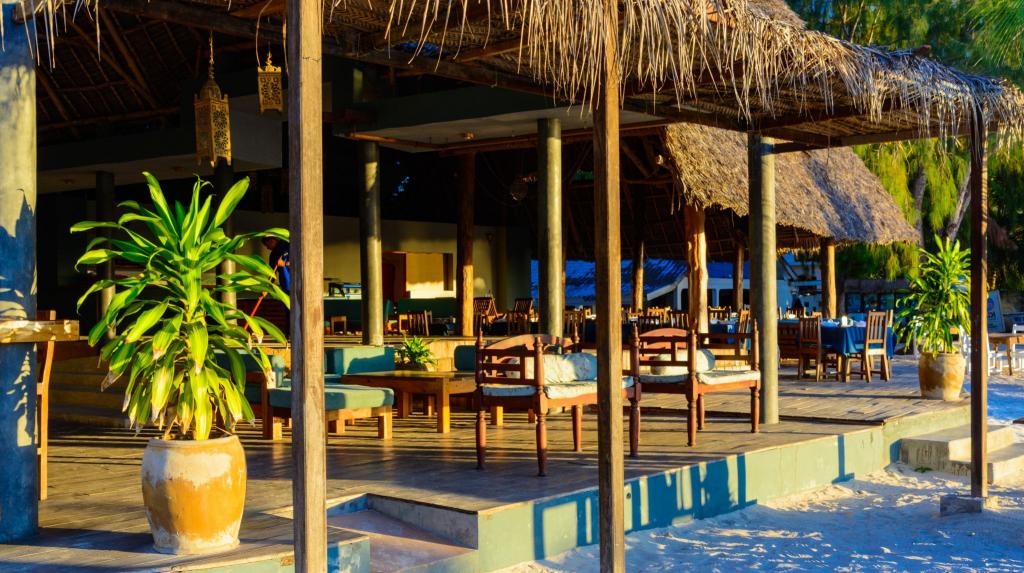
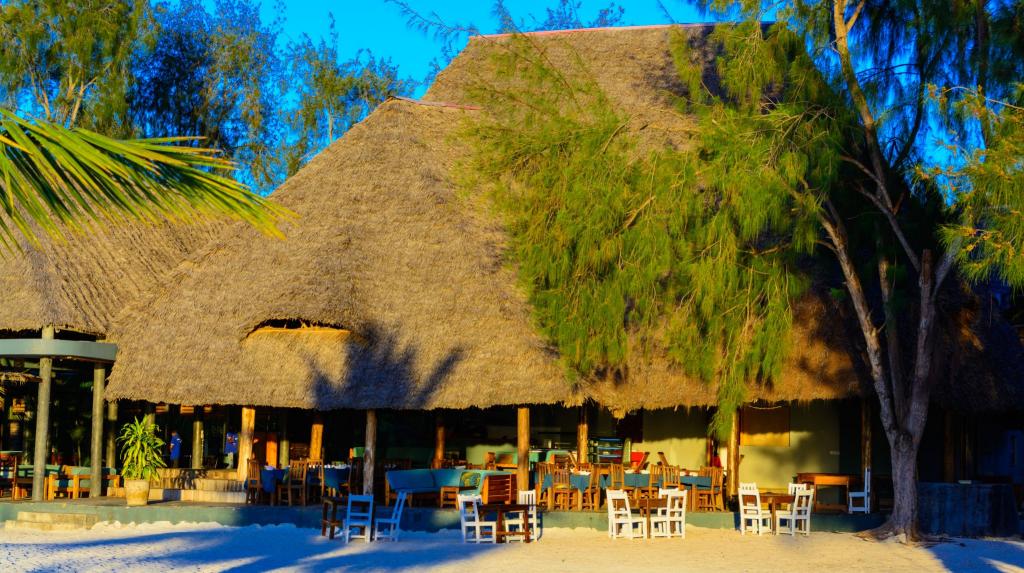
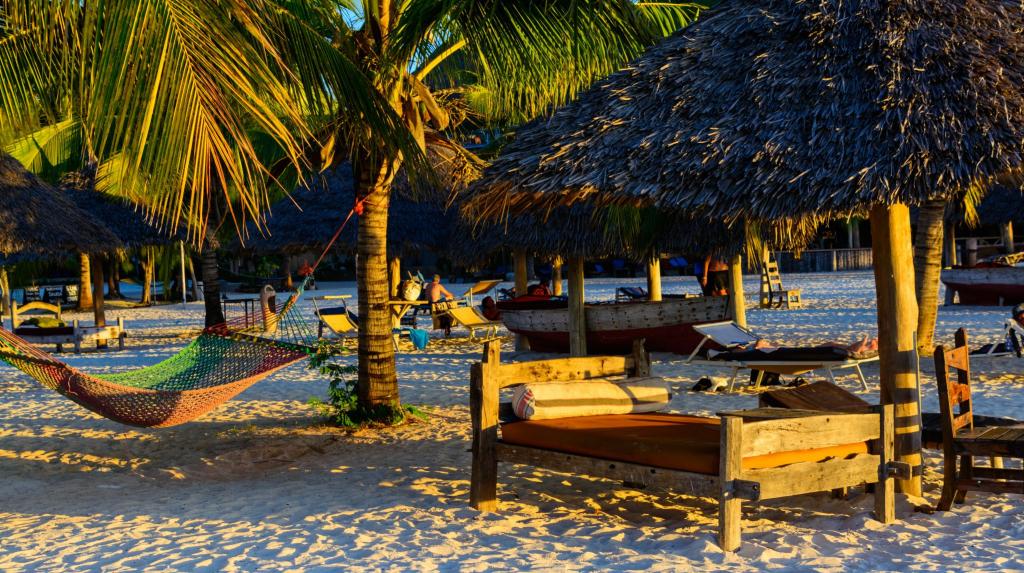
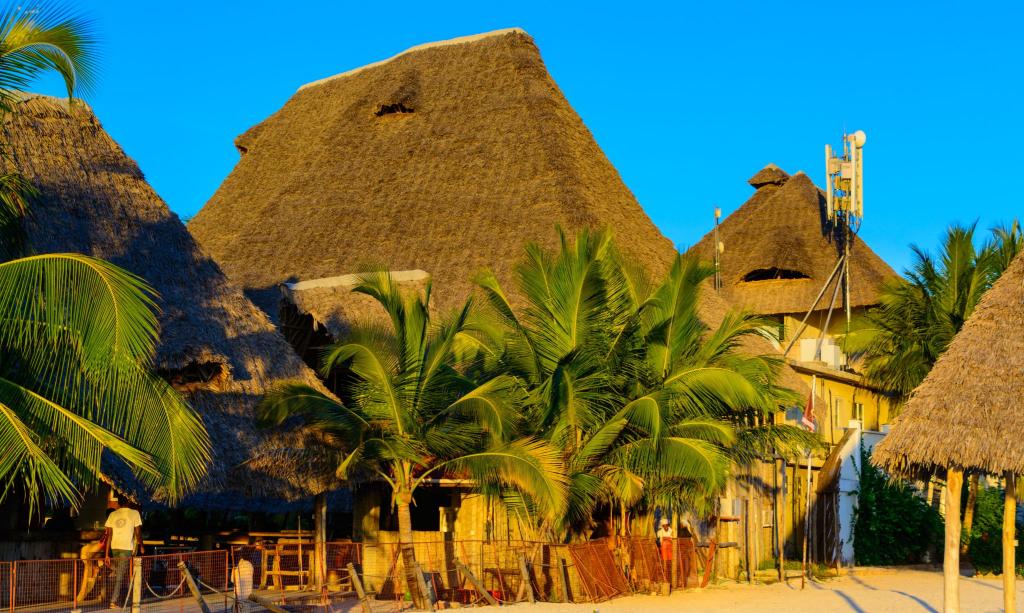
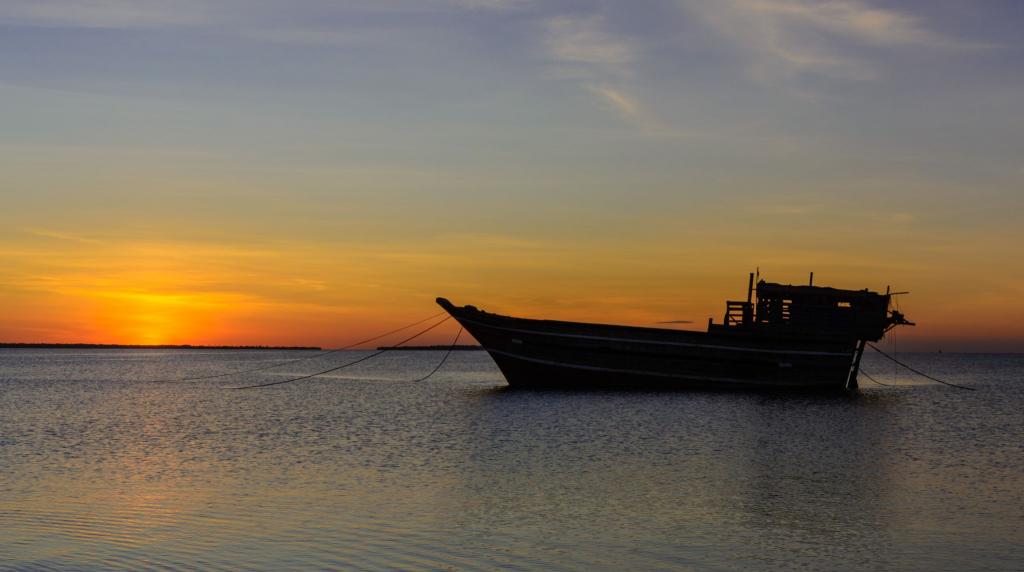
We manage to see a romantic sunset, after which it gets dark in just a few minutes, so we get back to our minibus and go back to our hotel.
Unluckily, only a few kilometres from the hotel we are stopped by the police. Our driver has the Tanzanian driving license, which is supposedly not recognized here (the only accepted one is the one issues here in Zanzibar). The truth is that the police were expecting a bribe of 10.000 Tanzanian Shilling (10 USD) as we were told. Eventually the driver lost his driving license, but after making a few phone calls to the officers’ supervisors later he was promised to get his documents back tomorrow.
In addition, we had Jeremy with us as a passenger, which is illegal here. The locals who don’t have a tour guide license are not allowed to stay in the car with the white people. Luckily the police didn’t cop on.
Time for a cool, relieving shower. Thanks to the courtesy of the owner – Raya, who went to the market for that, we got yogurt to put on the fire-burning back and legs.
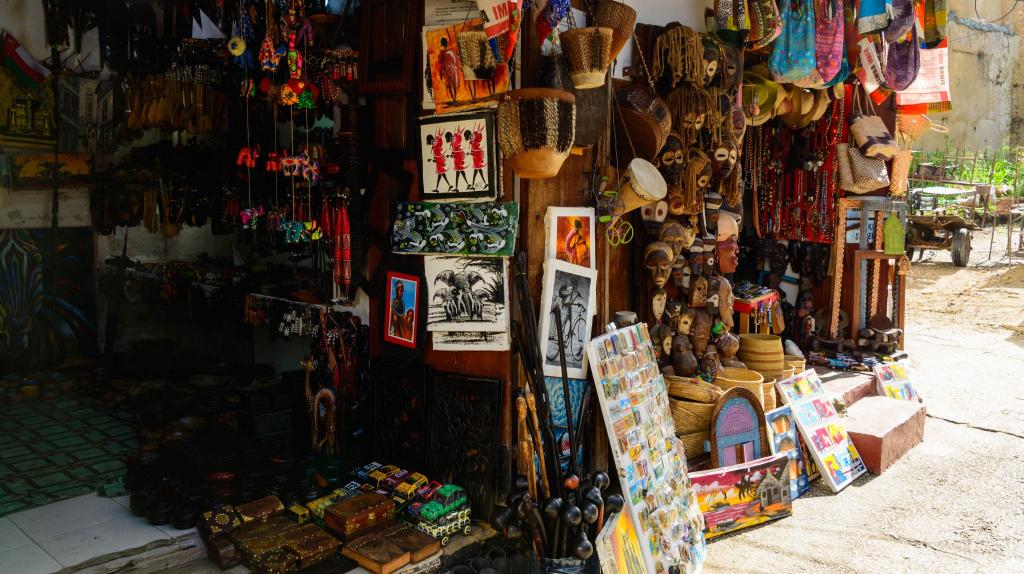
In pain from sunburns we allow ourselves to stay in bed longer than usual and the attraction of the day was getting some souvenirs in Stone Town. In the evening we go back to the hotel to keep enjoying laziness. In general the day went in a sleepy and calm atmosphere. Tomorrow we have more journey ahead.
We are now in Nairobi. When we were leaving our hotel in the Zanzibar, we were expecting a boring day on the plane and bus, but Africa doesn’t stop to surprise us. The people here have their saying about that – TIA, which means “This is Africa”, which today turned out to be absolutely appropriate.
We said goodbye to the owner of our hotel called Dalma Lodge, which we highly recommend because the staff was amazing and very helpful all the time. For a small fee we were even given a 7-seater car for the group and our private driver, Sunday. With the owner, Raya, we spent a lot of time talking, and she never refused us any help, whatever we asked her for.
With Sunday we arrive to the airport in 40 minutes. There we are told to go to one of the hangars. Inside there are a few relaxed people from the staff and maybe a dozen passengers waiting in the room next door, called the Departure Hall.
In the entrance we are asked to show our booking, put our bags on the belt and have to walk barefoot through the scanner (even sandals have to be x-rayed). After passing the control we go straight to the waiting room without checking in. Only twenty minutes before departure, when people start going to the previous room and get their boarding passes, we go for ours.
Finally, with a slight delay we get into our plane still equipped with propellers and we depart for Arusha, when we arrive at 11:45 after an hour and fifteen minutes. The plane has its best years definitely behind and we had a feeling that it was freshly welded before our flight. The wings are all patched, but inside it’s not much better as even the toilet is broken, but instead of fixing it it’s easier to stick a note “Toilet broken” and the problem is gone.
In Arusha we collect the luggage by ourselves straight from the trolley, left on the edge of the runway. Hakuna Matata, meaning relax and full trust between the airlines and the passengers are the motto of this airport.
We leave the terminal and we see supposedly official airport taxis, which are a merciless rip-off, charging similar rates as the taxis in Paris. For a fifteen-kilometre drive they charge $22, which is the price that the largest European cities can be proud of, but as the airport is at the end of the World and there is not even a bus stop, we need to swallow our pride and let them rip us off.
These official airport taxis are not even marked, most of them are 40 years old and are well battered. On the way we get stopped by the police and it turns out that that driver doesn’t have any documents by himself, but a bribe immediately saves him from the oppression.
Finally we arrive at the Riverside Shuttle Bus station and without even getting out from the car we are immediately surrounded by a horde of shouting touts from a few bus companies. The first price is $50, the second goes down to $25, third to $20 and finally goes down to $15. To Lobulu we paid twice as much for exactly the same fare from Nairobi to Arusha! It turned out our dear guide ripped us off.
After a big lunch for $3 we get to our bus and leave at 2pm. An hour and a half later we are at the Kenyan border, where we go through the formalities and control pretty quickly. Luggage control was mainly about getting rid of all plastic bags, which are illegal in Kenya and there is a high fine or even prison for not complying to these new regulations. After having our bags checked we get a big X written with chalk on our bags.
Before Nairobi we enter the motorway. It has six lanes each way. Three lanes, some green area with a huge ditch, another three lanes in the same direction, again the green and the ditch, three lanes in the opposite direction, green and ditch and another three lanes in the opposite direction. The problem is that some people go against the traffic, which causes huge traffic jams. To speed up we change lanes going through the ditch and passing to the other three lanes, nearly falling over. Luckily our driver didn’t decide to go against the traffic.
We arrive at the bus station around 8pm, where this time we are surrounded by a horde of taxi drivers. We show our driver the address of our hotel and he nods that he knows where it is, so we decide to go.
When we got lost in the suburban slums our driver finally decided to say the words: “we got lost”. We managed to get Google Maps working on his mobile, but where the hotel was supposed to be there was only a big fence and no marked entrance. The hotel phone was not responding and nobody from the encountered people never even heard of that hotel.
Finally we found some other hotel, where we decided to ask for help. After ten minutes of searching on the web the receptionist makes a phone call to somebody and a moment later a local rastaman comes to show us the way to the hotel nobody here even heard of.
When are arrive there… Oh my God… The building looks like a squat, inhabited by a lot of homeless and drug addicts walking inside. Our black driver immediately got pale seeing this place and said: “don’t get out of the car”.
At once we left and went to the city centre. On the way, in our guidebook we found a small, nice and cosy hotel in the city, located only 200 metres from the bus station, where we got the taxi. The hotel is not really cosy, the sheets are dirty and when we come back after dinner, a big rat runs toward us in the corridor…
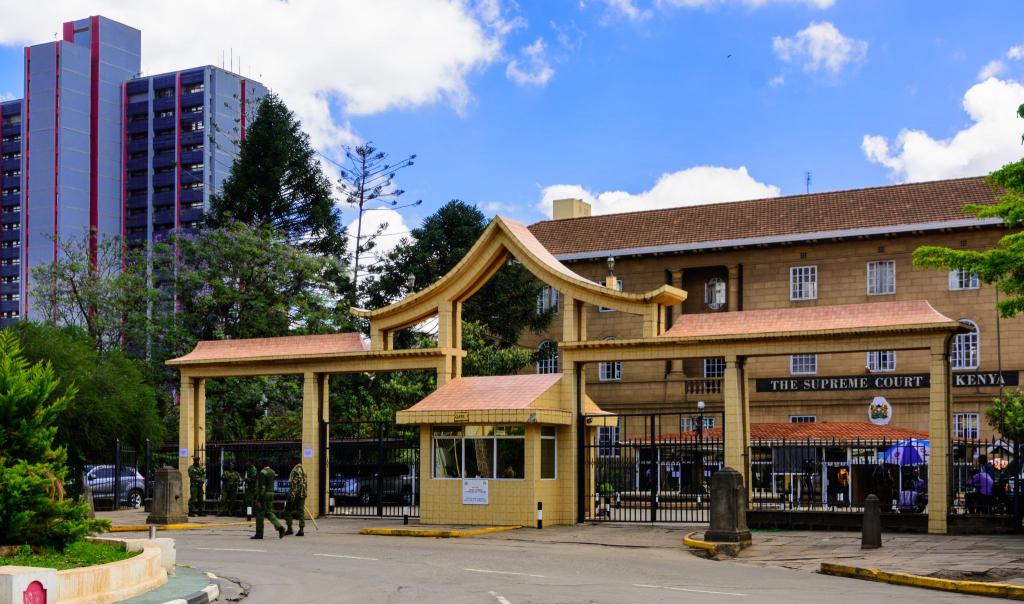
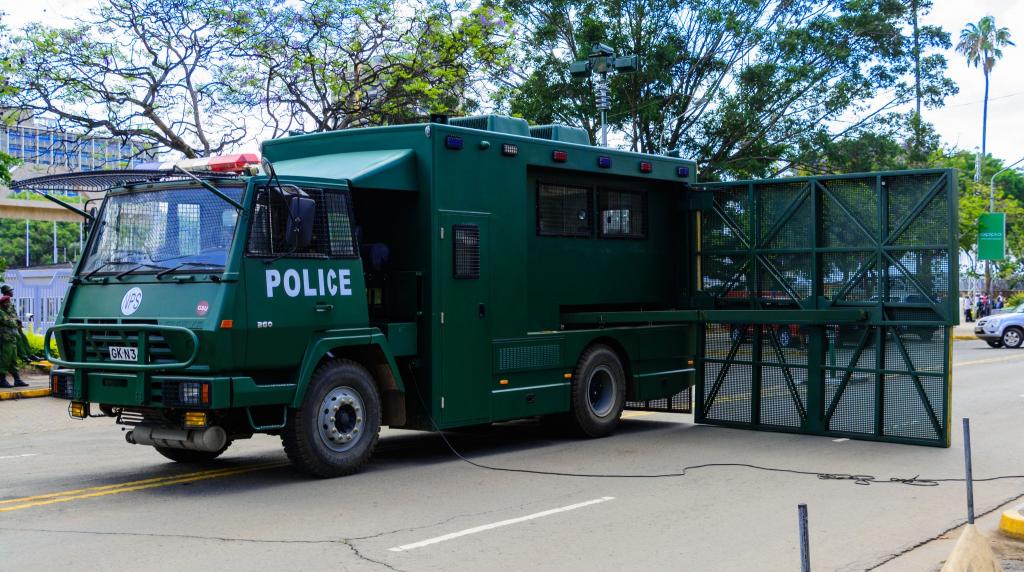
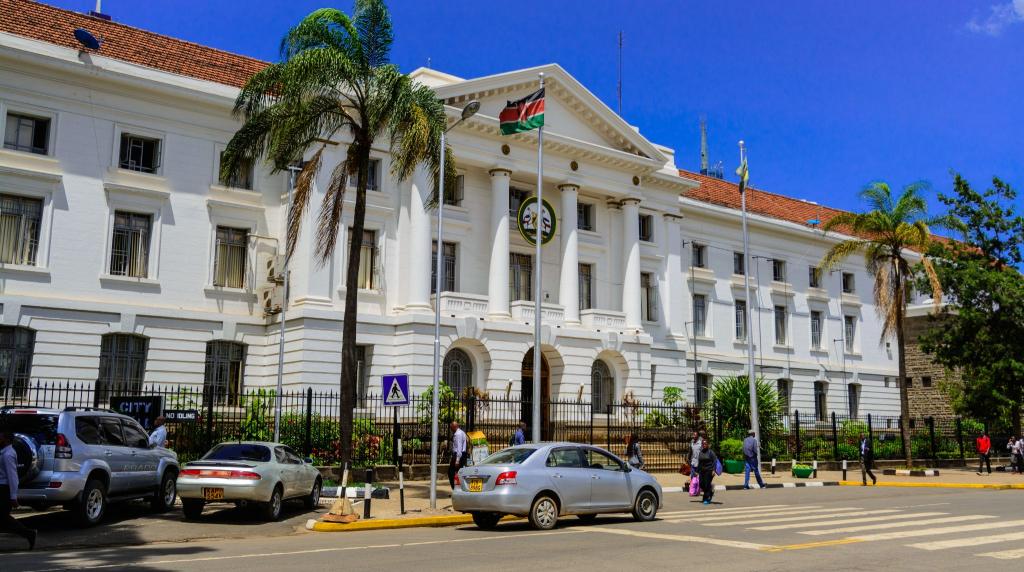
The first half of this last day we spend on a walk in the city centre of Nairobi. We walk near the Supreme Court, which is heavily guarded by armed police due to the upcoming verdict regarding the validity of recent presidential elections. Initially the elections were invalidated a few weeks ago, which caused unrest in the entire country, so the building is guarded by armed police vehicles, a lot of military, armed with rifles and dozens of police officers. We can sense that the situation is tense.
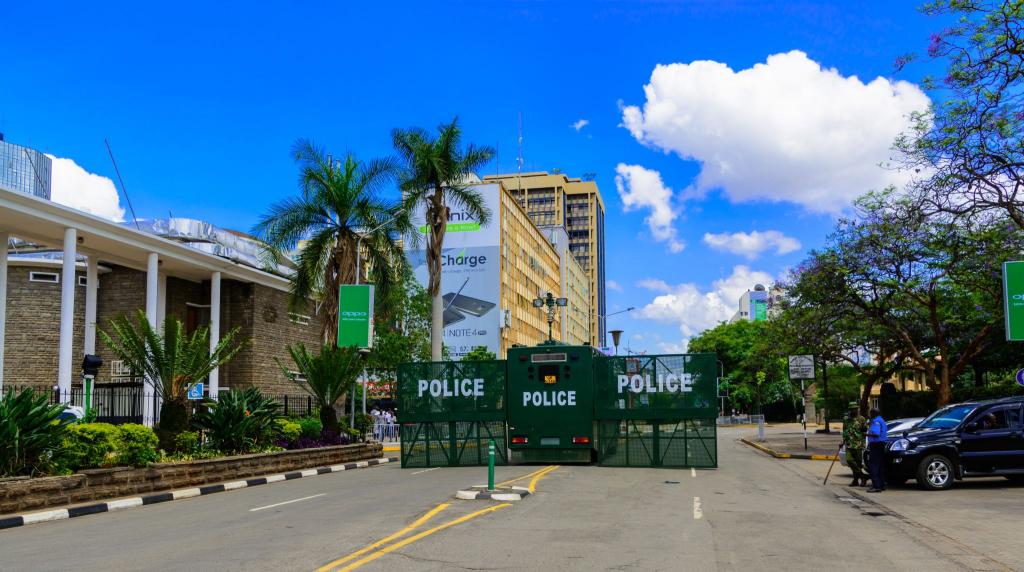
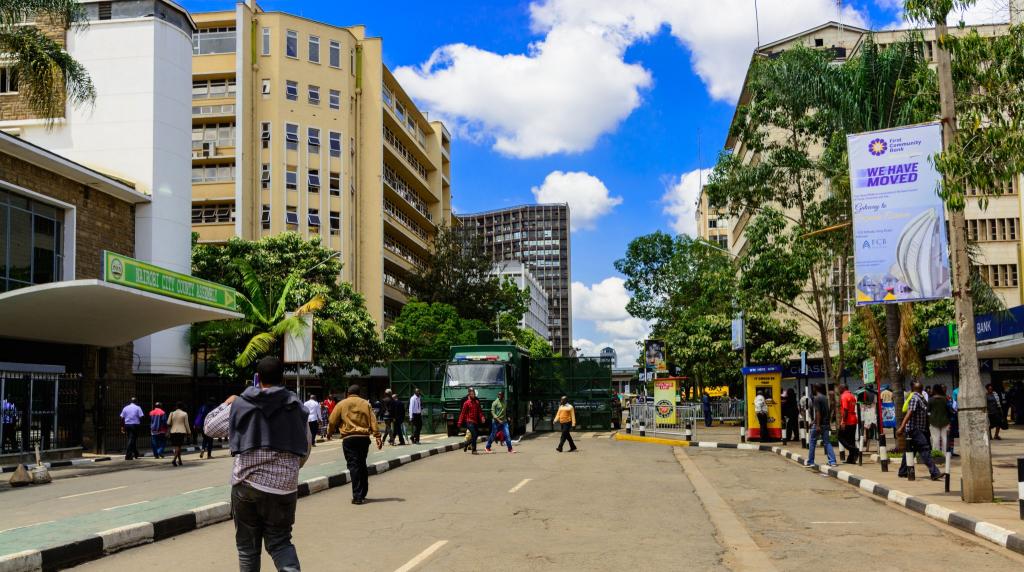
We walk through the park to the viewpoint. Everyone is going to the hill, so we follow them and get to a huge aggregation of people, who are apparently waiting for something outside the district court. As we don’t feel safe and a few people tell us that it’s better for us to go, we head back to the park, next to which we find the skyscrapers viewpoint.
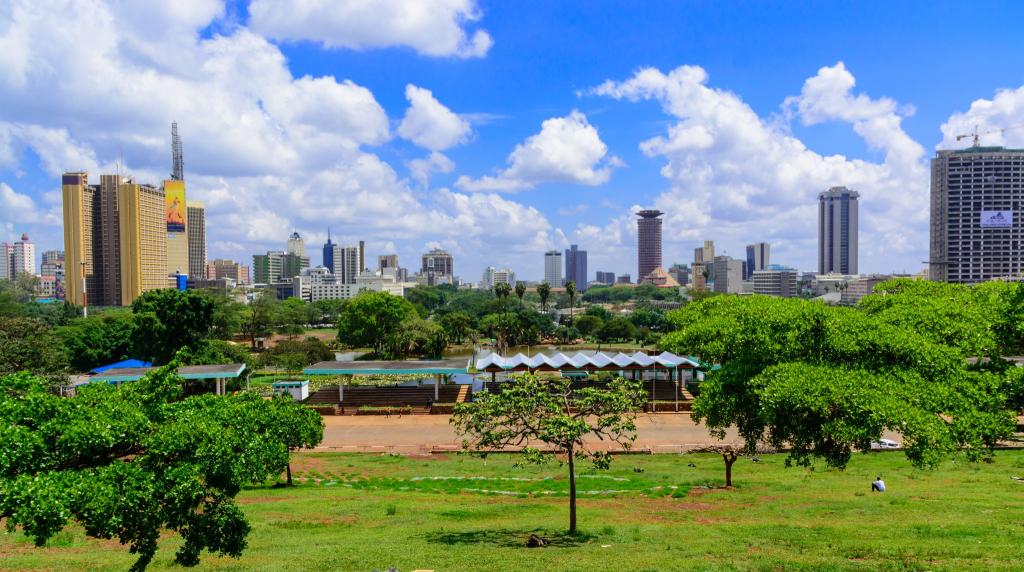
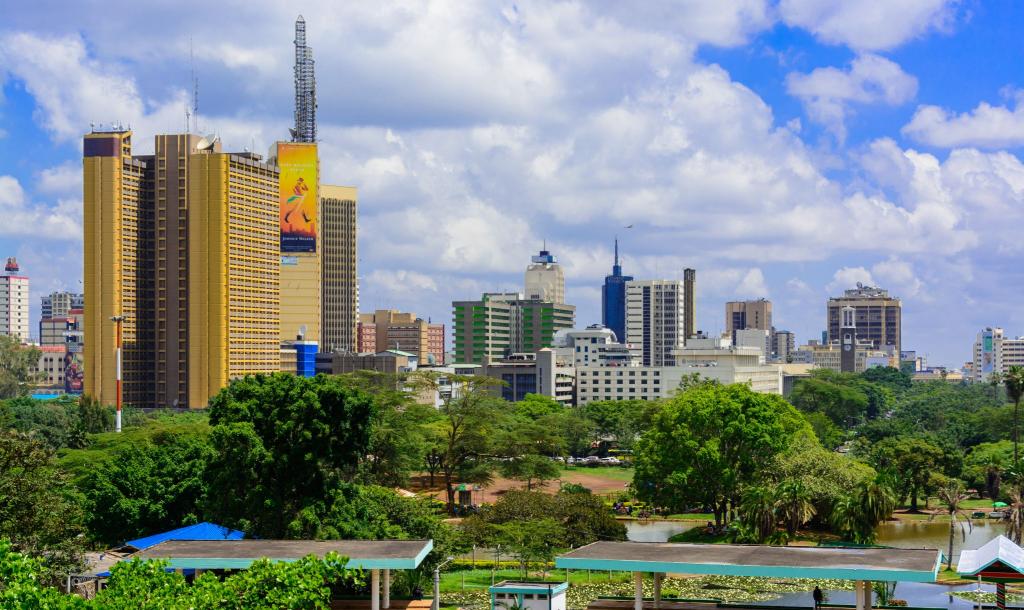
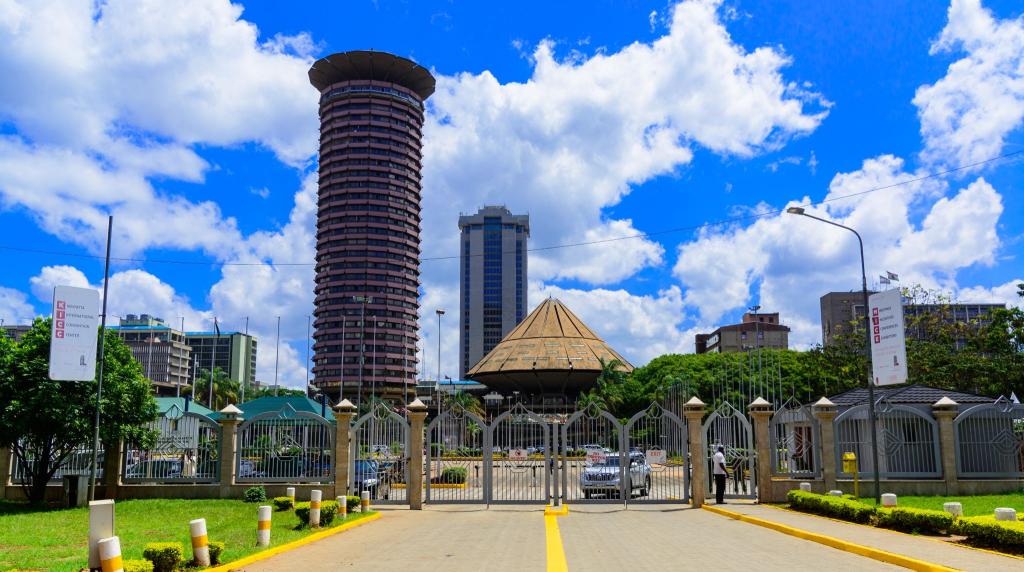
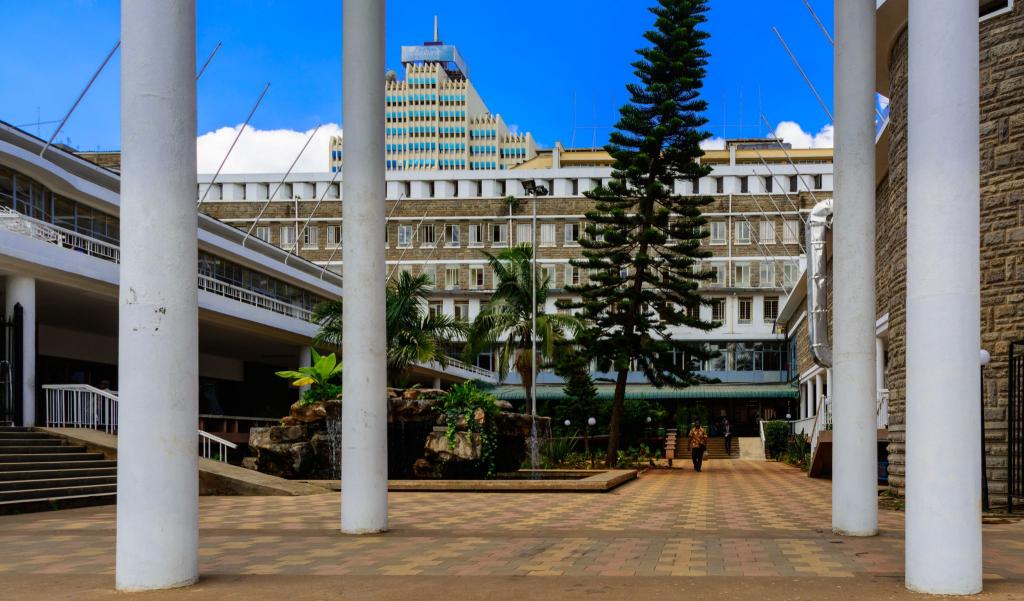
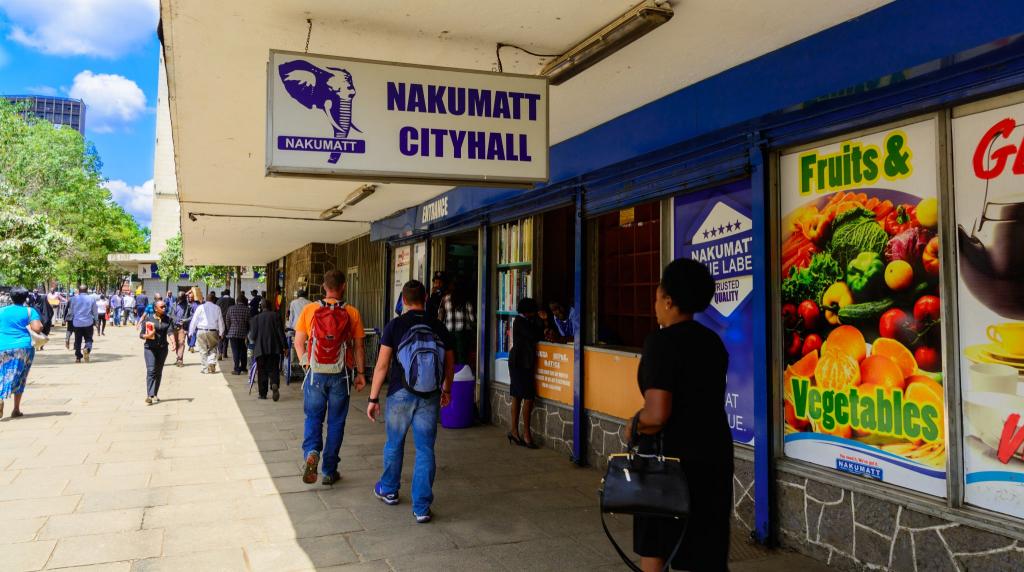
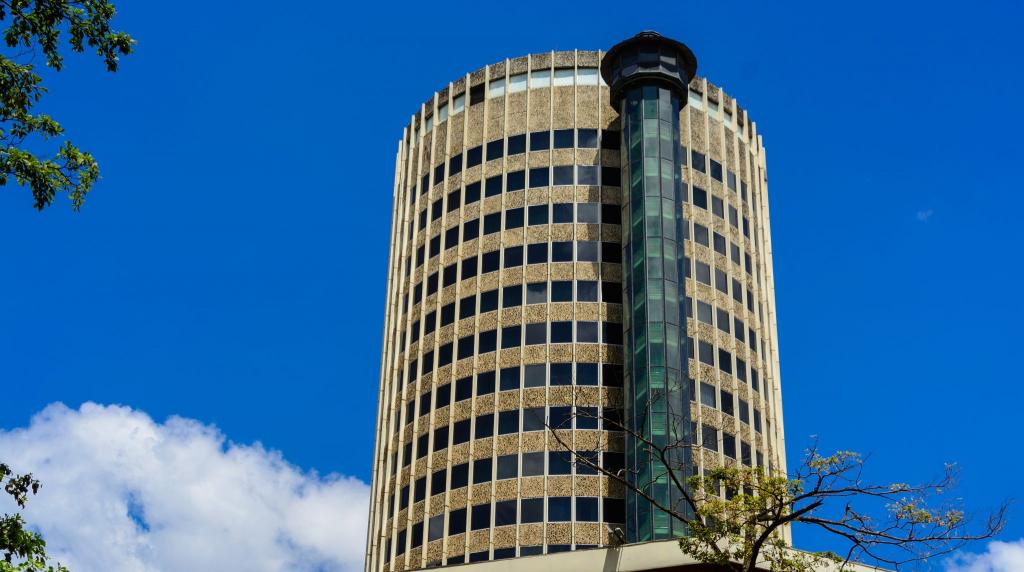
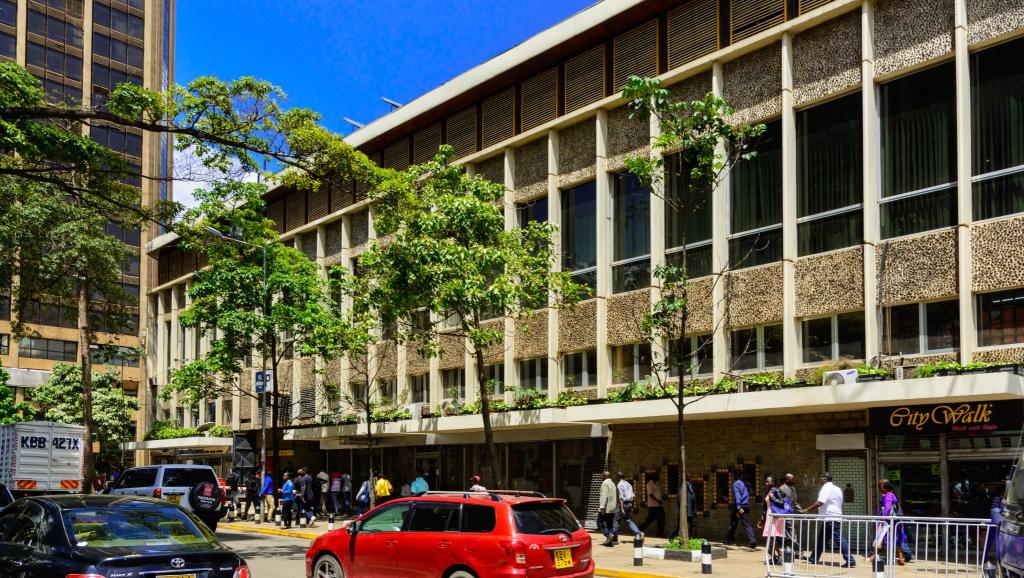
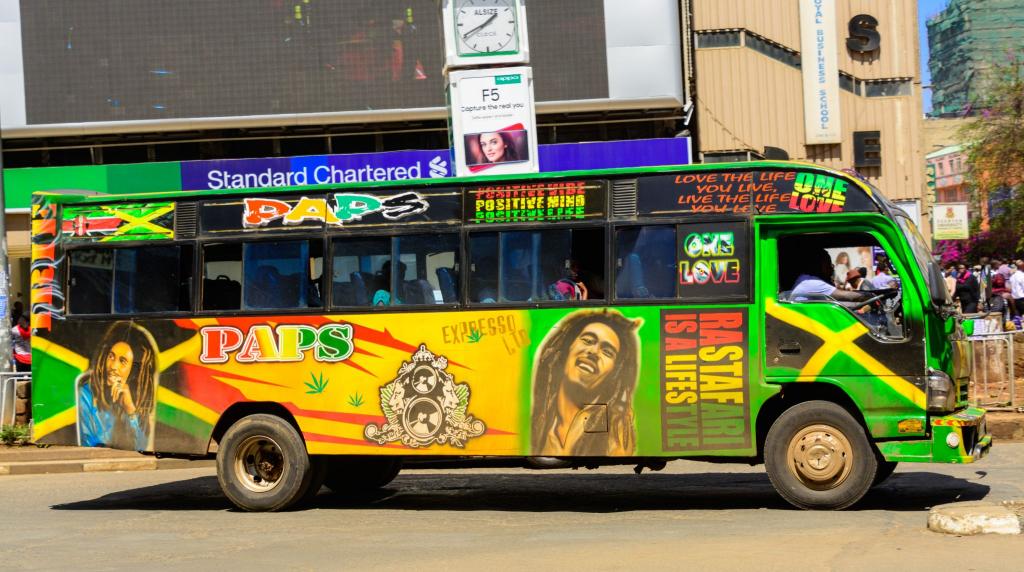
Then we go to the city centre to buy some souvenirs, eat and at 2pm we get back to our hotel, pack our things and go to the airport.
Te drive to the airport takes us 40 minutes. We get to the gates on the motorway, which look like toll stations, where everyone apart from the driver has to get out of the car and take their hand luggage for screening. In the same time the cars with big bags pass through the gates without any screening, so if anyone wants to smuggle a bomb, I advise to put it in the large bag for the way to the airport ;)
After going through screening we get to the other side and drive for another bit to the terminal. At the entrance to the airport there is another screening belt, this time for all bags, so here it may be harder to get the bomb across. We check in to our flight and get rid of the large backpacks. I shouldn’t have checked mine in - I will explain that in a bit…
We take off exactly at 7:20pm and our flight to Jeddah in Saudi Arabia, which we called “Jedi”, takes us three and a half hours. Here unfortunately we have nine hours of waiting without any chance to leave the airport as the visa to Saudi Arabia is impossible to get at the airport. It’s even very difficult to get in the embassy, because to get one you need a “local sponsor”, who will guarantee that you won’t cause any problems and will be liable if you do anything illegal according to the local, religious and very radical law.
We have no choice, but to find a piece of floor. It’s best to do this in the Saudia airline lounge, because here at least there aren’t such crowds as in the common area of the airport. The seats are all taken so getting one is nearly impossible, so we have to sleep on the floor, which is freezing. The only help comes with a hot tea and a free warm meal, server by the airline. And to think that I left my warm sleeping bag in my checked in backpack…
After eight hours of not sleeping we finally go to our gate.
Our flight traditionally beginning with a prayer starting with “Allah Akbar” played through the speakers, takes six hours, during which we finally manage to fall asleep.
We arrive in Geneva around 1pm local time.


